
Roofing companies compete in one of the toughest local search markets. A homeowner rarely searches for a roofer casually. They search when a roof is leaking, a storm caused damage, shingles are failing, or a major replacement decision is suddenly unavoidable.
That is why SEO for roofing companies has to do more than increase website traffic. It has to put the roofing business in front of high-intent local searchers and give those homeowners enough confidence to call.
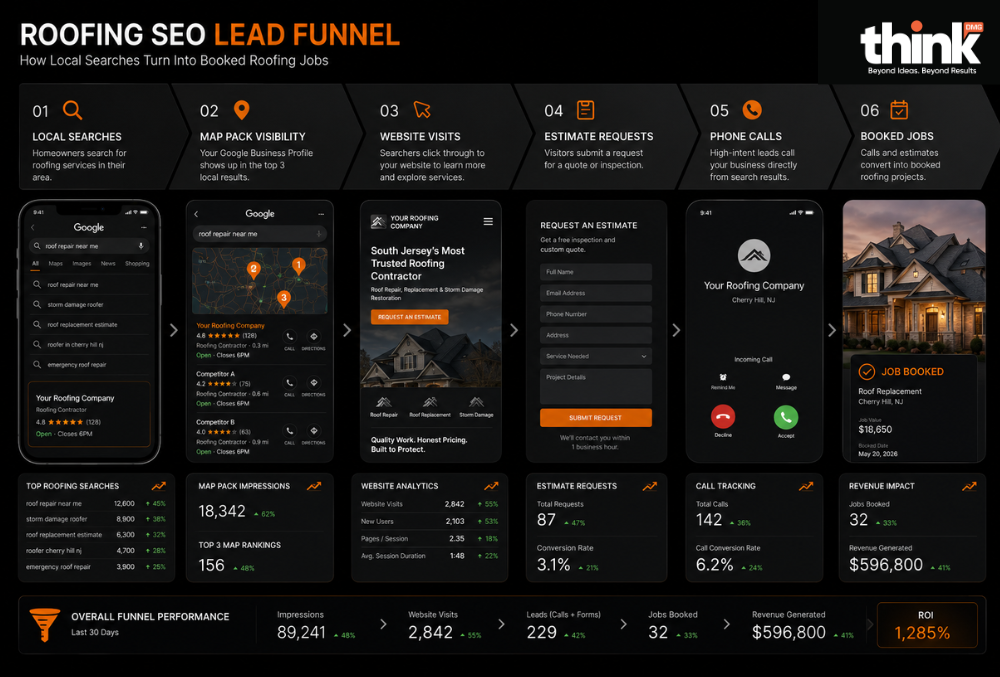
Roofing SEO Starts With Urgency and Location
Most roofing searches have two signals that matter: urgency and geography. Someone searching “roof leak repair near me” is in a different buying moment than someone searching “how long does a roof last.” Both searches can be valuable, but they need different pages and different expectations.
A strong roofing SEO strategy separates the major search types:
- Emergency intent: roof leak repair, storm damage roof repair, emergency roofer.
- Replacement intent: roof replacement company, new roof estimate, asphalt shingle roof replacement.
- Comparison intent: roofing contractor reviews, best roofers near me, local roofing company.
- Education intent: signs you need a new roof, insurance roof claim questions, roof repair vs replacement.
The goal is not to rank for every roofing keyword. The goal is to own the searches that match the jobs the business actually wants.
Why Roofing SEO Is Different From Other Local SEO
Roofing SEO works differently than most local SEO campaigns because homeowners usually search during stressful situations. A roof leak, storm, or major repair creates urgency that changes how people search and choose a contractor.
Most roofing customers are not casually browsing. They want fast answers, proof of trust, and a company that can respond quickly. That means roofing websites must focus on both visibility and conversion speed.
For example, someone searching for “emergency roof repair near me” behaves very differently from someone researching kitchen remodeling ideas. Roofing searches often happen during emergencies, bad weather, or expensive home repair situations.
This is why roofing SEO should focus on:
- Fast mobile performance
- Google Business Profile optimization
- Strong customer reviews
- Emergency service visibility
- Location-specific landing pages
- Clear click-to-call actions
Roofing companies that combine local SEO with trust-building content usually generate better leads and higher conversion rates.
The Four Types of Roofing Search Intent
Not every roofing customer searches the same way. Some homeowners need emergency help right away, while others are still researching their options.
Understanding search intent helps roofing companies build pages that match what customers actually want.
Emergency Intent
These searches happen during urgent situations like roof leaks or storm damage. Homeowners want immediate help and fast contact options.
Examples include:
- Emergency roof repair
- Storm damage roofer
- Roof leak repair near me
Replacement Intent
These homeowners are planning a major roofing project and comparing estimates, materials, warranties, and contractors.
- New roof estimate
- Roof replacement company
- Asphalt shingle replacement
Comparison Intent
These users are comparing reputation and trust before contacting a roofer.
- Best roofing company near me
- Roofing contractor reviews
- Top roofers in South Jersey
Education Intent
These homeowners are still learning about roofing problems and possible solutions.
- Signs you need a new roof
- Roof repair vs replacement
- How long does a roof last?
The best roofing SEO strategies create content for all four stages of the customer journey.
Your Service Pages Should Match Real Roofing Jobs
Many roofing websites make the same mistake: one general “roofing services” page tries to cover everything. That makes the site harder for search engines to understand and less helpful for homeowners who want a specific answer.
A better structure usually includes focused pages for high-value services such as:
- Roof replacement
- Roof repair
- Storm damage roof repair
- Emergency roof leak repair
- Commercial roofing, if the company serves commercial clients
- Roof inspections
Each page should explain the service, when a homeowner needs it, what signs to look for, what the process looks like, and how to request an estimate. This is where local SEO and conversion-focused page design need to work together.
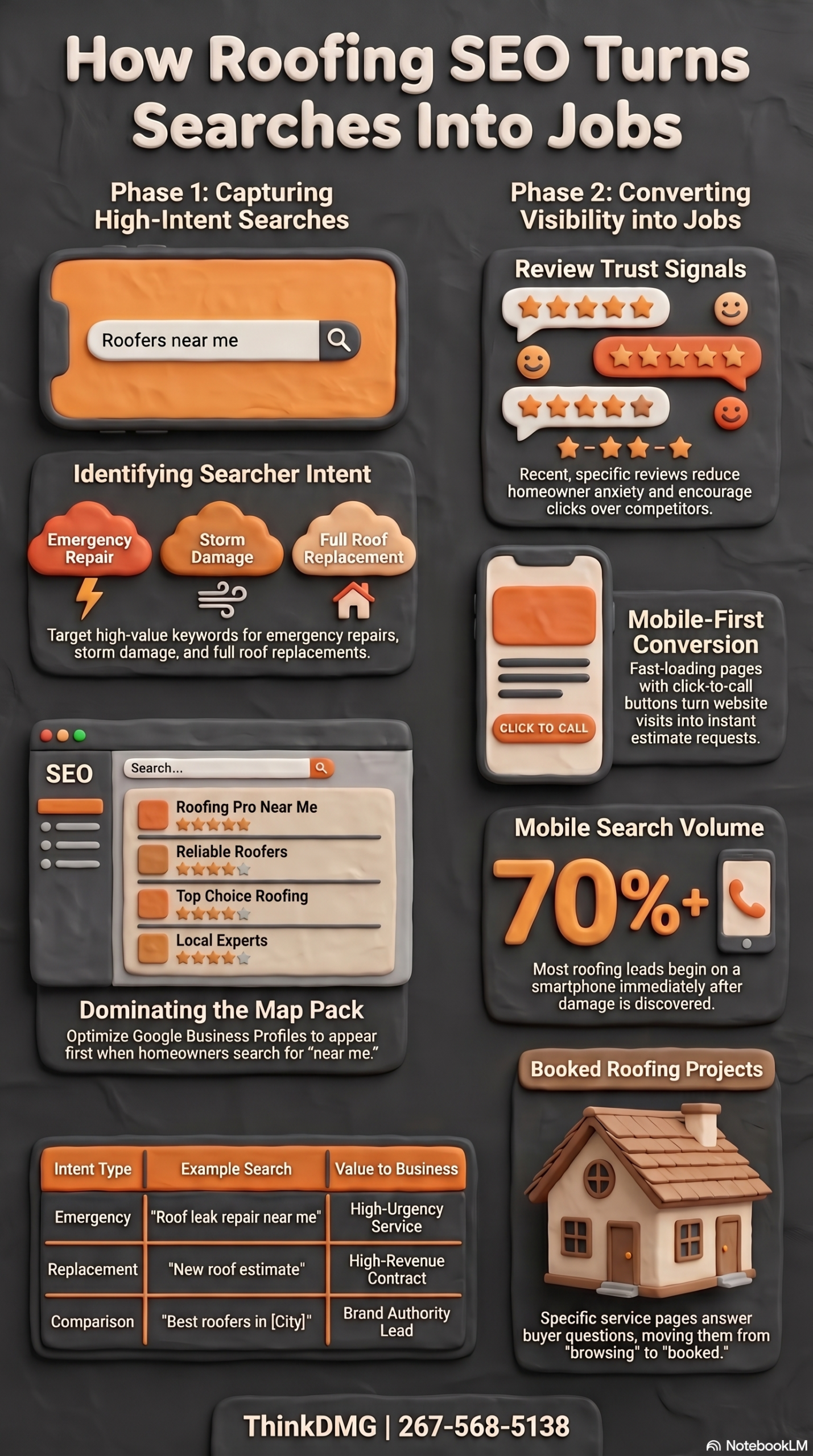
Location Pages Should Be Useful, Not Thin
Roofing is local. Homeowners want a contractor who serves their town, understands regional weather, and can get to the property quickly. Location pages can help, but only when they are written with real local relevance.
A weak location page swaps in a town name and repeats the same generic copy. A strong location page gives the homeowner a reason to believe the roofer truly serves that area. It may include the neighborhoods served, common roofing issues in the region, service availability, nearby completed project types, and clear contact options.
For New Jersey roofing companies, location strategy should be practical. It is usually better to build strong pages for the highest-value service areas than to publish dozens of thin pages that all say the same thing.
Google Business Profile Can Make or Break Roofing Visibility
For roofers, the Google local pack is often the first place homeowners compare options. The website matters, but the Google Business Profile can influence whether the business gets seen and whether the prospect trusts it enough to click.
Important roofing GBP elements include:
- Accurate categories and service areas.
- Consistent business name, address, and phone information.
- Recent photos of real roofing work.
- Review requests after completed jobs.
- Professional responses to reviews.
- Service descriptions that match the highest-value roofing jobs.
Reviews are especially important in roofing because homeowners are making a costly decision and may have heard stories about unreliable contractors. Recent, specific reviews reduce that anxiety.
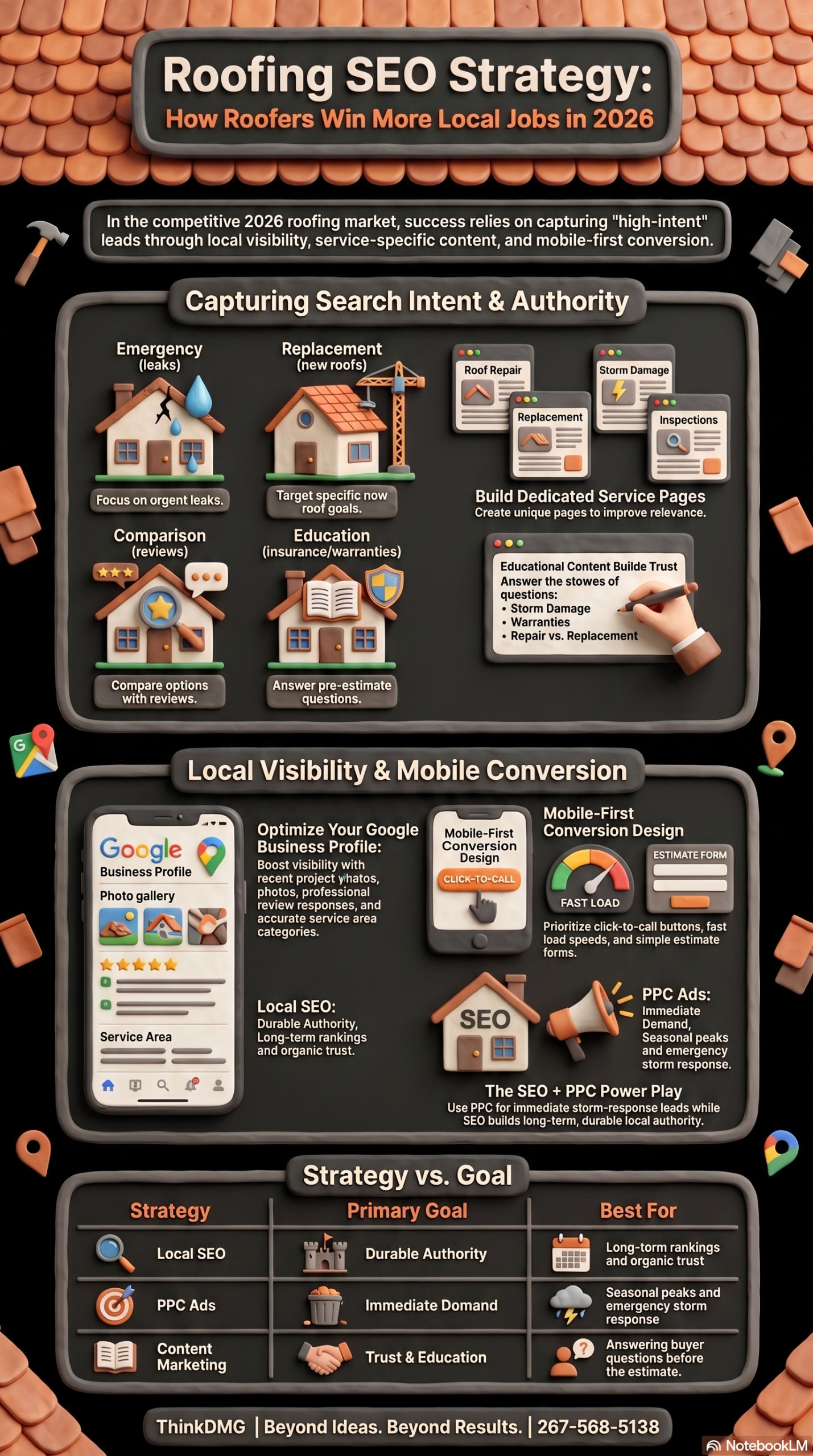
Content Should Answer Buyer Questions Before the Estimate
Roofing content works best when it answers the questions homeowners ask before they contact a contractor. The content should not be generic filler. It should support real buying decisions.
Strong roofing blog topics include:
- How to tell if roof damage is serious after a storm.
- Roof repair vs replacement: how homeowners should think about the decision.
- What to expect during a roof replacement estimate.
- Questions to ask before hiring a roofing contractor.
- How roofing warranties work and what homeowners should read closely.
- Why the cheapest roofing estimate can become the most expensive option.
These topics can bring in organic traffic, but their bigger value is trust. They help homeowners see the company as a practical guide, not just another contractor asking for the job.
The Website Has to Convert on Mobile
Many roofing leads happen on a phone. A homeowner sees a ceiling stain, searches quickly, compares a few options, and calls the company that feels easiest to trust. If the website is slow, cluttered, or hard to navigate, the lead goes somewhere else.
A roofing website should make the next step obvious. Calls, estimate requests, emergency service options, service-area confirmation, and proof of quality should be visible without forcing the visitor to hunt.
If the current site is dated or difficult to use, website design for roofing companies can be one of the fastest ways to improve lead quality from the traffic the business already has.
Why Mobile Optimization Matters for Roofing Leads
Many roofing leads happen on mobile devices during stressful situations. Homeowners often search for help while standing inside a leaking home or after a storm damages their roof.
If your website loads slowly or makes visitors hunt for a phone number, those leads usually go to another roofing company.
A mobile-friendly roofing website should include:
- Fast loading speeds
- Large click-to-call buttons
- Simple estimate request forms
- Clear service-area information
- Easy navigation on small screens
Google also uses mobile performance as a ranking signal. That means mobile optimization helps both SEO visibility and lead generation.
For roofing companies, mobile SEO is not just a technical upgrade. It directly affects how many calls and estimates your business receives.
Paid Search and SEO Should Support Each Other
Roofing SEO compounds over time, but roofers often need leads during specific seasons or after storms. That is where PPC advertising can support the organic strategy.
The strongest approach is not SEO versus ads. It is using each channel for the job it does best. Paid search can capture immediate demand while SEO builds durable local authority. The data from paid campaigns can also reveal which services, locations, and messages convert fastest, giving the SEO plan better direction.
FAQ: SEO for Roofing Companies
What is the best SEO strategy for a roofing company?
The best roofing SEO strategy combines dedicated service pages, strong local SEO, Google Business Profile optimization, customer reviews, technical SEO, and content that answers high-intent homeowner questions. Roofing companies that focus on both visibility and conversion usually generate better local leads.
Should roofers blog?
Yes, but blogging should support the sales process. The best topics answer questions homeowners ask before requesting an estimate, comparing contractors, filing insurance claims, or deciding between roof repair and replacement.
How can a roofer get more local leads from Google?
Roofing companies can improve local lead generation by optimizing their Google Business Profile, creating service-specific pages, improving customer reviews, speeding up mobile performance, and building useful location pages for the areas they actually serve.
How long does roofing SEO take to work?
Most roofing companies begin seeing early SEO improvements within three to six months. Competitive roofing markets may take longer depending on the quality of the website, local competition, review activity, and the strength of the SEO strategy.
Why are Google reviews important for roofing SEO?
Google reviews help roofing companies build trust and improve local search visibility. Because roofing projects are expensive and high risk, homeowners often compare reviews before requesting estimates or contacting a contractor.
Do roofing companies need separate pages for each service?
Yes. Dedicated pages for roof repair, roof replacement, storm damage repair, roof inspections, and emergency roofing services help search engines understand your business and improve rankings for high-intent local searches.
Why does mobile optimization matter for roofing websites?
Many roofing leads happen on mobile devices during urgent situations. A fast, mobile-friendly website with click-to-call buttons and simple estimate forms helps convert more visitors into phone calls and qualified leads.
Should roofing companies use SEO and PPC together?
Yes. PPC can generate fast leads during storms or busy seasons, while SEO builds long-term local authority and lower customer acquisition costs over time. Using both strategies together often creates stronger lead generation results.
What makes a roofing location page effective?
Strong roofing location pages include real local details, service-area information, nearby project examples, regional weather challenges, and useful homeowner information instead of repeating generic content across multiple cities.
Can Google Business Profile optimization help roofing companies get more calls?
Yes. An optimized Google Business Profile can improve local visibility, increase map pack rankings, build trust with homeowners, and generate more phone calls from local search traffic.
Roofing SEO Should Create Better Calls, Not Just More Clicks
The right SEO plan helps a roofing company appear when local homeowners need help and gives those homeowners a clear reason to choose that company over the next result. That requires strong local visibility, practical content, trust signals, and a website built to convert.
Digital Marketing Group helps service businesses build search strategies that turn visibility into qualified leads. To find out where your roofing website is losing opportunities, contact ThinkDMG and start with a clear review of your current search presence.
