
Med spas and cosmetic clinics sell services that are personal, visual, and trust-sensitive. A prospective client may want Botox, filler, laser treatments, body contouring, facials, or skin rejuvenation, but before booking they usually compare providers carefully. They look at photos, reviews, pricing cues, provider credibility, and whether the brand feels polished enough to trust with their appearance.
That is why med spa marketing cannot rely on generic local SEO or occasional social posts. The strongest strategy connects search visibility, visual proof, reputation, educational content, and a booking path that feels effortless.
Med Spa Buyers Research Before They Book
A med spa lead is rarely just a click. It is a confidence decision. The person may search on Google, check Instagram, read reviews, compare before-and-after photos, ask a friend, and return to the website before scheduling.
That means your marketing has to show up across the whole decision path. If one part of the experience feels thin or inconsistent, the prospect may pause or choose another provider.
The most important question is not simply, “Are we visible?” It is, “Do we look like the safest, clearest, most credible choice when someone compares us?”

Local SEO Should Be Built Around Treatments and Intent
People do not search for med spas in only one way. Some search for the provider category. Others search for a specific treatment. Others search by outcome, problem, or location.
A practical med spa SEO strategy should include pages for high-value services such as:
- Botox and wrinkle relaxers.
- Dermal fillers.
- Laser hair removal.
- Skin rejuvenation treatments.
- Microneedling or RF microneedling.
- Body contouring, if offered.
- Facials and maintenance skincare.
Each treatment page should explain who the service is for, what the appointment involves, what results may look like, how long results may last, and what consultation is needed. The page should avoid exaggerated promises and focus on clear, confident education.
This is where a focused SEO strategy can help the clinic match search intent without turning the site into a wall of keywords.
Visual Proof Matters More Than Generic Claims
Cosmetic buyers want to see evidence. They do not just want to read that a provider is experienced. They want to see whether the brand’s aesthetic matches their own goals.
Useful proof can include:
- Before-and-after galleries, when compliant with platform and medical advertising rules.
- Provider bios that explain training and treatment philosophy.
- Clear service descriptions with realistic expectations.
- Recent client reviews.
- Short educational videos or treatment explainers.
- Social content that shows the clinic environment and provider approach.
The goal is not to overpromise. The goal is to reduce uncertainty before the consultation.
The Website Should Make Booking Easy
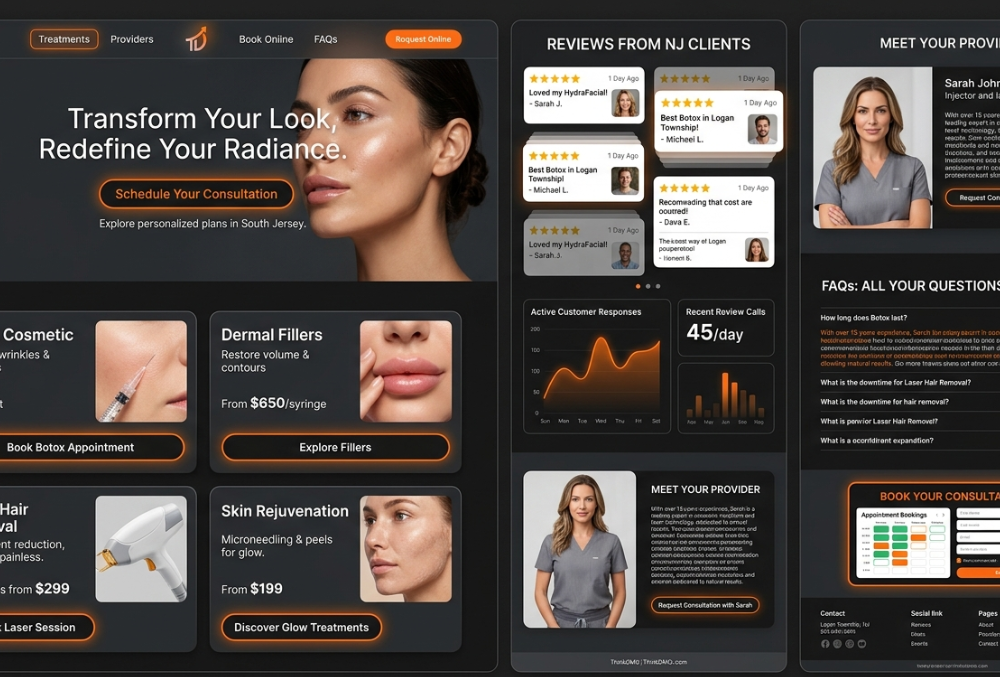
Med spa websites often look attractive but fail at conversion. They use polished imagery, but the visitor still has to hunt for pricing context, appointment options, treatment details, or a consultation button.
A stronger website guides the visitor naturally:
- Choose a treatment or concern.
- Understand what the service does and who it is for.
- See proof and provider credibility.
- Know what to expect during the consultation.
- Book or request an appointment without friction.
If the site looks beautiful but does not help people take action, it is not doing its job. A good web design plan should combine brand polish with clear conversion paths.
Social Media Should Support Search, Not Replace It
Social media is important for med spas because treatments are visual and trust builds through familiarity. But social content should not be treated as a replacement for search. Many high-intent clients still go to Google when they are ready to compare local providers or book a consultation.
The best med spa marketing plans connect both channels. Social content creates familiarity and proof. Search captures demand when the prospect starts looking for a provider. The website converts that attention into appointments.
A strong social media marketing plan for a med spa should also feed the content strategy: common questions from comments, consultations, and DMs can become website FAQs, blog posts, reels, and email topics.
Reputation Is a Growth Channel
Reviews are not just a credibility badge. They are part of local search performance and one of the strongest conversion signals for med spas. A prospective client wants to know whether other people felt safe, listened to, and happy with their result.
The review strategy should be consistent and ethical. Ask happy clients at the right moment, make the process easy, respond professionally, and look for recurring themes that can improve the client experience. If reviews repeatedly mention that consultations feel rushed or booking is confusing, that is not just a reputation issue. It is an operations issue affecting growth.
Content Should Educate Without Overpromising
Med spa content performs best when it gives prospective clients practical clarity. People want to know what a treatment does, whether it fits their goals, how to prepare, what questions to ask, and when to book maintenance.
Helpful content topics include:
- Botox vs filler: how to understand the difference.
- What to ask during a med spa consultation.
- How to prepare for laser hair removal.
- How often to schedule maintenance treatments.
- What makes a cosmetic provider trustworthy.
- Why treatment plans should be personalized.
This kind of content marketing helps the clinic earn trust before the prospect ever contacts the office.
Paid Campaigns Can Accelerate the Right Offers
Organic visibility is valuable, but many med spas also use paid campaigns to promote consultations, seasonal treatments, events, memberships, or high-margin services. Paid campaigns work best when they send traffic to a focused page, not a generic homepage.
For example, a campaign for laser hair removal should lead to a page about laser hair removal, with service details, consultation information, trust signals, and a clear booking option. Sending that visitor to a general service menu creates unnecessary friction.
Used carefully, PPC advertising can help test offers, identify the strongest treatments, and create faster appointment volume while SEO builds longer-term visibility.
FAQ: Med Spa Marketing
What is the best marketing strategy for a med spa?
The strongest strategy combines local SEO, treatment-specific pages, social proof, review generation, visual content, paid campaigns when appropriate, and a website that makes booking simple.
Should a med spa focus on Instagram or Google?
Both matter. Instagram helps build familiarity and visual trust, while Google captures people actively searching for a provider or treatment. The best results usually come from connecting the two instead of choosing one.
How can a med spa get more consultations?
Improve treatment pages, strengthen reviews, show provider credibility, make booking easier, publish educational content, and use targeted campaigns for high-value services or seasonal demand.
Med Spa Marketing Should Build Confidence Before the Consultation
The best med spa marketing does not pressure people into booking. It helps them feel informed, safe, and ready to take the next step. That requires visibility, proof, clarity, and a booking path that respects the client’s decision process.
Digital Marketing Group helps service businesses turn attention into qualified leads and appointments. If your med spa or cosmetic clinic wants a clearer path from search visibility to booked consultations, contact ThinkDMG to review your current marketing foundation.
