Categories
Content Marketing Digital Marketing for Small Business Digital Marketing Trends Marketing Online Advertising SEO

Auto Dealer Marketing Costs in NJ: What to Expect in 2025

It’s one of the most frustrating questions for any NJ dealership owner: Are we spending the right amount on marketing, or wasting it?

You’ve probably heard everything from $500 to $5,000/month. Some agencies quote flat rates, others promise “unlimited traffic” at a discount. And you’re left wondering, What does effective digital marketing cost for an auto dealer in New Jersey?

This isn’t just about budget—it’s about clarity. What you spend should reflect what you get in leads, inventory turnover, and predictable revenue. In this guide, we break down real-world costs, key decision points, and how to build a high-ROI strategy that fits your dealership.

📌 Quick Summary

Wondering what your NJ dealership should really be spending on digital marketing in 2025? This guide breaks down realistic costs, ROI-driven strategy, and how to stretch your budget without sacrificing results.

  • 📊 Real 2025 pricing ranges for SEO, Ads & more
  • 🚦 Smart budgeting methods used by top dealers
  • 💡 What’s costing you more than you realize

📍 Why Marketing Costs Vary So Much for NJ Dealerships

🧩 It’s Not One-Size-Fits-All

From a single-location used car lot in Vineland to a multi-franchise dealer in Camden, every NJ dealership has a unique market reality. Your size, inventory, region, and growth goals all impact your budget.

Key variables include:

  • Metro competition: Dealers in Cherry Hill or Edison face higher CPCs.

  • Inventory volume: More listings = more optimization.

  • Digital maturity: First-time marketers pay more to ramp up.

🔄 Strategy Mix = Cost Variation

An aggressive paid ads approach may cost more upfront but deliver immediate leads. SEO is more cost-effective long-term but requires commitment. Most high-growth dealers use a hybrid model of:

  • SEO content and local optimization

  • Google Ads and Local Services Ads (LSA)

  • Social media + retargeting

  • Website optimization and lead tracking

💰 Breakdown: Typical Auto Dealer Marketing Costs (2025 NJ Benchmarks)

Service Type Monthly Range (USD) Notes
SEO $1,500 – $4,000 Includes local SEO, content, GMB, schema
Google Ads/LSA $500 – $3,500+ Based on impressions, inventory push, seasonality
Content & Social $500 – $2,000 Blog creation, social media, reviews
Website UX/Tracking $500 – $1,500 CRO, landing pages, lead tracking

👉 Dealers with a blended strategy (SEO + Paid + CRO) typically spend $2,500–$6,000/month for measurable growth in traffic and leads.


🛑 The Hidden Cost of Doing Nothing (or Doing It Wrong)

🚫 Lost Leads from Low Visibility

If your Google Business Profile isn’t optimized or you’re invisible on local search, you miss ready-to-buy customers searching “used car dealers near me.” That’s hundreds—sometimes thousands—of potential leads lost monthly.

💸 Ad Waste from Bad Setup

Running Google Ads without tight geo-targeting, ad extensions, and landing page relevance? Expect to burn $500–$1,000/month on clicks that don’t convert.

🔍 A recent NJ dealership recovered 47% of wasted ad spend just by tightening their keyword strategy and aligning ads with high-converting pages.


📣 Want a Smarter Budget?

See exactly where your dealership can cut waste and grow leads—with a personalized budget strategy that works.

🚀 Book My Free Strategy Call

🧠 How to Build a Smart, ROI-Focused Marketing Budget

1. Start With Your Funnel Goals

Ask:

  • How many test drives or appointments do I want per month?

  • What’s my average deal size?

  • How many leads do I need to hit that?

2. Budget Backwards From ROI

If one new customer is worth $2,500 and your close rate is 15%, your cost per lead target should be under $375. Your spend should match the return.

3. Balance Short and Long Term

  • Short-term: Paid search to drive immediate showroom traffic.

  • Long-term: SEO content that ranks and compounds over time.


What Smart NJ Dealers Spend (and Get)

Dealership Type Monthly Spend (2025 Avg) Result Expectation
Independent Used Lot $1,500 – $3,000 Local SEO + Leads
Mid-size Franchises $3,000 – $5,000 SEO + PPC + Reviews
Multi-location Groups $5,000 – $10,000+ Full-funnel + CRM/analytics integration

Conclusion: Your Budget Isn’t the Problem, Your Strategy Might Be

You don’t need the biggest budget. You need a smarter one.

Whether you’re frustrated with rising ad costs, unsure what you’re getting for your SEO spend, or ready to scale, your dealership deserves clear answers and real results.

🚗 Get a transparent, personalized breakdown of what your dealership should be spending—and how to make every dollar work harder.
👉 Book your free budget strategy call now →

❓ Frequently Asked

How much should a dealership in NJ spend monthly on digital marketing?

Most NJ dealers spend between $2,500–$6,000/month depending on size, goals, and services included.

Is SEO or Google Ads more cost-effective in NJ?

SEO provides more compounding ROI over time. Paid ads bring immediate results. A blended approach is best.

What’s the fastest way to reduce lead cost?

Improve landing page conversion, retargeting, and use keyword-focused ad copy. Better targeting = lower CPA.

Categories
Digital Marketing FAQs Digital Marketing for Small Business Digital Marketing Trends SEO SEO Strategies

7 Costly Auto Dealer Marketing Mistakes (And How to Fix Them Fast)

You’re spending thousands on ads, SEO, maybe even video—but leads aren’t growing. It’s maddening. Every month feels like a gamble, and even when your site gets traffic, calls and form fills stay flat.


That’s not a traffic problem. It’s a strategy gap.


Many auto dealers are making the same hidden digital marketing mistakes—and it’s quietly killing their ROI. If you’re wondering why your dealership’s online presence isn’t converting into real buyers, these overlooked errors may be to blame.


Let’s get you unstuck.


🚗 Quick Summary

Struggling to get leads from your dealership’s digital marketing? Many dealers unknowingly make key mistakes that sabotage their results. This guide reveals the 7 most common auto dealer marketing mistakes—and how to fix each one with smart, proven strategies.

  • 📍 Local SEO flaws that kill foot traffic
  • ❌ Brochure-style websites that don’t convert
  • 💸 Over-reliance on paid ads without ROI
  • 🚦 Missing offers, poor CTAs, and more

Mistake #1: Ignoring Local SEO Basics That Drive Foot Traffic

Why Local Optimization Is Non-Negotiable

Over 78% of mobile searches for local businesses lead to a purchase within 24 hours. If your dealership isn’t optimized for proximity, service areas, and intent-driven keywords like “best used car dealership near me,” you’re missing ready-to-buy customers.

Quick Fixes:

  • Claim and optimize your Google Business Profile

  • Add schema markup for vehicle inventory and location

  • Use consistent NAP (Name, Address, Phone) across the web

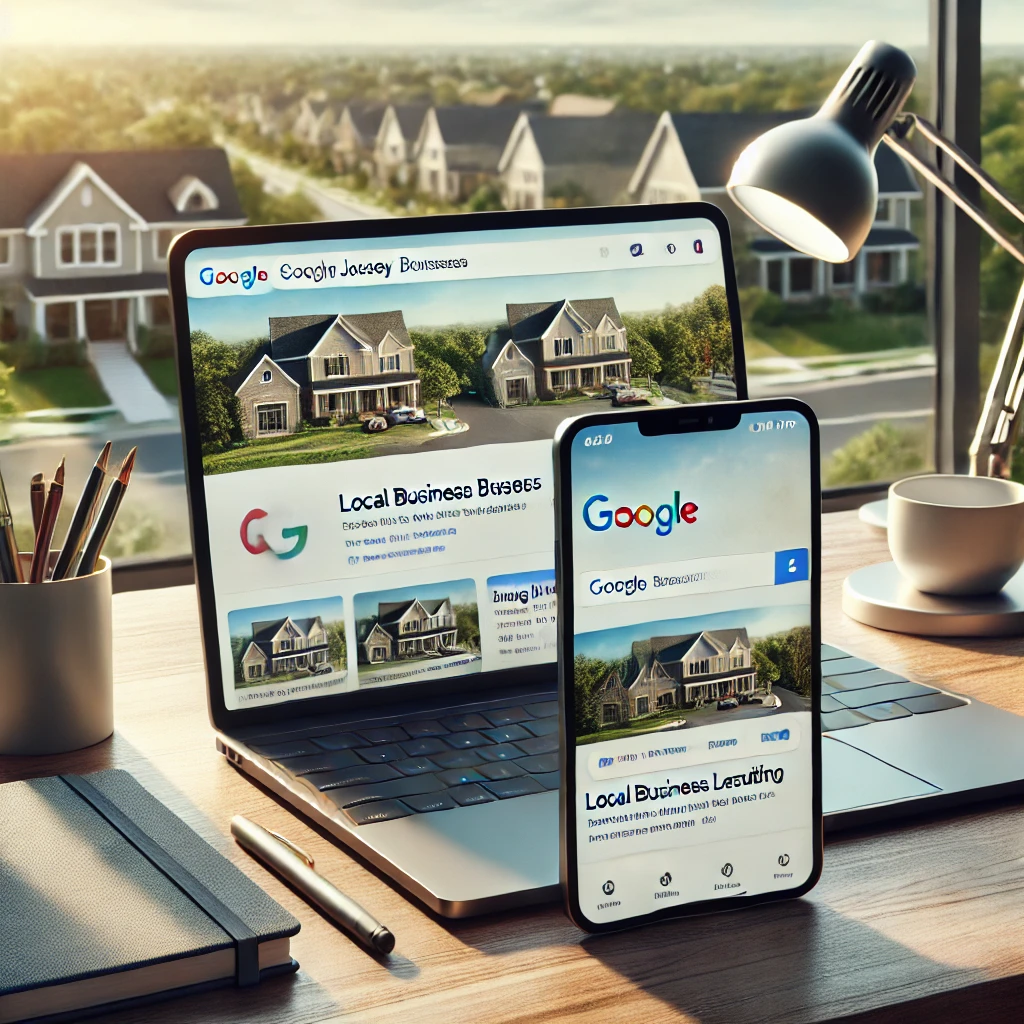
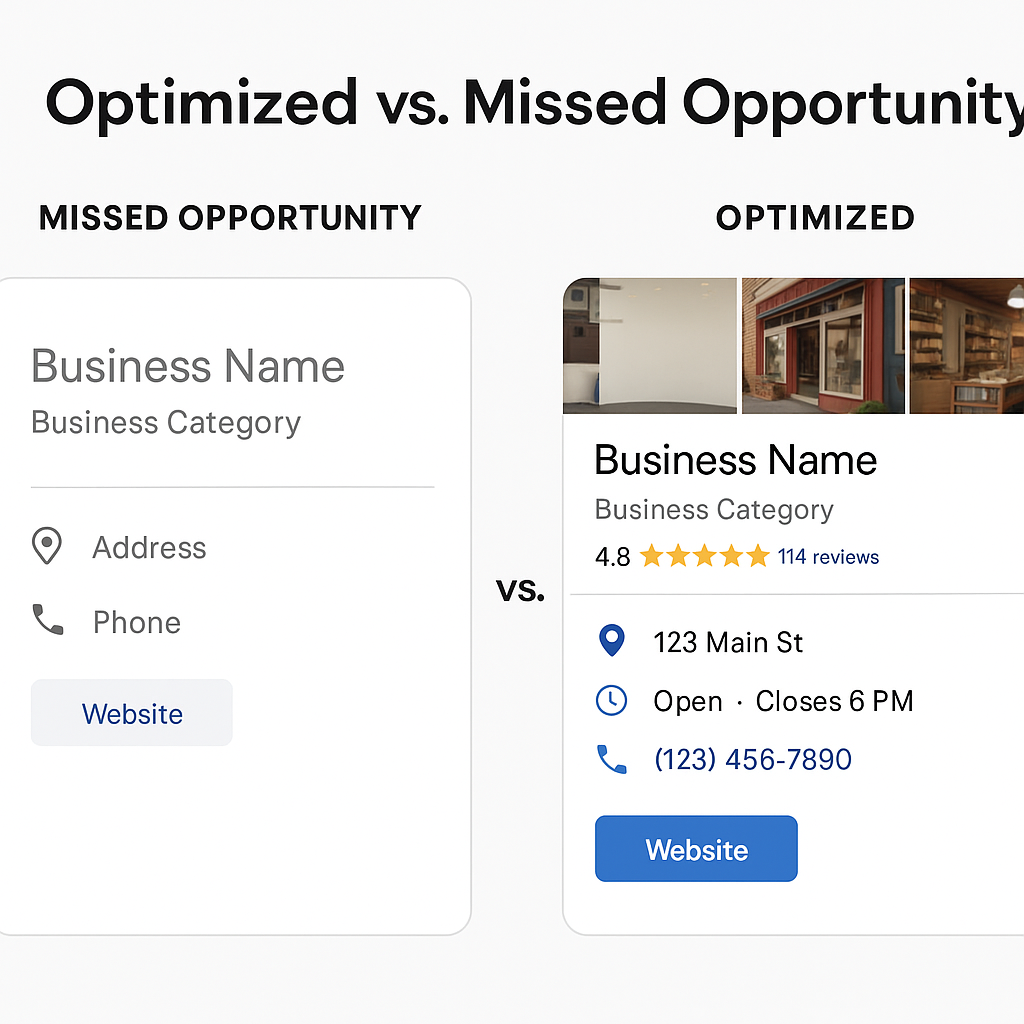
Side-by-side comparison of optimized vs. incomplete Google Business listings

Mistake #2: Treating Your Website Like a Brochure

Brochures Don’t Convert. Funnels Do.

Most dealership websites are too static—no real offers, no clear paths to contact, no urgency.

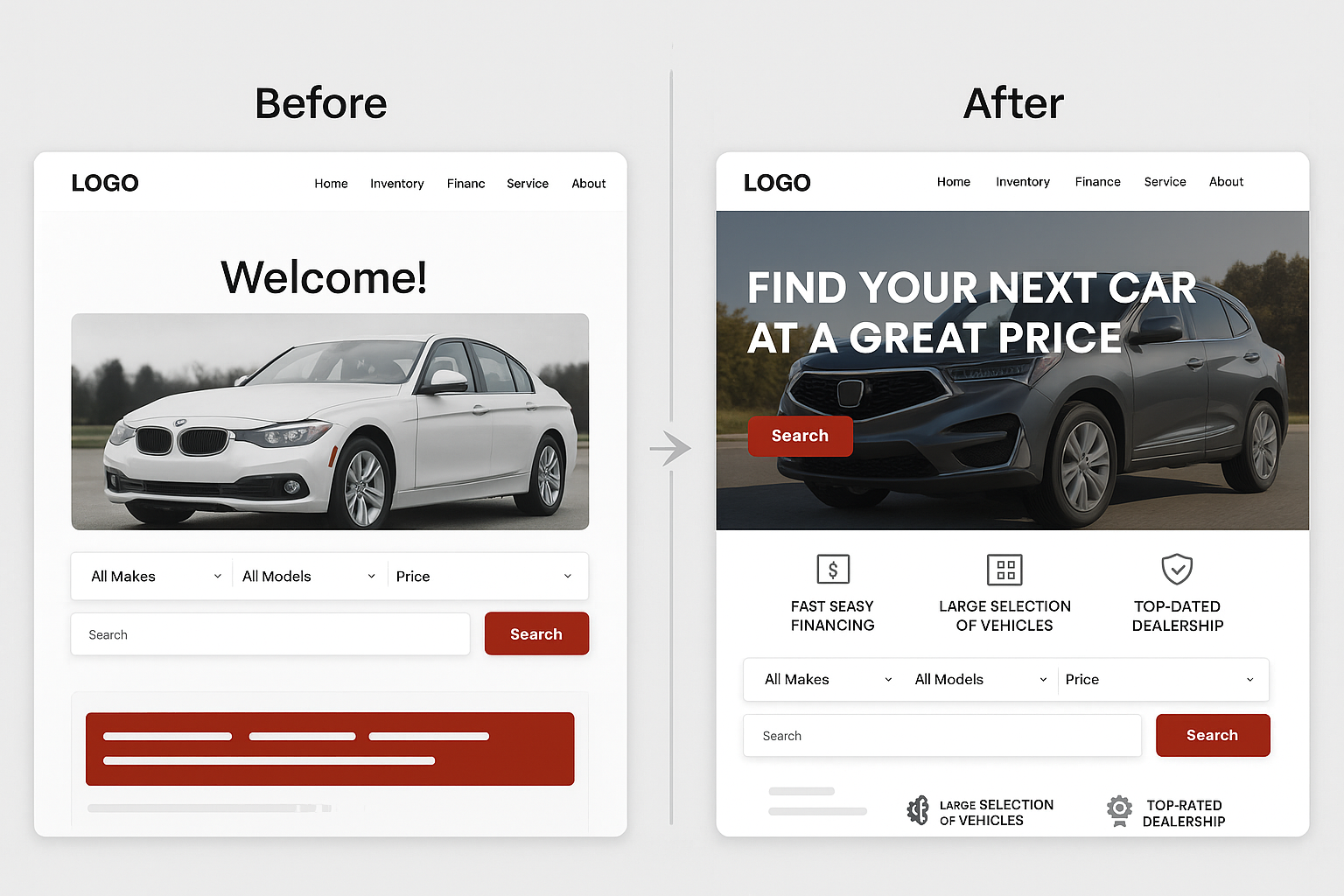
If your homepage says, “Welcome to XYZ Motors,” instead of solving a buyer’s problem in seconds, you’re likely losing 40–60% of potential leads.

Upgrade Your Site:

  • Use headlines that solve problems (“Worried About Bad Credit? We’ll Approve You Today”)

  • Add social proof: reviews, logos, stats

  • Include trust triggers: warranties, guarantees, real-time support

“Get pre-approved in minutes—book your consultation today.”

before/after homepage layout

📣 Ready to Stop Guessing and Start Growing?

Your dealership deserves a strategy that actually works. Book your free digital marketing audit today and see exactly what’s holding you back.

🚀 Get My Free Audit

Mistake #3: Relying Too Heavily on Facebook or Google Ads Alone

Paid Media Alone Won’t Build Loyalty

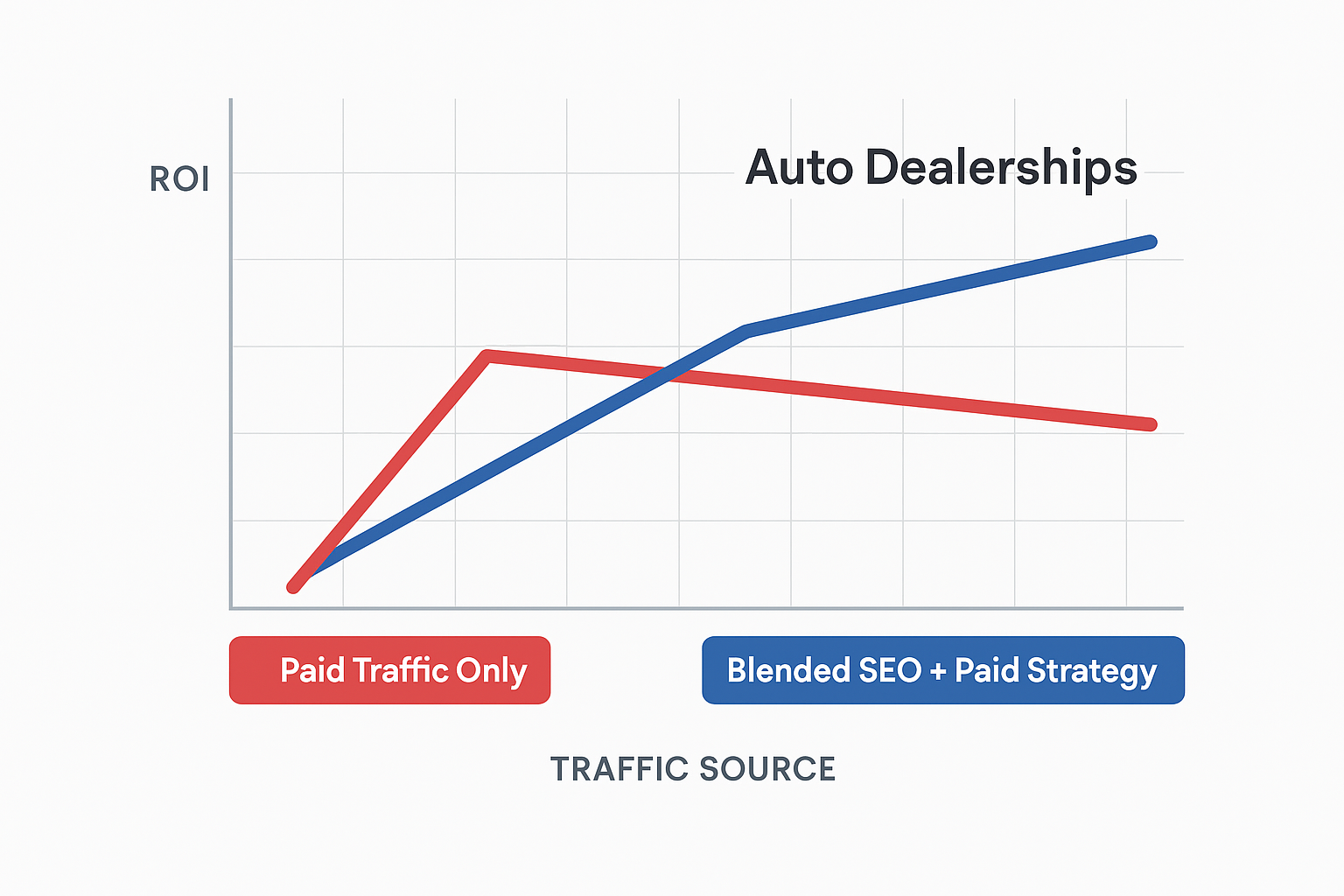
Dealers often rely on paid traffic but ignore organic visibility. That makes you dependent on ever-increasing ad budgets—and vulnerable to algorithm changes.

Balanced Approach:

  • Run high-converting PPC campaigns (yes)

  • Simultaneously build organic visibility with SEO

  • Use remarketing to pull buyers back to inventory pages

Paid vs. blended traffic ROI graph

Mistake #4: No Clear Offers or Pricing—Just “Contact Us”

Buyers Want Clarity, Not Mystery

Alex Hormozi said it best: “Confused people don’t buy.” If your website hides pricing or lacks clear calls to action, it creates friction and mistrust.

How to Fix It:

  • Add a headline offer (e.g., “Drive Today for $99/Month – No Credit Check”)

  • Use visible CTAs: “Check inventory,” “Schedule a test drive”

  • Stack value: warranty + support + ease = irresistible

Hormozi-style offer stack image

Mistake #5: Underusing Reviews, Retargeting & Social Proof

Most Shoppers Read 10+ Reviews Before Contacting You

If your reviews aren’t displayed prominently—or you’re not retargeting warm traffic—you’re burning opportunity.

Action Plan:

  • Embed Google review widget on key pages

  • Launch retargeting ads featuring testimonials

  • Incentivize customers to leave reviews post-sale

“Speak with an auto marketing expert about your reputation plan—get a quote today.”


Mistake #6: Using Agencies Without Automotive Experience

Generic = Expensive & Ineffective

A marketing agency that doesn’t specialize in dealerships won’t know how to position offers, write vehicle-specific ad copy, or navigate compliance.

What to Ask Before You Hire:

  • Do they have dealer-specific case studies?

  • Can they show ROI from previous PPC/SEO campaigns?

  • Do they understand automotive lead follow-up cycles?

“Hire an automotive digital marketing expert who’s done it before—start your plan now.”


Mistake #7: Not Tracking What’s Actually Working

“More Clicks” Isn’t a Strategy

Dealers often get weekly marketing reports filled with fluff: impressions, clicks, bounce rate—but nothing that ties directly to leads or car sales.

What to Track Instead:

  • Cost per lead by source

  • Appointment bookings per 100 visits

  • Pages that generate the most form fills

Use tools like GA4, Semrush, and Clarity to visualize where buyers drop off—and fix it fast.


Your dealership is likely wasting thousands each month due to invisible marketing mistakes—and it’s not your fault. This powerful PDF companion to our top-performing guide reveals the most common traps auto dealers fall into with digital marketing, and exactly how to course-correct.

Inside this guide, you’ll get:

  • 🚦 7 mistakes that quietly kill leads and sales

  • ✅ Clear, actionable fixes for each one

  • 📊 Real numbers on what these mistakes are costing you

  • 🎯 Strategic insight into how top-performing dealerships scale

If you run or manage a dealership and want to stop guessing and start converting, download this free guide and see what your marketing might be missing.

Whats Costing Auto Dealers Thousands in Lost Leads And How to Fix It Today

🔚 Conclusion

Your digital marketing shouldn’t feel like roulette.

By avoiding these common mistakes, you can go from spending blindly to growing strategically—with campaigns that drive real leads, not just traffic.

Don’t settle for “we’ll see what works.” You deserve clarity, results, and a team who knows auto marketing inside out.

🚗 Benefit-Driven CTA:
Get a personalized audit of your dealership’s digital strategy →

❓ Frequently Asked Questions

How much should a car dealership spend on digital marketing?

Most dealerships spend 5–10% of their monthly revenue on marketing. For high-ROI strategies, it’s common to allocate $2,000–$6,000/month on a blend of SEO, paid ads, and content.

What’s the fastest way to improve my dealership’s online visibility?

Start with local SEO. Fully optimize your Google Business Profile, get listed in relevant directories, and publish region-specific content that answers local search intent.

Is SEO better than paid ads for dealerships?

Both have value. Paid ads drive instant traffic, but SEO builds long-term lead flow. Smart dealers use both, balancing short-term wins with sustainable growth.

Categories
Content Marketing Digital Marketing FAQs Digital Marketing for Small Business Marketing SEO

How Small Changes in Your Marketing Can Lead to Big Business Growth

Introduction: Growth Isn’t Always About Going Bigger

When business owners feel stuck, they often assume the solution is something massive: a total rebrand, a $10,000 ad campaign, or a brand-new website.

But what if the breakthrough isn’t a huge move?

What if it’s a small change?

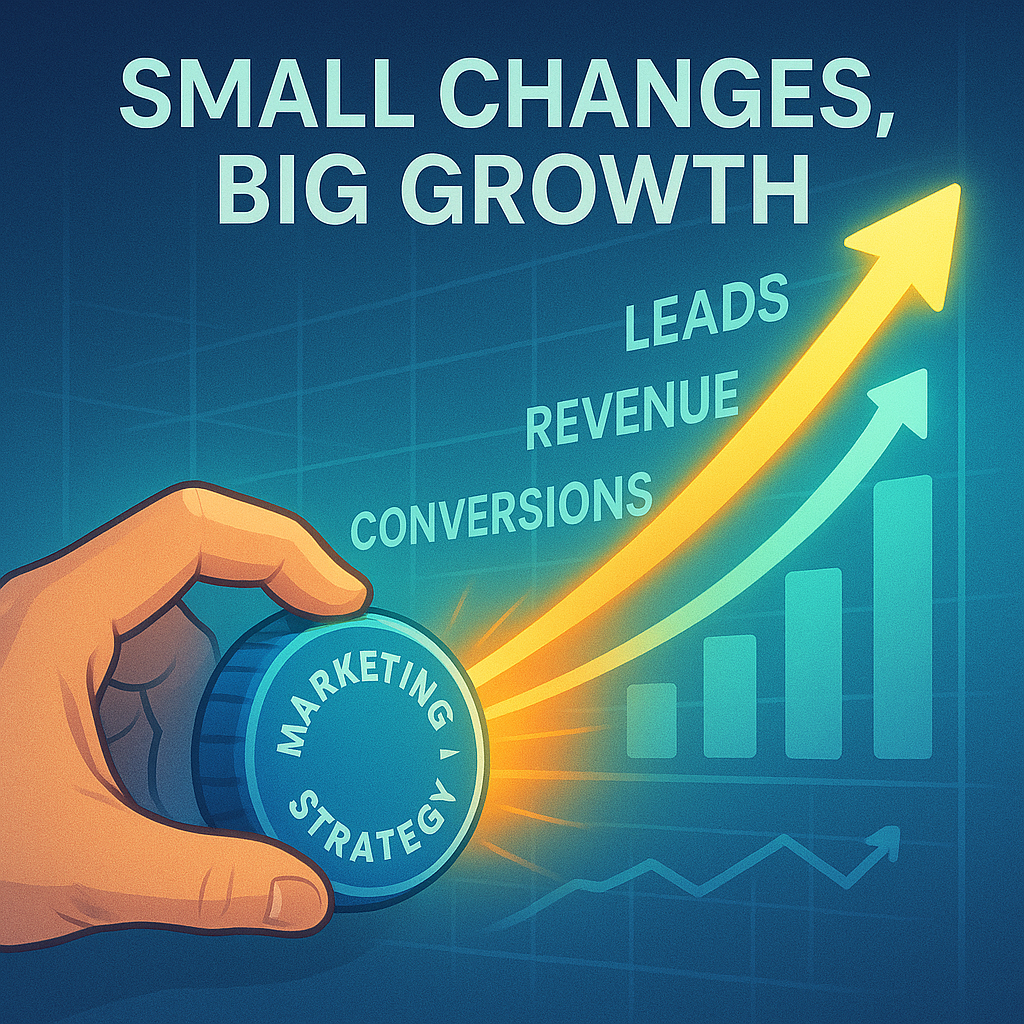
At ThinkDMG, we’ve worked with service-based businesses across med spas, home services, law firms, and local retailers—and we’ve seen this time and again: a handful of small, strategic marketing tweaks can unlock compounding growth. Think of it like a pressure valve. Tiny turns make a big difference.

In this article, we’ll walk you through the exact kinds of small changes that generate big ROI—based on real patterns from frustrated small business owners who eventually got results.

Turn Your Expertise Into Organic Traffic

Our Content Marketing Program Is Built to Rank and Convert

Publishing content without a keyword strategy is just writing. Our NJ content marketing program starts with deep keyword research and topic cluster architecture — then produces pillar pages, blog content, and service page copy engineered to rank for the searches your South Jersey buyers are actually making before they hire someone.

Explore Our Content Marketing Services →

Why Small Tweaks Lead to Major Results

It’s not a gimmick. It’s psychology and performance marketing at work.

When your offer becomes clearer, more people say yes.
When your site loads faster, fewer people leave.
When you follow up in minutes instead of days, your leads convert more often.

These aren’t theories. They’re the kind of marketing improvements that take a few hours to implement—but create a lasting impact on your bottom line.

Let’s look at seven examples of small marketing changes that deliver big results for real businesses.

Speed Up Your Website and Watch Your Bounce Rate Drop

1. Speed Up Your Website and Watch Your Bounce Rate Drop

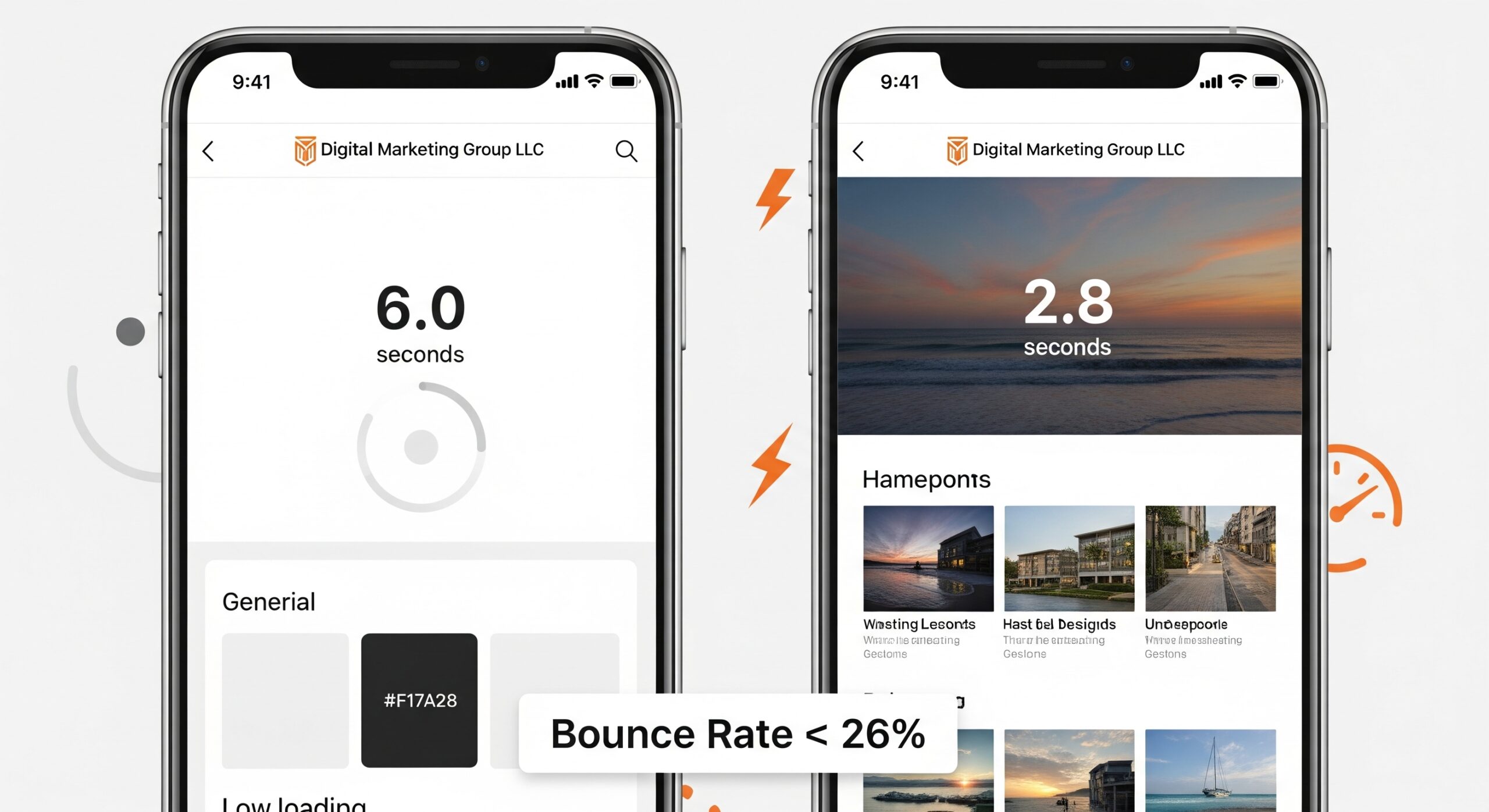
One South Jersey plumbing business we worked with saw a 26% drop in bounce rate after reducing their homepage load time from 6 seconds to 2.8.

Why it worked: Faster pages get higher engagement, better SEO rankings, and better ad quality scores.

Try this:

  • Run a site audit with Google PageSpeed Insights

  • Compress images using TinyPNG

  • Use caching tools and switch to a faster host if needed

💡 Pro tip: If your local business website hasn’t been optimized in the last 12 months, this is the easiest way to improve your lead conversion rate without touching your copy or ads.

2. Replace “Contact Us” With a Real Offer

“Contact us” is a dead CTA. Your site visitors aren’t looking to “contact” anyone—they want a solution.

For example, we helped a med spa go from 5 to 21 consultation requests per week just by changing their call-to-action to:

“Claim Your Free Skin Assessment—Book in 15 Seconds”

Why it works:

  • It tells them what they’ll get

  • It sounds fast and risk-free

  • It speaks to the outcome (not the task)

These kinds of conversion optimization changes directly influence how many qualified leads you’re bringing in from your paid media and organic traffic.

Add Social Proof Where It Actually Matters

3. Add Social Proof Where It Actually Matters

Trust doesn’t live in your footer. It lives in the first 5 seconds of the customer’s scroll.

Adding high-credibility trust signals above the fold—like client logos, review stars, or “As Seen On” badges—can lift conversions significantly. For one local HVAC company, we added three review snippets to their service page. Result? A 41% increase in quote requests in 30 days.

💡 Want faster results from Google Ads? Trust elements lower perceived risk, which boosts your Quality Score—reducing cost per click and improving pay-per-click ROI.

4. Clarify Your Offer: Sell the Result, Not the Process

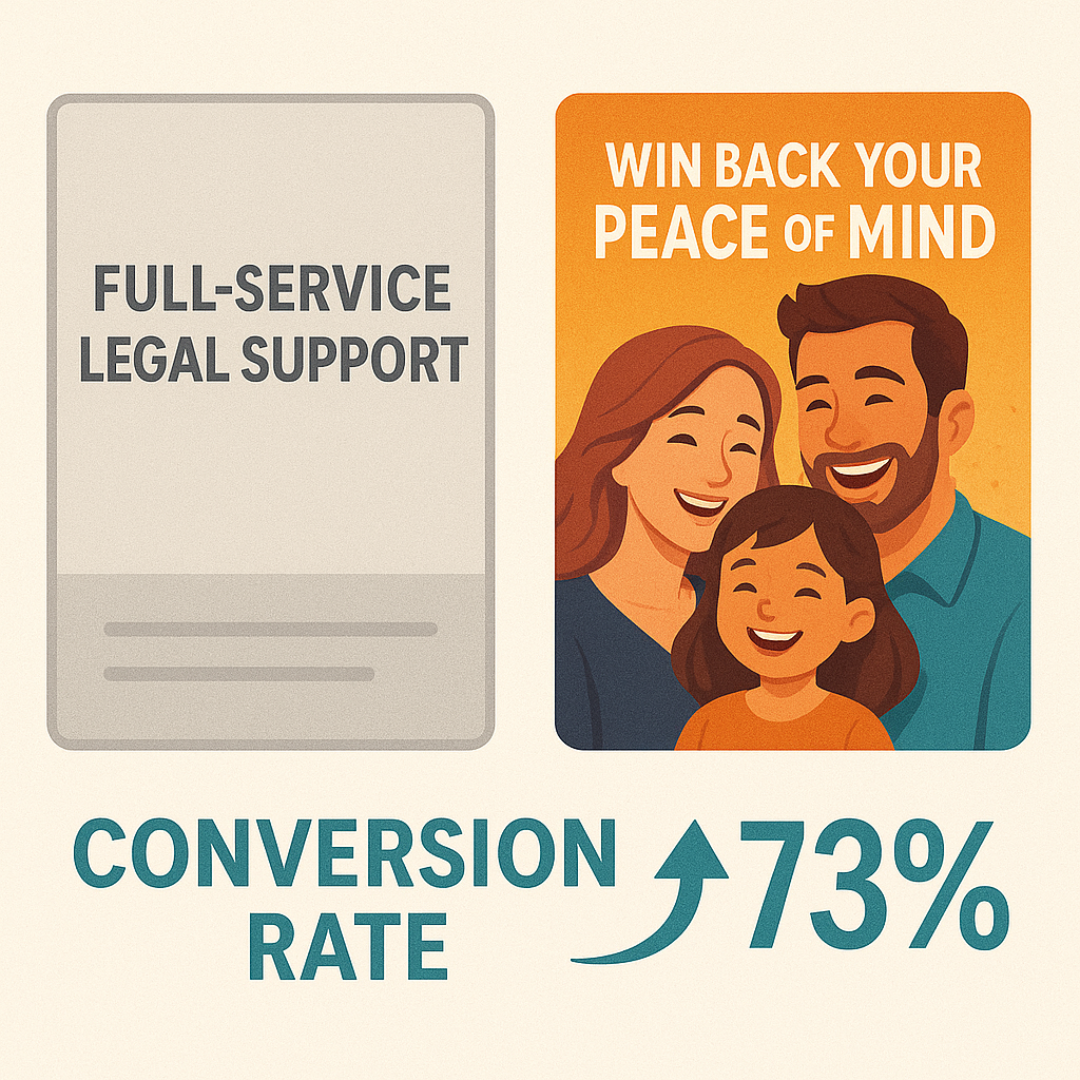
Let’s say you’re an attorney. Do your ads say:

“Full-service legal support for families in New Jersey”?

Or do they say:

“Win back your peace of mind—our South Jersey firm helps you resolve family legal matters fast, without endless paperwork.”

We worked with a local law firm to reposition their offer and rewrite their hero message. The result? Their conversion rate from Google Ads jumped 73%.

Transactional copywriting—language focused on the outcome, not the service—drives better ROI across email, paid search, landing pages, and even cold outreach.

Clarify Your Offer: Sell the Result, Not the Process

5. Follow Up With Leads in Under 5 Minutes

The speed-to-lead window is very real.

One client (a med spa) was responding to form leads within 6–12 hours. We implemented an automated follow-up system via SMS and email using HighLevel. Now they respond in under 3 minutes—even during lunch breaks.

The change?

  • 8x increase in booked consultations

  • Fewer no-shows

  • A better experience for the client

This is a perfect example of marketing automation for SMBs that pays off immediately.

6. Add One Clear ROI Tracking Layer

Many small business owners tell us, “I’m spending $3K/month on marketing… but I don’t know what’s working.”

Here’s the fix:

  • Use CallRail or WhatConverts to track calls and form fills

  • Connect that data to ad campaigns and Google Analytics

  • Review lead quality weekly—not just clicks

This helps you shift spend from “activities” to actual outcomes. We call this revenue-focused marketing—and it’s the #1 thing that separates high-performing businesses from guesswork-driven ones.

7. Update Your Google Business Profile Description With Keywords

It takes 15 minutes. But it’s wildly underutilized.

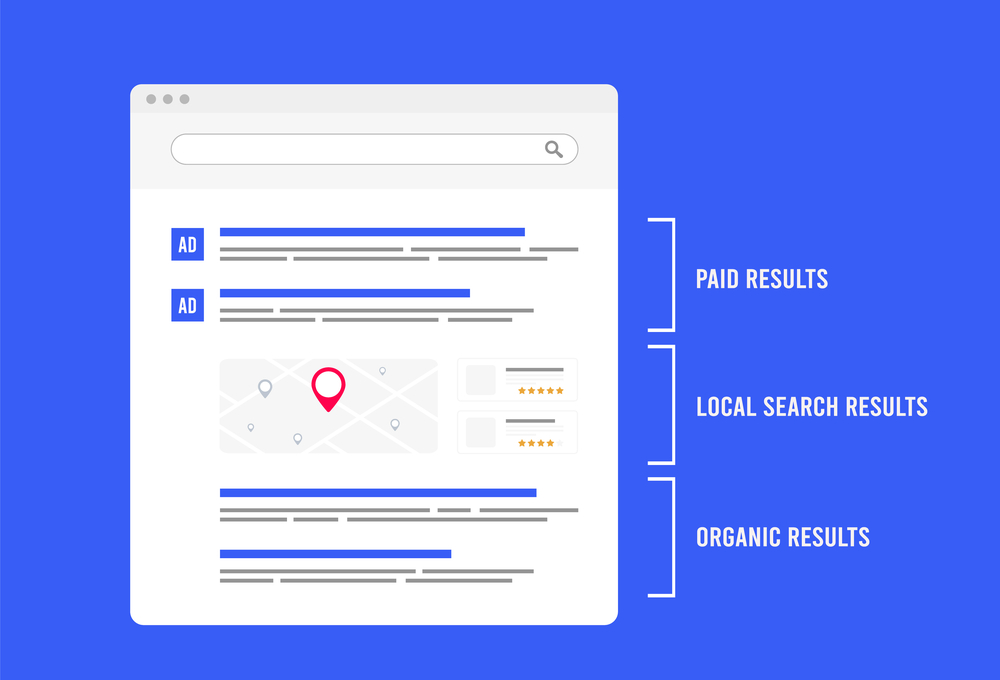
Your Google Business Profile (GBP) often shows up before your website. A strategic rewrite can improve visibility in map packs for key local searches like:

  • “med spa near me”

  • “roof repair Marlton NJ”

  • “family lawyer Cherry Hill”

Adding 3–5 location-based and service-specific keywords, plus a CTA like “Book a free consult,” increases both impressions and calls from Google Maps—without spending a dime.

These Changes Aren’t Fancy. They’re Effective.

Each of these small tweaks has helped real businesses generate better traffic, more qualified leads, and ultimately, more revenue—without spending more money.

No rebrand.
No massive budget.
No trendy new funnel.

Just simple, strategic shifts based on what customers want and how they behave online.

Want to See What Changes Will Help Your Business?

We created a free “Small Fixes, Big Wins” checklist with our top 10 conversion-focused marketing improvements any SMB can make this month.

Download the checklist now →

Ready for Real Growth? Let’s Find Your Quickest Win.

ThinkDMG helps small and mid-sized businesses across New Jersey and the U.S. optimize what they already have—so they stop wasting time, money, and opportunities.

📞 Book your free 15-min marketing clarity call

Categories
Content Marketing Conversion Optimization Digital Marketing FAQs Digital Marketing for Small Business SEO SEO Strategies

Why Med Spa Marketing Feels Broken—And What to Do Before You Waste Another Dollar

Introduction: You Didn’t Open a Med Spa to Spend Nights Fixing Facebook Ads

You opened your med spa to transform lives—boosting confidence, delivering beauty and wellness, and helping your clients feel amazing. But instead of focusing on treatments and growth, you’re caught up in…

  • Unqualified leads ghosting your staff

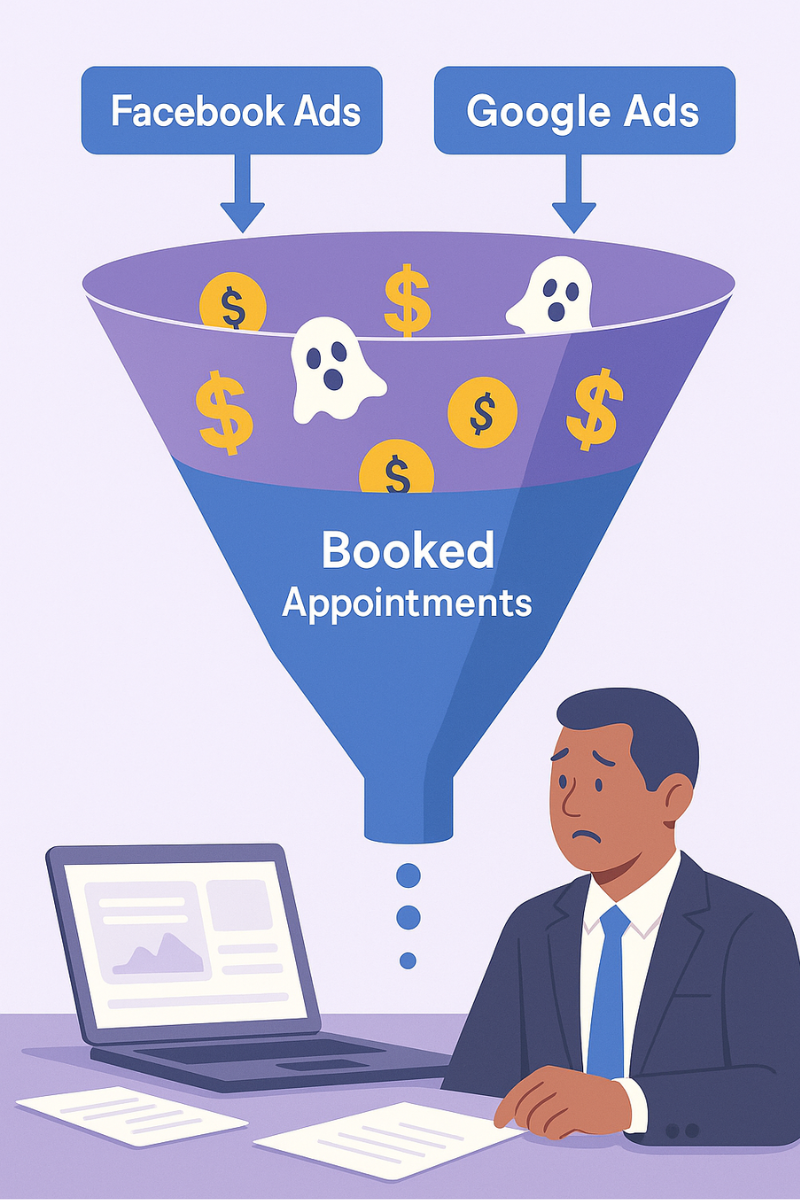
  • A monthly $2,000 ad bill with no appointments

  • Pretty marketing reports that don’t drive revenue

  • Late nights trying to DIY Instagram posts that get buried

Sound familiar?

If your marketing feels more like a money pit than a patient pipeline, you’re not alone. We’ve studied hundreds of conversations from med spa owners on Reddit, Quora, and in strategy calls—and identified the 6 most painful marketing problems killing your ROI.

This article will walk you through:

  • What’s really wrong (with proof from your peers)

  • What it’s costing your business

  • How to fix it—without wasting another dollar

You’ll also get access to our free Med Spa Pain Point Dashboard, packed with real quotes, emotional triggers, and lead value scores to help you make smarter decisions starting today.

1. The Lead Conversion Paradox

“We’re running $2k/month in Facebook ads and still can’t get people to book.” – Reddit, r/MedSpa

You’ve got leads. But they’re not booking. Why?

  • They’re low quality

  • You follow up too late

  • They’re browsing, not buying

You’re not alone—this is the most common pain point for growing med spas. A disconnected booking system or slow response time can tank your ROI—even if your ads are getting clicks.

Fix It:

  • Use an automated follow-up system (email + text) that responds within 5 minutes

  • Score and tag leads by service interest

  • Use pre-screening questions in your forms to filter out time-wasters

The Lead Conversion Paradox


2. The “Pretty Report” Agency Nightmare

“My agency keeps sending reports with traffic graphs, but I don’t see new clients.” – Reddit
“I feel like I’m paying for smoke and mirrors.” – Quora

It’s not about impressions. It’s about booked appointments.

The #1 complaint about agencies in our research? Lack of transparency. You get charts and reports, but no clarity.

Warning Signs:

  • You don’t own your ad accounts

  • Your agency doesn’t talk about ROI

  • You can’t connect dollars spent to actual patients

Fix It:

  • Demand access to everything: your Google Ads, Meta Ads, and analytics

  • Ask for monthly reporting that shows revenue per campaign

  • Partner with an agency that specializes in patient acquisition, not just traffic

3. The Advertising Money Pit

“$4,000/month for ‘brand awareness’—can’t pay rent with impressions.” – Reddit

Your ads may be beautiful, but beauty alone doesn’t book.

We’ve seen med spas spending thousands monthly on campaigns that drive likes, not leads—and can’t be tracked back to a single client.

Fix It:

  • Run conversion-based ads with click-to-book CTAs

  • Add call tracking and booking conversion tracking

  • Segment by high-value services (e.g., CoolSculpting, filler, laser) instead of boosting every post

4. Content Strategy Confusion

“Do before-and-afters even work anymore, or is it just clutter?” – Quora

Posting randomly won’t get you clients. But over-posting without strategy is just as bad.

The new challenge: Organic reach is down, engagement is low, and everyone’s feed looks the same.

Fix It:

5. The Time Trap

“I’m spending hours every night on marketing that doesn’t work.” – Med Spa Owner

You’re a provider, not a full-time marketer. But you’ve become:

  • The content creator

  • The campaign manager

  • The community responder

That’s a fast track to burnout.

Fix It:

  • Use templates and scheduling tools (e.g., Canva + Later)

  • Delegate strategy to a partner who gets aesthetics

  • Automate your lead flow so you can focus on delivering results, not chasing clients

Daily timeline graphic showing provider vs. marketer role conflict

6. The ROI Mystery

“I feel like I’m throwing money into a black hole and hoping patients come out.” – Med Spa Owner

According to the PDF:

  • 67% of owners don’t know which channels drive actual bookings

  • $3.2K/month is wasted on low-performing campaigns

  • 85% can’t tie their marketing to revenue

That’s not just inefficient—it’s unsustainable.

Fix It:

  • Use a dashboard that connects marketing spend to booked services

  • Track cost per lead, conversion rate, and revenue per channel

  • Adjust campaigns weekly based on appointments, not clicks

Download the Free Med Spa Marketing Pain Point Dashboard

Want to visualize all this in one powerful, sharable format?

We’ve packaged these insights into a PDF dashboard that includes:

  • Real Reddit and Quora quotes

  • Emotional pain level scoring

  • Deal value potential

  • Strategy gaps—and how to close them


Download the Med Spa Pain Point Dashboard Now →

Conclusion: Your Marketing Should Bring You Clients—Not Headaches

You didn’t build your med spa to stress over analytics, chase no-show leads, or decode marketing jargon. You built it to deliver transformation.

ThinkDMG helps you get back to that.

With proven systems, clear ROI reporting, and a team that understands aesthetics—we help med spa owners like you increase bookings by 40% in 90 days.

📞 Book a 15-Min Growth Strategy Call

Categories
Digital Marketing FAQs Digital Marketing for Small Business Digital Marketing Trends SEO

Law Firms Deserve Better: Why So Many Get Burned by Marketing Agencies (And How to Take Back Control)

Introduction: “We Signed a Contract—and Then They Vanished.”

If you’re a managing partner, solo practitioner, or marketing director at a law firm, chances are you’ve worked with a digital marketing agency at some point—and chances are, you’ve also been let down.

The promises sound great: new clients, better SEO, sleek design, full-service support. But what you often get is:

  • A clunky, outdated website

  • Cookie-cutter content

  • Ghosted after onboarding

  • No clear idea where your ad dollars are going

You’re not imagining things—this is a widespread problem in the legal space. Most marketing agencies aren’t built to support law firms, and it shows in the results.

At ThinkDMG, we’ve studied the digital frustrations of law firms across Reddit, Quora, and real client feedback to build a more transparent, legal-specific solution.

This article breaks down:

  • The top 3 pain points law firms face with agencies

  • How these issues affect growth and reputation

  • The proven framework we created to fix it

  • And how you can download a free, data-backed dashboard to take control of your strategy

Let’s dig in.

The Top 3 Pain Points Law Firms Face With Agencies

1. Unsatisfactory Agency Experiences

“The site they built for us looks like it’s from 2008, and I can’t even update the bios without calling them.”
— Reddit, r/LawFirm

From a design and tech standpoint, most law firm websites are underwhelming. That’s not a design critique—it’s a conversion and credibility issue.

Common problems include:

  • Outdated web design that doesn’t build trust

  • Unusable CMS platforms that require phone calls to update bios or blog posts

  • Generic, AI-like content that doesn’t reflect your expertise or legal niche

Your website is your digital storefront. If it looks like an afterthought, prospective clients will treat your practice like one.

The Top 3 Pain Points Law Firms Face With Agencies 2
The Top 3 Pain Points Law Firms Face With Agencies
❌ Outdated Law Firm Website ✅ Modern Law Firm Website
Last updated: 2013 Updated regularly, mobile-optimized
Old serif fonts and pixelated logo Professional typography and high-res branding
Not mobile-friendly, slow loading Fast, responsive design across devices
Homepage cluttered with dense paragraphs Clear calls-to-action and skimmable sections
No lawyer bios or photos Engaging team bios and client testimonials
Contact form buried or missing Visible, conversion-optimized contact options

2. Strategy Confusion and ROI Blind Spots

“I don’t know if I need SEO, ads, or just a new site. Every agency says something different.”
— Reddit, r/Lawyertalk

Every agency seems to have a different “silver bullet”—some push SEO, others swear by Google Ads, some suggest a site overhaul.

And here’s the problem: no one is showing the strategy or numbers behind the recommendations.

Law firms are left with:

  • Disconnected campaigns

  • Little to no performance data

  • A marketing spend with no measurable return

At ThinkDMG, we call this the strategy swirl—where agencies create confusion instead of clarity.

3. Red Flags & “Digital Hostage” Scenarios

“They held our domain hostage and we had to start from scratch.”
— Reddit, r/LegalMarketing

This one hurts—and it’s more common than you think.

We’ve seen law firms:

  • Locked out of Google Ads accounts they paid to build

  • Lose control of domains and email servers

  • Go months without hearing from their agency contact

These are the kinds of experiences that sour law firms on all marketing—rightfully so.

And they’re why ThinkDMG gives you full ownership of all assets and accounts, from day one.

How ThinkDMG Built a Better Way for Law Firms

We’ve worked with legal clients for over 15 years. That means we understand:

  • The compliance and nuance required in legal content

  • The need for reputation-first design and messaging

  • The high cost of wasted leads or misleading agency tactics

Our approach is based on:

  • 100% Transparency – you own all accounts and access all data

  • Legal-Specific Strategy – content, design, and campaigns tailored for your practice area

  • Results That Actually Show Up – our clients see an average 30% ROI boost in year one

Download the Law Firm Pain Point Dashboard

Download the Law Firm Pain Point Dashboard

Want proof?

We compiled the exact insights in this article into a data-backed PDF you can download and review with your team.

Inside the dashboard:

  • Quotes from real managing partners

  • Pain point breakdowns with emotion and deal value scores

  • A strategic checklist to evaluate your current agency

Click here to get the Law Firm Pain Point Dashboard →


Final CTA: Talk to Someone Who Understands Legal Marketing

Your law firm’s digital presence should build trust, drive leads, and be something you actually control.

We don’t believe in:

👉 If you’re tired of vague promises and ghosted agency calls, schedule a strategy session with ThinkDMG. We’ll review your current setup, identify low-hanging growth opportunities, and show you what clarity feels like.

📞 Contact us here for a no-pressure consultation →

Categories
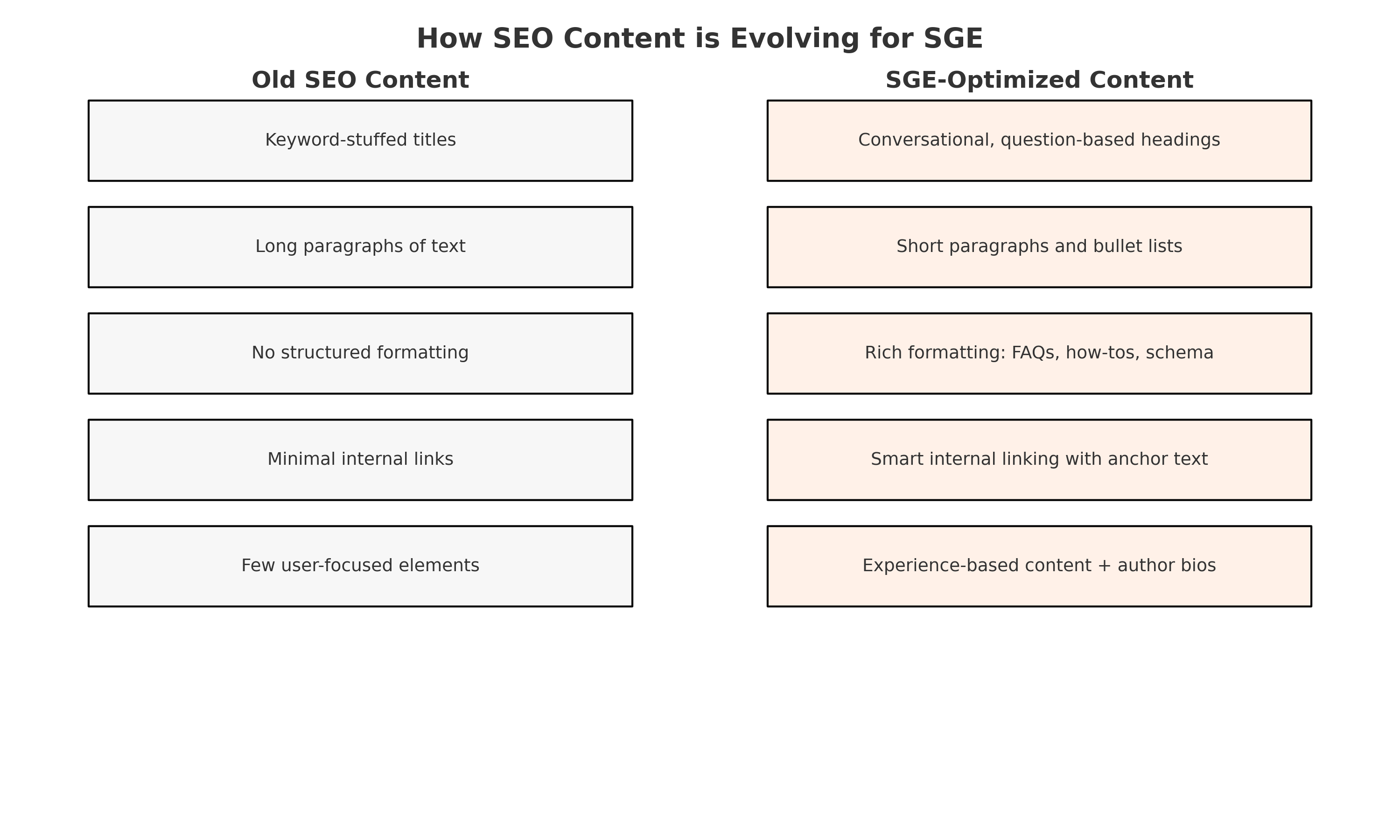
Generative Engine Optimization SEO SEO Strategies User Experience (UX)

Exposed: How ‘Best SEO Agency’ Lists Game Google and LLMs—And What You Can Do Instead

Introduction: The SEO Illusion That’s Costing You Trust (and Traffic)

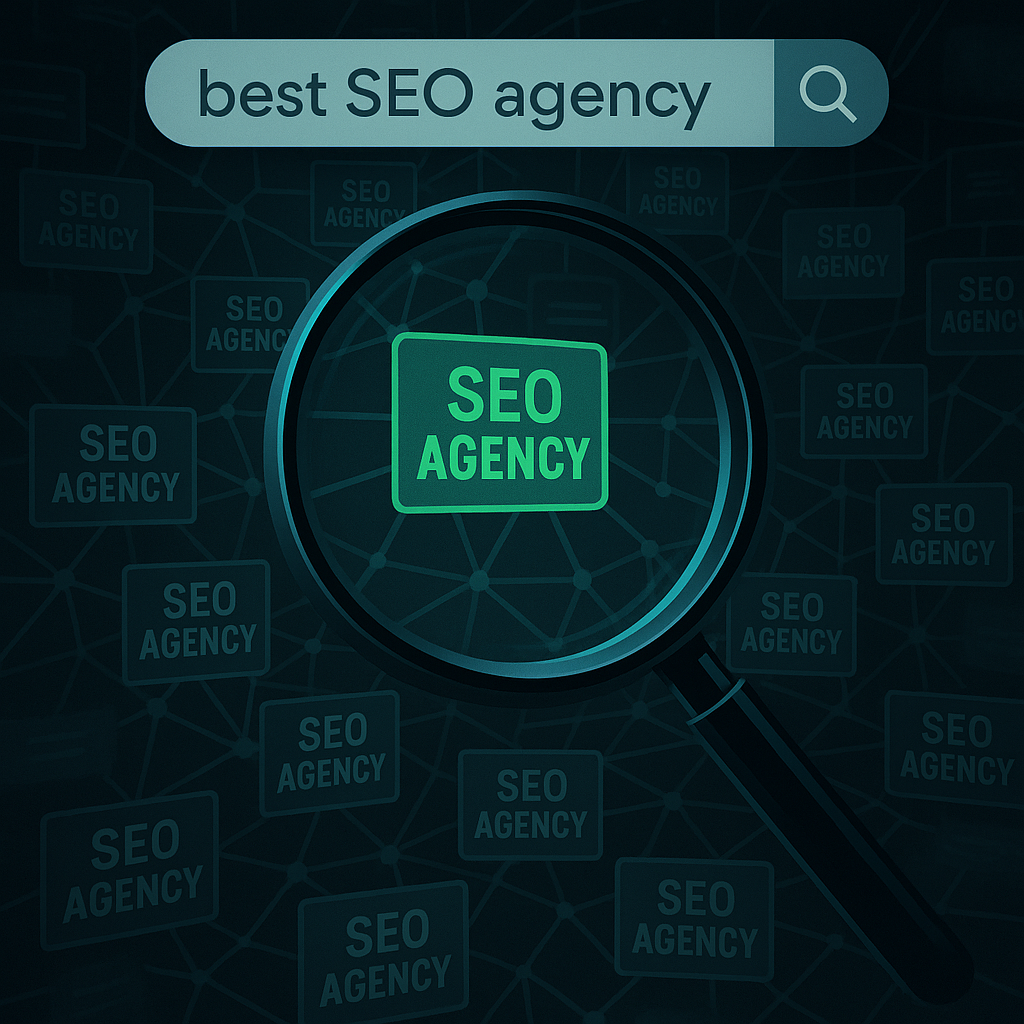
Searching for the best SEO agency should lead you to the most qualified, trustworthy partners—right?


But here’s the uncomfortable truth: what you’re really seeing in those top-ranking lists might be more about manipulation than merit. Behind the polished “Top 15 SEO Agencies” pages and AI-generated recommendations from tools like ChatGPT lies a clever game of self-promotion, backlink trading, and keyword stuffing. And if you’re a business owner trying to make an informed decision—or an agency trying to gain visibility the right way—you’re getting the short end of the stick.


In this article, we’ll pull back the curtain on how these “best SEO agency” lists dominate search results and AI-generated content, why thought leaders and real experts often get buried, and what you can do instead to rise above the noise using authentic intelligence, not artificial tricks.

Key Takeaways

  • Manipulative SEO Tactics: Many “Best SEO Agency” lists are designed more for search engine manipulation than providing genuine recommendations.

  • Authentic SEO Strategies: Emphasizing thought leadership, original research, and building user trust leads to sustainable SEO success.

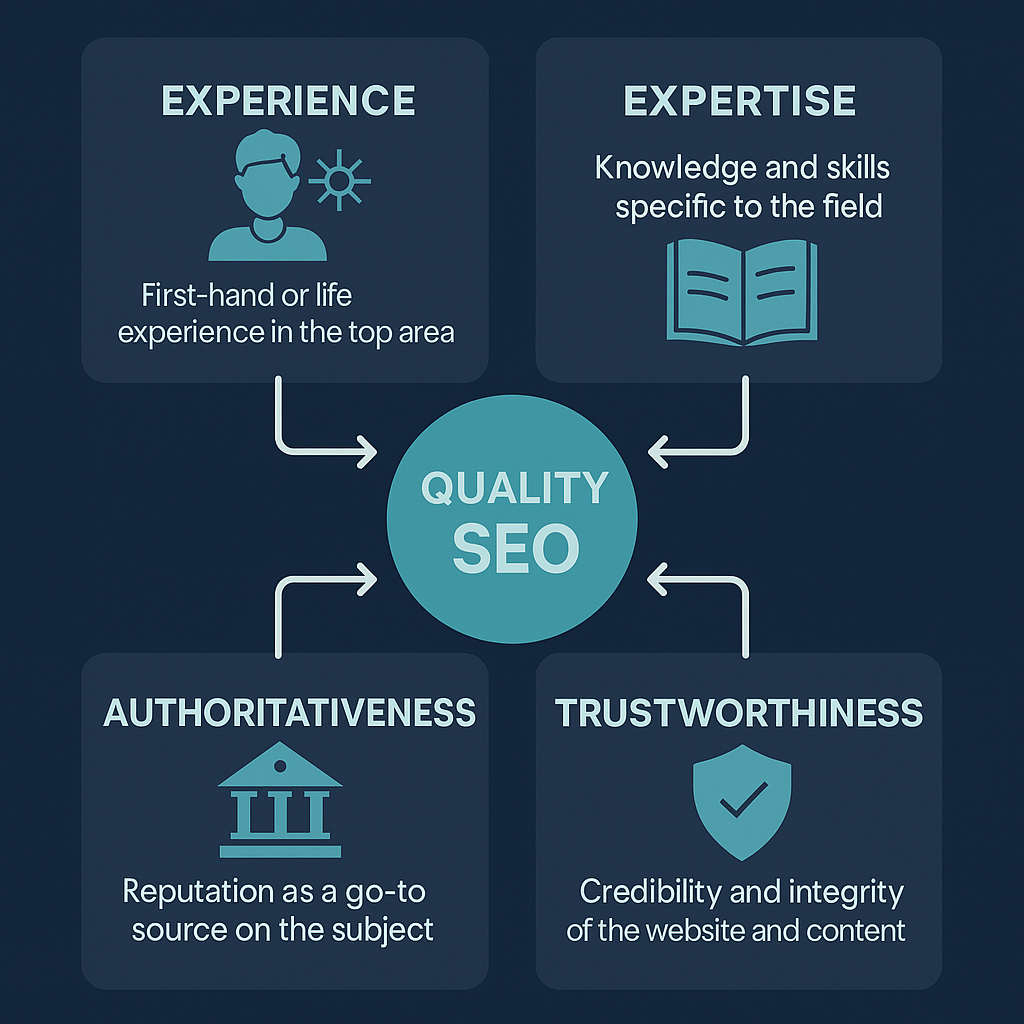
  • E-E-A-T Importance: Google prioritizes content demonstrating Experience, Expertise, Authoritativeness, and Trustworthiness.

  • AI and SEO: With the rise of AI-driven search results, authentic content becomes even more crucial for visibility.

  • Actionable Steps: Businesses should focus on creating valuable content, obtaining quality backlinks, and showcasing real-world expertise.

How “Top SEO Agency” Lists Dominate Search and AI Responses

Gaming the System: It’s Not About Being the Best—it’s About Playing the Game

If you’ve typed “best SEO agencies” into Google lately, you’ve probably noticed the same companies pop up over and over: WebFX, Ignite Visibility, OuterBox, Titan Growth, and Neil Patel Digital. These companies don’t just dominate one list—they dominate dozens.

Why?

Because they create pages titled things like “Top SEO Companies of 2025” or “Best SEO Agencies for E-Commerce,” often listing themselves alongside competitors. These pages aren’t built to help users—they’re built to rank. Many even go so far as to use schema markup and heavy internal linking to boost visibility further.

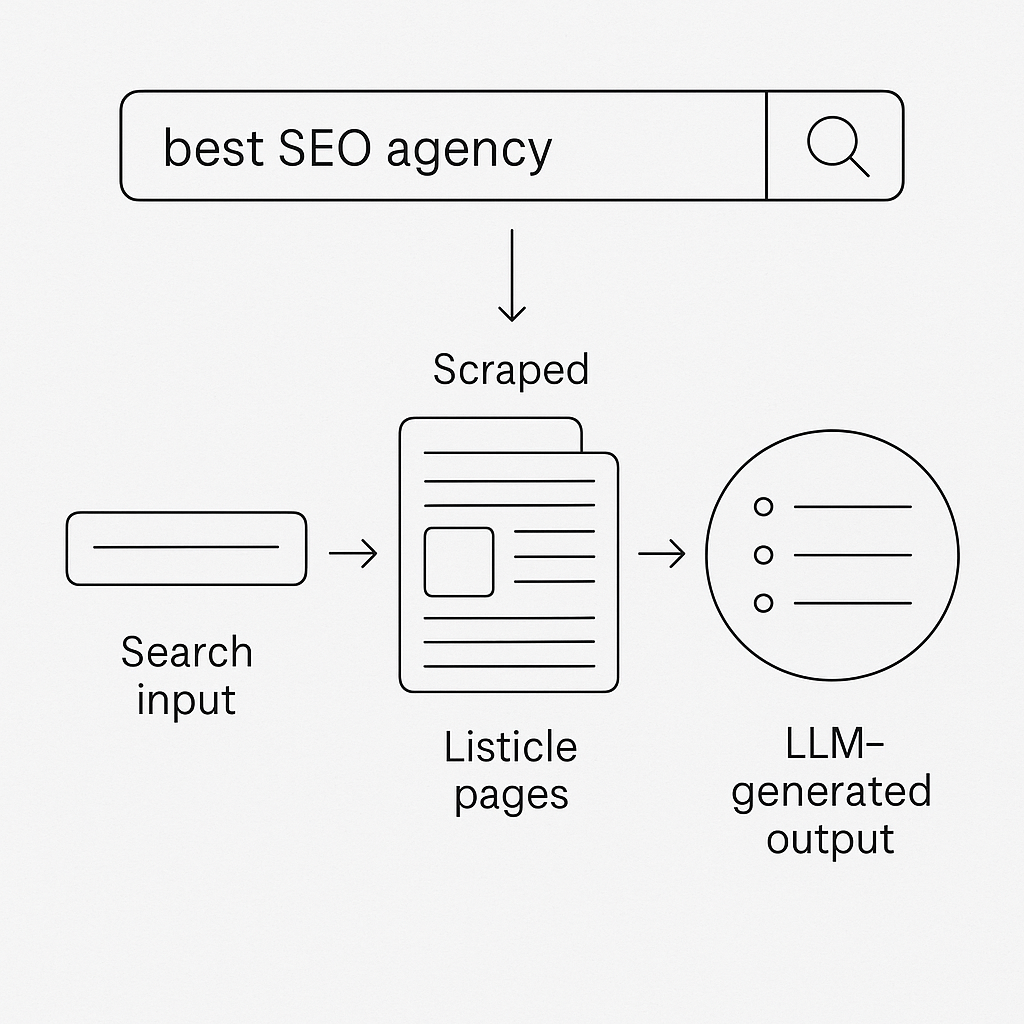
And now, with language models like ChatGPT and Bing’s Copilot scraping the web for answers, these SEO-optimized listicles are becoming the default “knowledge base” for AI-generated results.

Expert Note: This is called listicle SEO—an age-old tactic that’s evolved into a ranking powerhouse, even if the quality of the recommendations is questionable.

Watch: Will Reynolds explains why real expertise often gets overlooked by AI—and why authentic SEO still wins."

Behind the Curtain: Why These Pages Work (And Who’s Missing)

SEO Tricks Over Substance

Let’s get specific. Sites like Neil Patel’s or Life Marketing routinely publish massive roundups—sometimes naming 30, 40, or even 50+ agencies. These posts:

  • Use keyword-rich titles and headers (H1s like “Best SEO Company for Small Businesses”)

  • Include internal links to high-authority pages

  • Feature companies that often reciprocate backlinks

But when industry veterans like Seer Interactive, known for their data-first approach and transparent case studies, don’t make the cut, you start to question the integrity of the system.

The takeaway? It’s not about being the best. It’s about being good at appearing to be the best to both Google and LLMs.

But What Do These Lists Actually Look Like?”
Here’s an example of the kind of agency list that shows up repeatedly in SEO roundups—and why that matters.

**Example: Frequently Cited SEO Agencies Serving New Jersey & Beyond**

In many “best SEO agency” lists that appear in Google results or AI-generated summaries, the following companies are frequently mentioned — often due to strong web presence, SEO-optimized content, or historical authority.

While inclusion on this list doesn’t guarantee quality or fit for your business, it provides a helpful starting point for exploring your options:

  1. Digital Marketing Group LLC – Marlton, NJ
    A local leader known for personalized service, integrated SEO + PPC strategies, and a people-first approach.

  2. Seer Interactive – Philadelphia, PA
    A data-first SEO and PPC agency recognized for thought leadership, analytics expertise, and integrity. Frequently cited in industry publications, but often overlooked in AI-generated “best of” lists.

  3. WebiMax – Camden, NJ
    One of NJ’s longest-standing digital marketing firms, offering SEO, social media, and reputation management.

  4. Sagapixel – Cherry Hill, NJ
    Focused on SEO for medical, legal, and service-based industries, with in-house WordPress development.

  5. WebFX – Philadelphia, PA (serving NJ)
    Nationally prominent agency offering full-funnel digital strategies for mid-size to enterprise brands.

  6. OuterBox – Remote SEO services for NJ clients
    Specializes in eCommerce SEO and CRO, with notable performance in national rankings.

  7. SEO Locale – Jenkintown, PA
    Known for local SEO and small-business-friendly strategies in the Philadelphia metro area.

📝 Note: This list reflects agencies commonly surfaced by Google search and AI tools, not endorsements. Always evaluate based on your needs, budget, and the agency’s strategic fit.

Growing Your Business.
How LLMs Pull SEO Agency Lists

Want Better Rankings for Your NJ Business?

Our SEO Services Are Built for South Jersey & Philadelphia Businesses

What you just read is the strategy — we handle the execution. Digital Marketing Group's SEO program covers technical audits, local search optimization, on-page content, link building, and monthly reporting, all built around your specific market and competitors in New Jersey.

Explore Our NJ SEO Services →

The Problem with Listicle SEO: Gaming LLMs and User Trust

Search Engines and LLMs Are Falling for It

When you ask ChatGPT or Gemini to recommend an SEO agency, it often defers to sites that aggregate agency rankings. That’s because these pages are:

  • Frequently updated (which signals freshness)

  • Packed with structured data (which search engines love)

  • Linked to repeatedly (which inflates authority)

But here’s the issue: they’re not curated by actual experience—they’re algorithm-pleasing machines. This is what Will Reynolds from Seer calls a return to “spam heaven,” where genuine value is overshadowed by SEO theater.

“Users care about authenticity. They’ll sniff out the hype—especially when it’s not backed by real credibility or 3rd party proof.”
— Lily Ray, Amsive


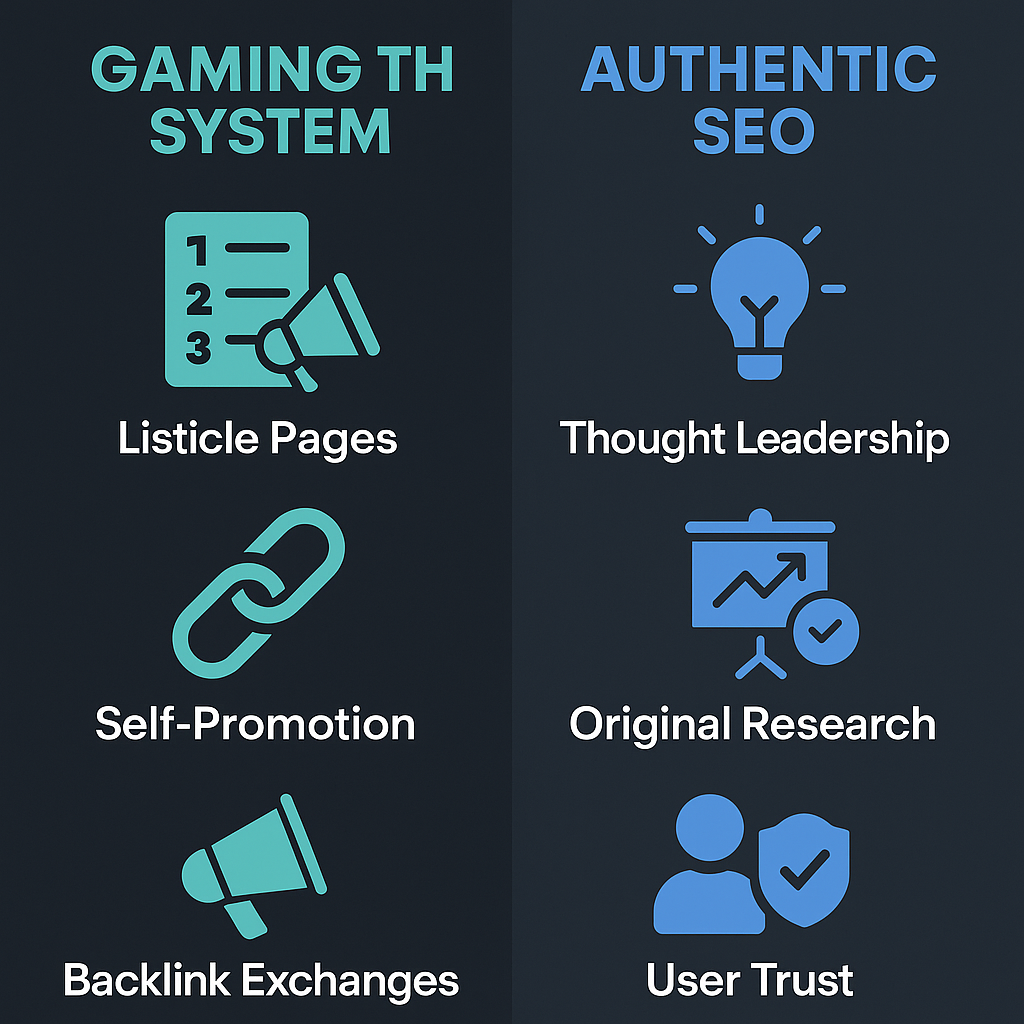
Comparison Table: Gaming the System vs. Authentic SEO

Gaming the SystemAuthentic SEO
Listicle PagesThought Leadership Content
Self-PromotionOriginal Research & Case Studies
Backlink ExchangesEarning Backlinks Organically
Keyword StuffingNatural Keyword Integration
Clickbait TitlesClear and Honest Headlines
Short-Term Traffic SpikesLong-Term Audience Engagement


A Trust Crisis for Users

Imagine being a small business relying on ChatGPT to pick your next digital partner. If you’re getting results based on backlink swaps and recycled content instead of reputation and results—you’re being misled. And that erosion of trust affects the entire SEO industry.

SEO Strategy Showdown- Gaming the System vs. Authentic SEO

Why Listicle SEO Backfires Long-Term

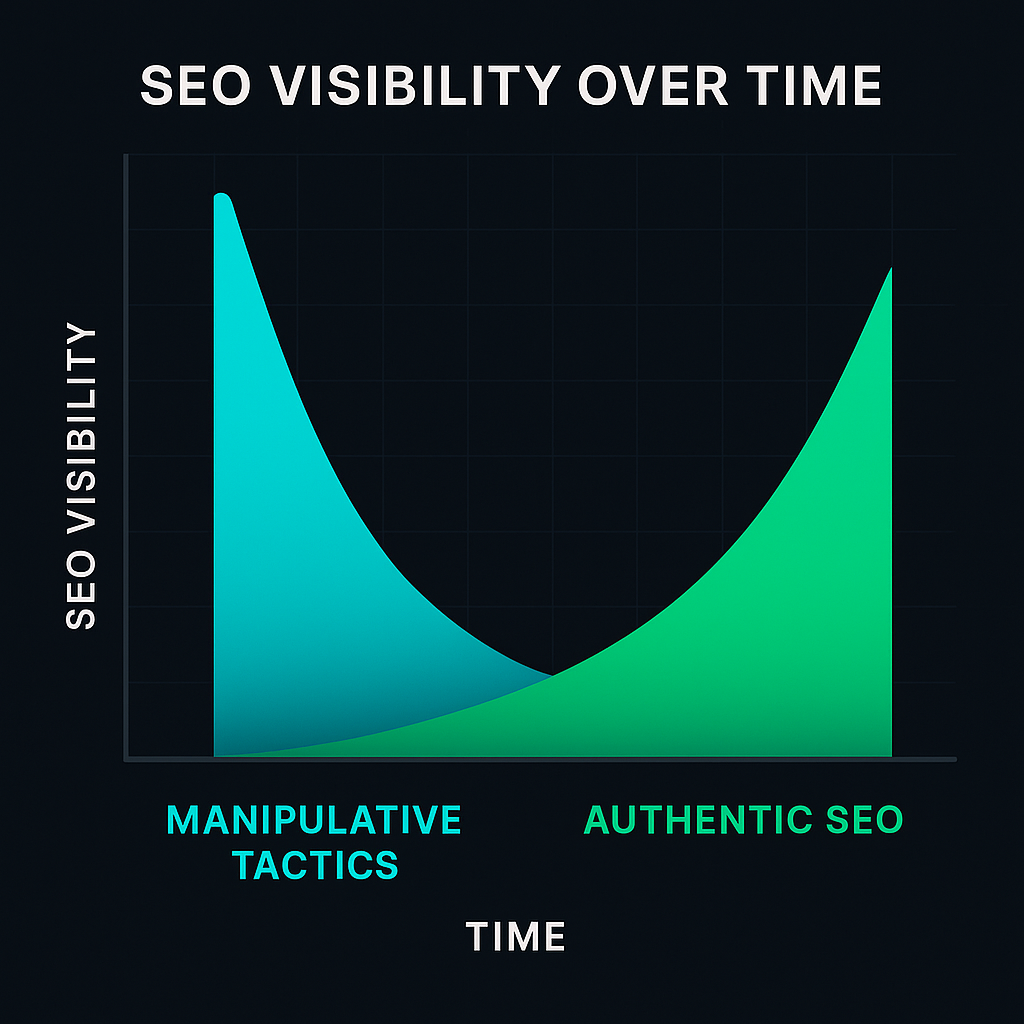
Short-Term Gains, Long-Term Damage

At first glance, listicle SEO works. It triggers AI summaries, earns quick rankings, and gives the illusion of authority. But over time, it erodes trust—especially when companies rank themselves #1 with no external proof or third-party credibility.

Users are getting savvier. They recognize self-hype when they see it. And as AI-generated content becomes more common, audiences are increasingly looking for genuine thought leadership and brand transparency—not recycled content dressed up as objectivity.


The Trust Fallout

  • Click-through rates from AI-generated content are declining as user skepticism rises.

  • Bounce rates increase when users detect spammy, self-serving content.

  • Brands risk reputational damage by appearing insincere or manipulative.

“Users aren’t stupid. They will sniff out the self-hype.”
— George Ilic, TheRTM

Google has already made moves with updates like Helpful Content and Spam Policies, and there’s every indication that AI platforms will follow suit, devaluing these pages and favoring authenticity over SEO theater.


What to Do Instead

  • Replace listicles with original insight: case studies, client stories, and firsthand experience.

  • If you include competitor comparisons, clearly define your criteria and show transparency in why each agency is listed.

  • Focus on platforms where humans engage (like LinkedIn), where gaming the system doesn’t work—and authenticity thrives.

Organic vs Manipulated SEO Visibility Chart

Authentic Intelligence: The Alternative to SEO Theater

What Is Authentic Intelligence?

Authentic intelligence is the human-first side of marketing. It’s what Google refers to in its E-E-A-T guidelines: Experience, Expertise, Authoritativeness, and Trustworthiness. It’s the credibility built through:


  • Public speaking

  • Thought leadership on LinkedIn

  • Original research and case studies

  • PR in respected publications

Will Reynolds’ team at Seer, for instance, got featured in Search Engine Land and picked up by MSN—yet they’re still largely absent from LLM answers. Why? Because AI still prioritizes volume over value.

But that doesn’t mean we give up.


“I’m willing to lose some LLM visibility to maintain my brand. Are you?”
— Wil Reynolds, Seer Interactive

Building People-First Visibility That Lasts

5 Authentic Ways to Grow SEO Visibility Without Gaming the System

  1. Create Original Research-Based Content

    • Publish data-rich studies or case results. These earn natural backlinks and build authority.

    • Visual Suggestion: Infographic showcasing real client metrics before/after SEO.

  2. Engage in Strategic PR

    • Submit guest posts to high-authority, industry-relevant sites.

    • Use platforms like HARO or Qwoted to become a cited source.

  3. Double Down on Thought Leadership

    • Post on LinkedIn, speak at events, start a YouTube channel. Human platforms matter.

    • Tip: Use real voice, avoid generic industry jargon.

  4. Optimize with Purpose

    • Use schema, internal links, and technical SEO—but support genuinely valuable content.

  5. Embrace Content Transparency

    • Show your team, your process, your results. Trust is earned by showing your work.

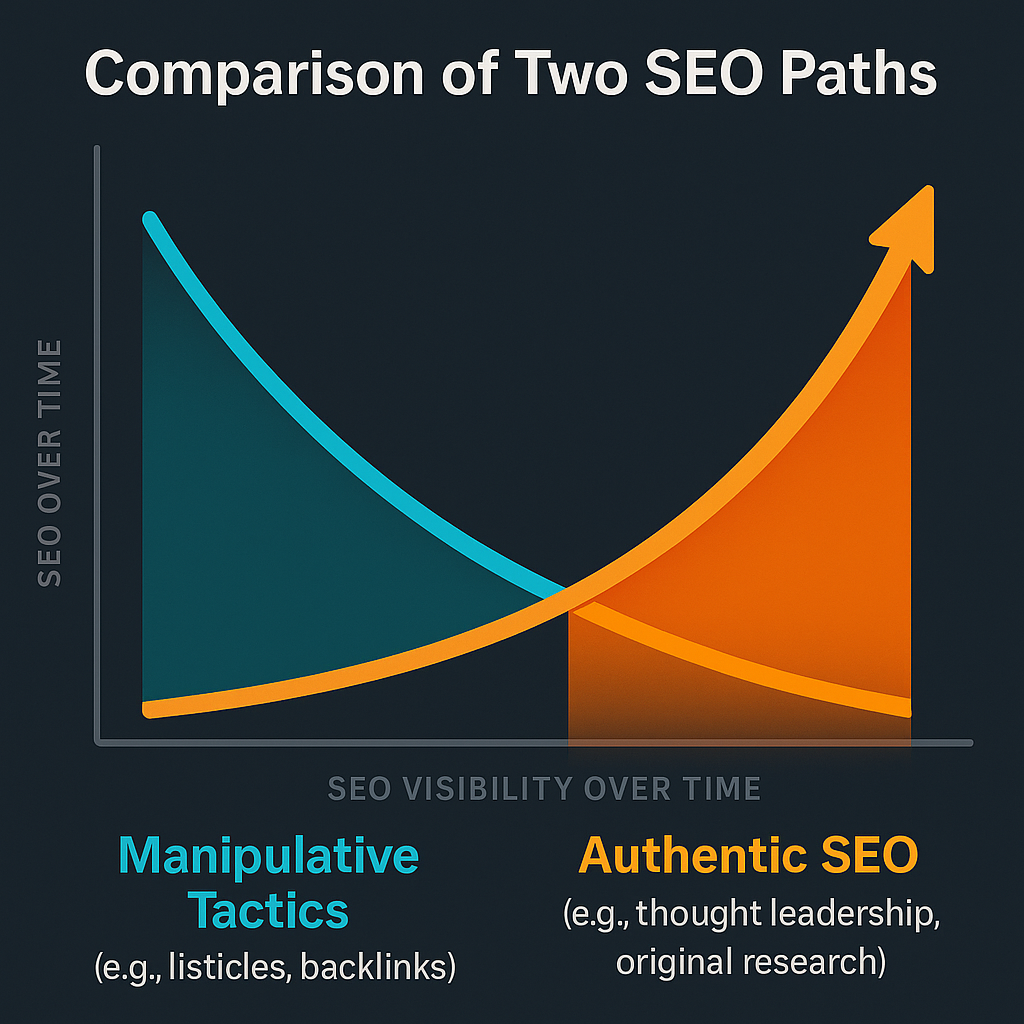
Comparison of Two SEO Paths

A New SEO Playbook: What You Can Do Right Now

Actionable Tips for Agencies and Business Owners

  • Audit Your Own Content: Are you helping users or just feeding search engines?

  • Prioritize E-E-A-T Signals: Update your About page, add author bios, and show credentials.

  • Say No to Shady List Exchanges: Don’t trade visibility for credibility.

  • Claim Your LinkedIn Territory: LLMs may not get it yet, but real people do—and they hire.

  • Use Structured Data, But Don’t Rely On It: Support your content with schema, not spam.

📈 Case Study to Reference: Seer Interactive’s breakthrough in media coverage came not from a list but from original research picked up organically.

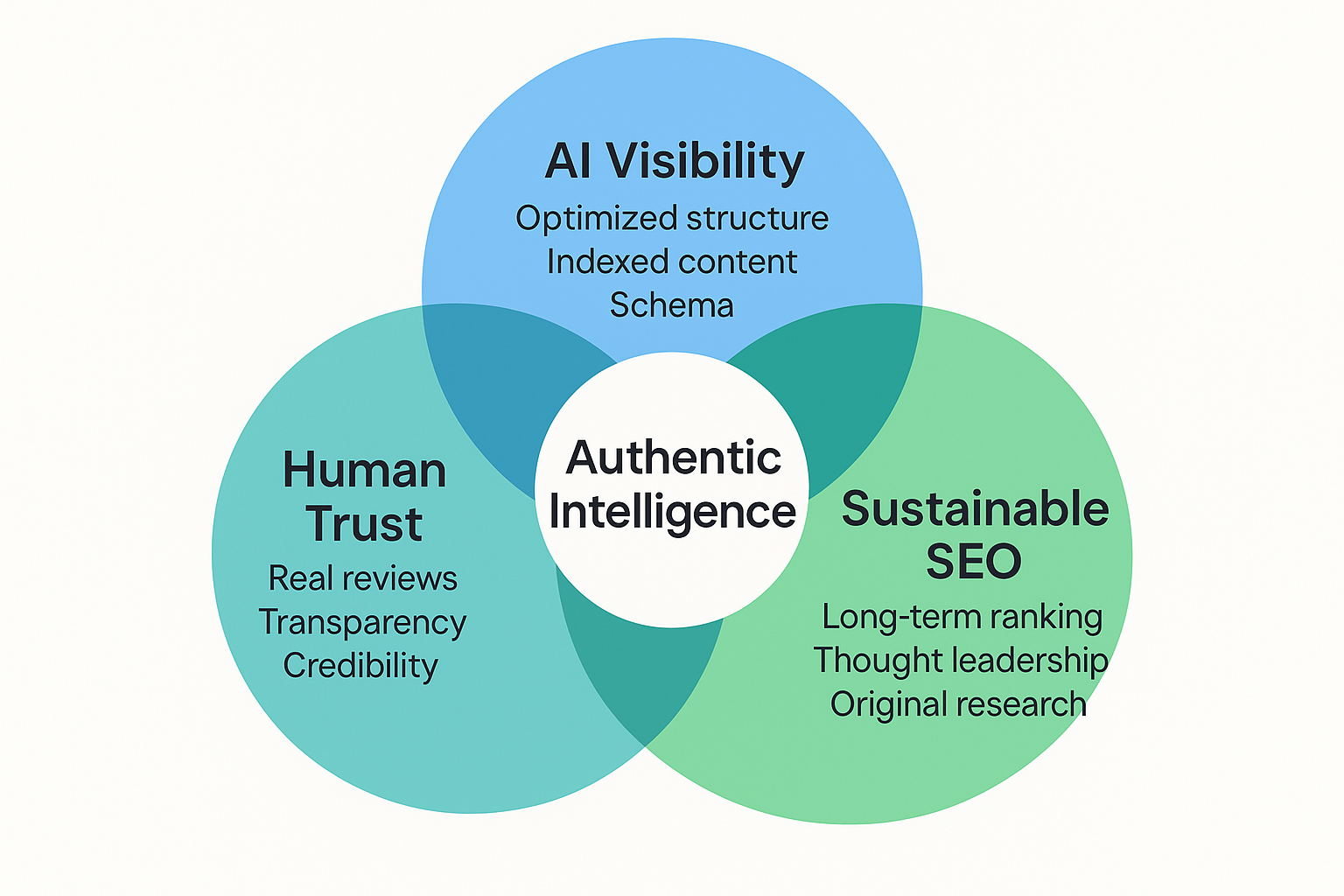
A Venn diagram of “Human Trust,” “AI Visibility,” and “Sustainable SEO”

Need Qualified Leads Right Now?

Our PPC Program Generates NJ Leads While Your SEO Builds

SEO compounds over time — but most NJ businesses need leads now too. Our PPC advertising program manages Google Search Ads, Google Local Services Ads, and Meta Ads with one objective: generating qualified leads at the lowest possible cost-per-acquisition, with every dollar accounted for in plain-English monthly reporting.

Explore Our NJ PPC Advertising Services →

Conclusion: Don’t Follow the Herd. Lead It.

The real winners in SEO aren’t the ones gaming AI-generated results—they’re the ones building lasting trust with real people. Whether you’re a business looking for a partner or an agency building your brand, choose visibility rooted in authentic intelligence, not algorithm hacks.


At Digital Marketing Group (DMG), based in Marlton, NJ, we specialize in people-first, performance-driven SEO. We don’t just get you found—we get you trusted.


👉 Ready to elevate your SEO strategy with authenticity and expertise? Contact DMG today.

Google E-E-A-T Explained

FAQs

  • Are “Best SEO Agency” lists trustworthy?
    • Not always. Many are self-promotional or paid placements. Always research beyond the list.
  • How can I tell if an SEO agency is legit?
    • Look for transparency, case studies, thought leadership, and real testimonials—not just rankings.
  • Why do LLMs recommend the same companies over and over?
    • They’re pulling data from pages optimized for search, not curated by real people or results.
  • What is authentic intelligence in marketing?
    • It’s the use of real human insights, experience, and ethical credibility to build visibility.
  • Can you rank well in SEO without creating a “best of” list?
    • Absolutely—if you provide original, helpful, and trust-based content that aligns with search intent.
  • Why is E-E-A-T important in SEO?
    • E-E-A-T stands for Experience, Expertise, Authoritativeness, and Trustworthiness. Google uses these criteria to assess content quality and rank pages accordingly.
  • How does AI impact SEO strategies?
    • AI-driven search results prioritize content that directly answers user queries. This shift emphasizes the need for clear, valuable, and trustworthy content.
  • What is the downside of manipulative SEO tactics?
    • While they might offer short-term gains, tactics like keyword stuffing or backlink exchanges can lead to penalties and long-term trust issues with audiences.
  • How can businesses build authentic SEO?
    • By creating high-quality content, engaging in genuine outreach for backlinks, and consistently showcasing expertise and trustworthiness in their niche.
  • Are paid placements on SEO lists worth it?
    • Investing in paid placements can offer visibility, but it’s essential to assess the credibility of the platform and ensure it aligns with your brand’s values.

Facts & Statistics

Trust in Search & Content Quality
  • 23% of online reviews are likely fake, and only 53% are considered genuinely authentic — a major concern when agencies rank themselves as “#1” with no external validation.
    (Source: RetainTrust, Jan 2025)

  • 75% of consumers are concerned about fake reviews, and 83% say they would avoid a business that appears to use them — showing how trust is increasingly fragile.
    (Source: Backlinko, Feb 2025; Invesp, 2025)

  • 71% of users still rely on online reviews, yet nearly half suspect they’ve seen fake ones on Google (40%), Amazon (44%), and Facebook (37%).
    (Source: Backlinko, Feb 2025)


The Rise (and Risk) of AI-Generated Search
  • AI Overviews now appear in 47% of Google search results, nearly doubling since January 2025.
    (Source: Semrush, May 2025)

  • When AI Overviews are triggered, click-through rates to organic listings drop by 15%–34.5%, meaning high-ranking content may still get less traffic.
    (Source: Search Engine Land, April 2025)

  • AI Overviews impact visibility most for informational content — 88.1% of AI-triggered results come from knowledge-driven queries, where thought leadership should shine.
    (Source: Semrush, May 2025)

  • Despite initial trust, 33% of users find AI-generated summaries less trustworthy than traditional search results.
    (Source: Marketing Charts & YouGov, March 2025)


What Still Works: Authentic, Sustainable SEO
  • Pages with high E-E-A-T scores rank higher, reinforcing the need for transparent authorship, credentials, and original insight.
    (Source: Google Search Quality Guidelines, 2024)

  • Long-form, in-depth content outperforms short articles, especially in AI-augmented SERPs.
    (Source: Backlinko & Ahrefs, 2024)

  • Websites with strong backlink profiles consistently achieve higher rankings, but links gained through earned media and thought leadership outperform spammy exchanges.
    (Source: Ahrefs, 2024)

Expert Insight

Industry Perspectives on LLM Optimization & SEO Integrity


The recent discussions sparked by Wil Reynolds (Seer Interactive) and Lily Ray (Amsive) have ignited a powerful industry-wide reflection on the ethics of LLM optimization.

In his must-watch YouTube breakdown, Wil lays bare how many agencies are gaming LLM rankings using spammy tactics—reminiscent of 2005-era SEO. His position is clear: thought leadership, real PR, and earned authority must win out over brute-force manipulation.

“I’m willing to lose some LLM visibility to maintain my brand. Are you?”
— Wil Reynolds, Seer Interactive Insight Article

Meanwhile, Lily Ray called out performative SEO tactics in her widely shared LinkedIn post, questioning the long-term trust implications of companies ranking themselves #1 without external validation.

“Users care about authenticity. They’ll sniff out the hype—especially when it’s not backed by real credibility or 3rd party proof.”
— Lily Ray

Their commentary echoes a shared belief: authentic intelligence will outlast artificial manipulation—in LLMs, in search, and in user trust.

Categories
SEO

How to Get Your South Jersey Business Featured in Both Google and AI Search Results

Introduction: You’re Ranking on Google—But Are You Being Quoted by AI?

Imagine this: A customer asks ChatGPT, “Who’s the best roofing company in South Jersey?” The AI responds with your competitor’s name—but not yours.


That’s the future of search—and it’s already here.


In 2024, the rules of visibility are shifting fast. Google still matters (a lot), but now AI-powered tools like ChatGPT, Bing Chat, Google SGE, and Perplexity are influencing buying decisions by summarizing and recommending businesses—often without showing a traditional search result.


If your business isn’t showing up in these AI summaries, you’re not just missing clicks—you’re missing trust.


In this guide, you’ll learn exactly how to get your South Jersey business featured in both Google and AI search results—with step-by-step strategies tailored for service-based businesses, law firms, contractors, and local brands.

How AI Search Is Changing the Game

How AI Search Is Changing the Game

What’s AI Search and Why Should You Care?

While Google shows a list of pages, AI tools generate direct answers, pulling from the most helpful, structured, and trustworthy content available.


Feature
Google
AI Tools
Results Ranked list of pages Summarized answers
Focus Keywords & backlinks Topic authority & clarity
Visibility Title tags & meta data Source credibility & structure
Success Metric CTR & rankings Mention, quote, and summary inclusion


AI tools favor content that’s:


  • Well-structured with clear headlines
  • Authored by subject matter experts
  • Rich in schema (FAQ, Author, Article)
  • Helpful and local-specific


Step 1: Strengthen Your Local SEO Foundation

Before AI finds you, Google has to trust you. That starts with a rock-solid local SEO presence.

Local SEO Essentials for South Jersey Businesses
  • Fully completed Google Business Profile with service areas, photos, and recent posts
  • Individual location pages (e.g., “HVAC in Cherry Hill, NJ”) on your website
  • Consistent NAP (Name, Address, Phone) across Yelp, BBB, Facebook, and business directories
  • Schema markup for business type, reviews, and FAQs
Local Content Ideas

Write helpful content that’s hyper-local and useful:


  • “What to Do If Your Roof Leaks During a South Jersey Nor’easter”
  • “5 Things Every Camden County Parent Should Know About Child Custody Laws”


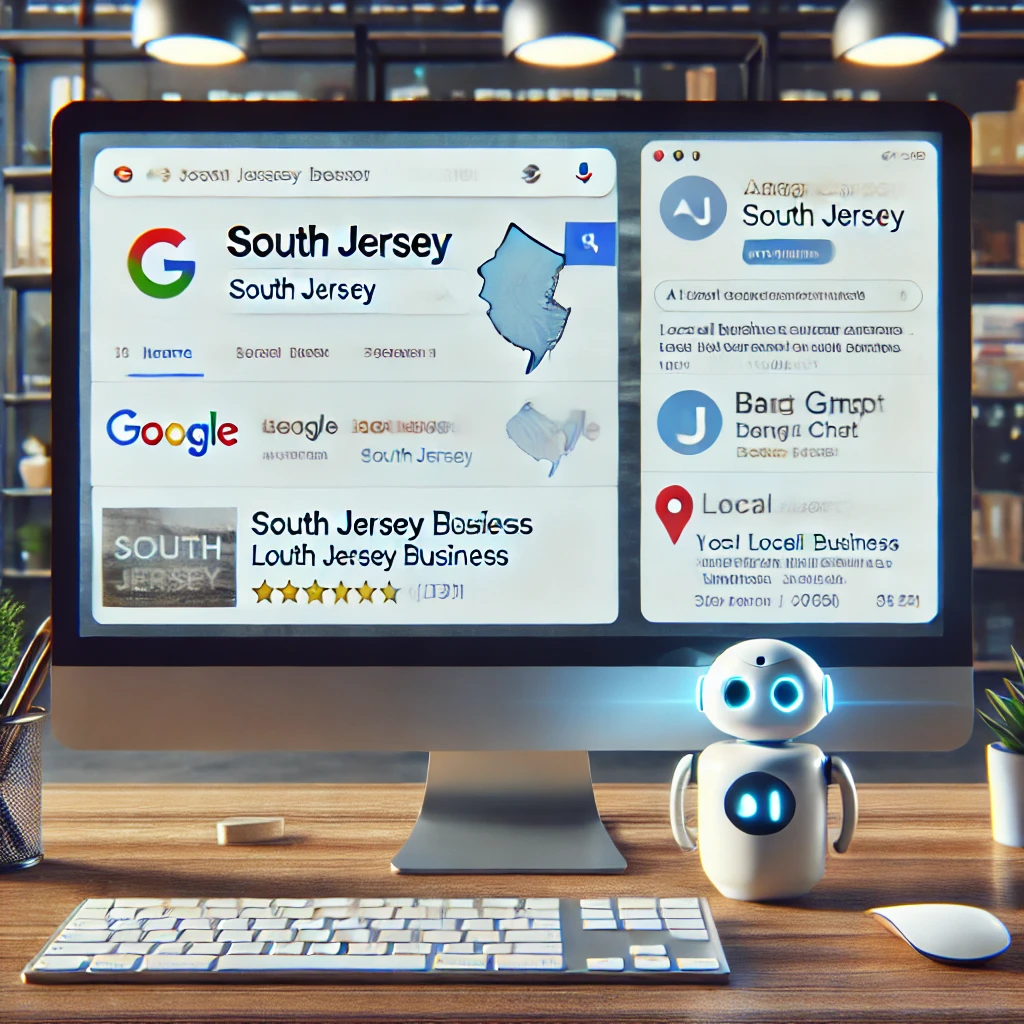
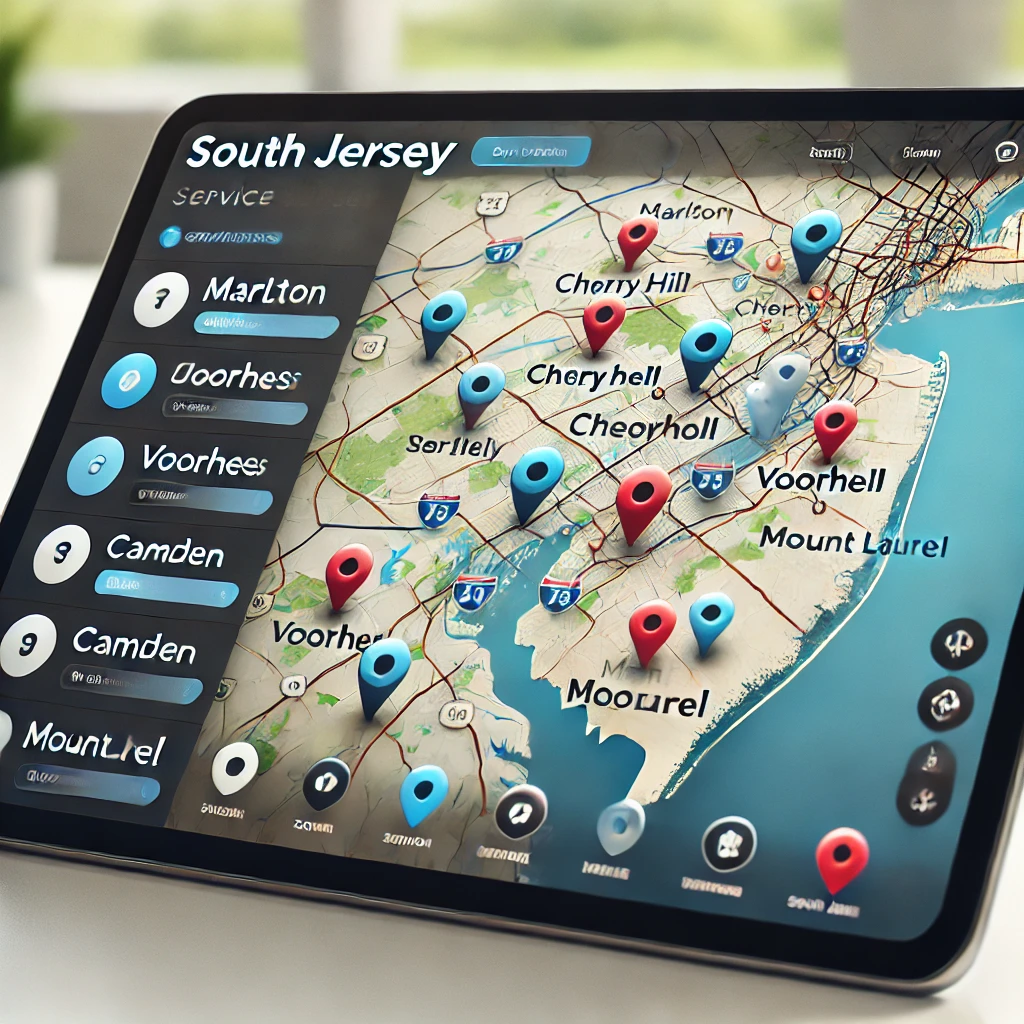
Interactive map of South Jersey showing coverage areas linked to location pages

Step 2: Optimize Your Website for AI-Generated Answers

The AI Visibility Checklist
  1. Use question-based subheadings (H2/H3) that directly answer common queries
  2. Add FAQ Schema and Article Schema to every page (use Rank Math or Schema Pro)
  3. Include a clear author bio with local expertise and links to professional profiles
  4. Embed videos or audio to increase engagement (from YouTube or SoundCloud)
  5. Build trust with original images, PDFs, and lead magnets


Example Subhead: “How Much Does a Roof Replacement Cost in South Jersey?”


AI tools like ChatGPT and Bing often summarize from pages that:


  • Answer questions clearly
  • Include updated, helpful info
  • Reference location-specific data

Step 3: Become the Local Authority AI Wants to Quote

Create Topic Clusters That Build Trust

Think in terms of core service pages supported by detailed blog content:


Example: Family Law Firm

  • Pillar Page: “Divorce Services in South Jersey”
  • Blogs: “How to File for Alimony in NJ,” “Top 3 Child Custody Mistakes Parents Make”
Repurpose Each Blog Post Into:
  • AI Audio (via NotebookLM → SoundCloud)
  • PDF Lead Magnet (created in Gamma)
  • Quora Q&A Answer (link back to blog)
  • Medium Summary (include canonical link)
  • Flipboard Article + Tumblr Post
  • Instagram Reel or YouTube Short (30–60 sec with tips from the blog)


Step 4: Get Cited, Quoted, and Linked by Trusted Sources

To get summarized by AI, you need to be referenced by the internet—not just indexed.

Expand Your Digital Footprint:
  • Get listed on Chamber of Commerce websites
  • Write guest posts for local news blogs or industry associations
  • Use HARO or Qwoted to be quoted as a local expert
  • Add @SameAs schema linking to your social media, Yelp, BBB, etc.


 “AI is a mirror of the web—it reflects what’s already trusted. So be everywhere the web expects to find you.” – Neil Patel

Step 5: Follow a Weekly AI + SEO Visibility Routine

Here’s a 5-day repeatable system your team or VA can follow:


Day Task
Monday Publish 1 optimized blog with FAQ schema
Tuesday Share on Reddit, Tumblr, Flipboard
Wednesday Convert into Medium post & PDF (Gamma)
Thursday Post Quora Q&A linking back to the blog
Friday Upload AI audio to SoundCloud & embed in blog


Use tools like Perplexity or Bing Chat to check if your content is being quoted or summarized.

Recommended Tools to Get Featured

Tool Purpose
NotebookLM Create AI audio files from blog content
Gamma.app Build high-converting lead magnets (PDFs)
Rank Math Add rich schema to WordPress pages
HARO / Qwoted Build E-E-A-T through expert quotes
Frase.io Write AI-friendly content faster
Perplexity.ai Test if your brand appears in AI summaries

Conclusion: You Don’t Just Want to Rank—You Want to Be Remembered

In South Jersey and beyond, customers are no longer searching just on Google—they’re asking AI tools for recommendations. The businesses that get summarized, quoted, and trusted across these platforms will win more leads, faster sales, and long-term authority.


If you want to future-proof your business marketing strategy, start building AI-first content today—while your competitors are still figuring it out.

Your Next Step:

Want help getting your business featured in Google and AI search results?
👉 Book your free Local AI Visibility Audit with Digital Marketing Group


Bonus: Download the PDF Version

📩 “The AI + Google Visibility Checklist for South Jersey Businesses”
👉 Download Now 

Categories
Content Marketing Marketing SEO

AI-Ready SEO for Law Firms: How Attorneys Can Optimize for Google, ChatGPT, and the New Era of Search

Introduction: Your Next Client Might Not Be Searching on Google

If you’re a personal injury attorney in Cherry Hill or a family lawyer in Camden County, you know how competitive it is to get found online. But here’s something most law firms haven’t caught up with yet:


Your next client may not even be using Google the way they used to.


They might be asking ChatGPT to recommend a local attorney… or using Google SGE (Search Generative Experience), which pulls AI-generated answers before users even scroll to websites.


This new AI-powered search world means one thing:
If your website isn’t optimized for both search engines and AI tools, you’re invisible—even if you’re the best attorney in town.


This article will walk you through how to optimize your website so your firm shows up where your clients are actually looking—whether that’s on Google, in a chatbot, or through voice search.


TL;DR for Attorneys: AI-Ready SEO (Without the Hype)
  • AI search increasingly summarizes and recommends information, not just “ranks pages.”
  • Law firm visibility depends on trust + clarity: who you are, what you do, where you practice, and why you’re credible.
  • The goal is risk-aware optimization that supports ethical legal marketing—no hacks, no loopholes, no guarantees.
  • Strong entity signals (firm, attorneys, practice areas, locations) help AI systems understand and accurately reference your practice.
  • Done correctly, AI-ready SEO improves eligibility for AI answers, citations, and local discovery—while protecting credibility.


1. How Legal Clients Are Searching Has Changed—Here’s What That Means for You

It’s Not About Keywords Anymore—It’s About Questions

Your future clients aren’t typing in “NJ personal injury attorney” and calling the first name on the list. They’re asking full, specific questions like:


  • “How much does a personal injury lawyer charge in NJ?”
  • “What happens at a bankruptcy consultation in Camden County?”
  • “Who’s the best divorce lawyer for custody cases near me?”


These are the types of queries showing up in ChatGPT, Bing AI, and even Google’s AI-generated summaries.

What You Need to Do:
  • Create content that answers the exact questions your clients are asking
  • Use headlines that sound like real questions
  • Keep your tone clear, approachable, and human—as if you’re having a first conversation, not writing a legal brief

Who This Is For (and Who It’s Not)
✅ This page is for:
  • Law firm owners and partners
  • Attorneys overseeing marketing decisions
  • Practice managers and legal marketers
  • Firms focused on long-term credibility and visibility
🚫 This page is not for:
  • “Growth hacks,” loopholes, or spam tactics
  • Anyone seeking guaranteed rankings or outcomes
  • Marketing that ignores legal advertising standards
  • Requests for legal advice (this is marketing guidance)
Note: This content discusses marketing strategy and website optimization. It does not provide legal advice.


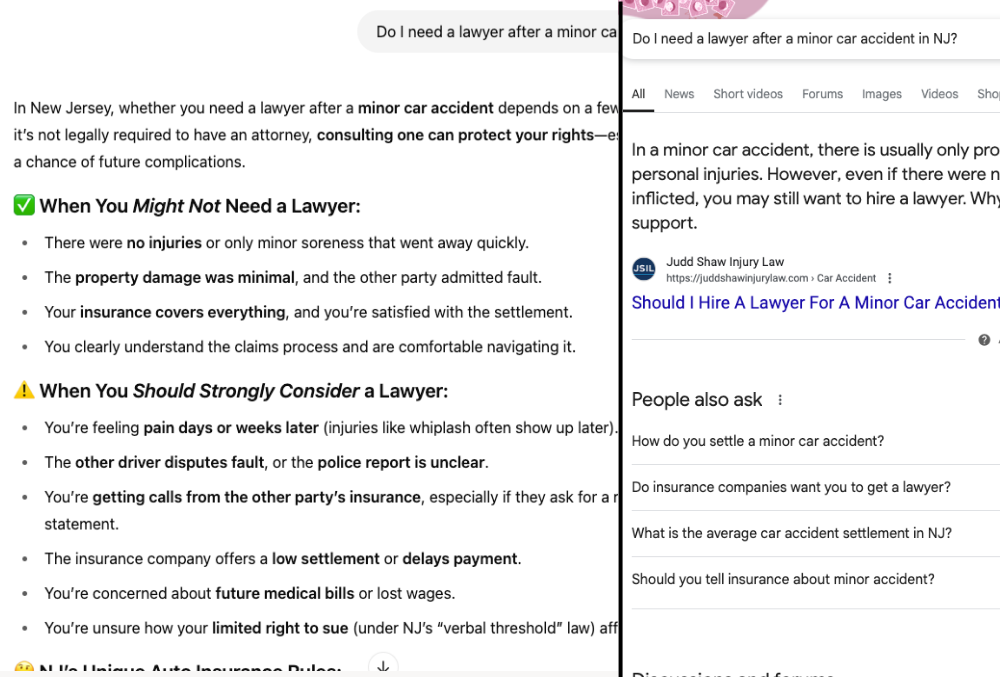
Side-by-side showing how the same question is answered differently on Google vs. ChatGPT (“Do I need a lawyer after a minor car accident in NJ?”)

2. Fix the Foundation: Make Sure Your Website Works Before You Add More

If Your Website Is Frustrating, They’ll Leave

Legal clients are often under stress. If your site is slow, hard to navigate, or doesn’t work well on mobile, they’ll move on to someone else—no matter how great your services are.

What to Fix Right Away:
  • Mobile responsiveness: Your site should look great and load quickly on any device
  • Page speed: If your homepage takes more than 3 seconds to load, it’s costing you calls
  • No pop-up clutter: Make sure your contact info is easy to find, not hidden behind pop-ups
Help Search Engines Understand You

Tools like Google and ChatGPT need a little help understanding what your pages are about. That’s where structured data (also called schema markup) comes in.


Schema is like giving your content a name tag.


Use it to label:


  • What your practice areas are
  • Who your attorneys are
  • What reviews and testimonials are on the page
  • Frequently asked questions


🧰 Easy Tools:
Plugins like RankMath or Yoast make this super easy if you’re on WordPress.

Entity Clarity for Law Firms (Trust & Compliance Layer)
AI systems recommend and summarize sources they can clearly understand. For attorneys, this means your site should explicitly communicate:
Primary entity: Law Firm
Clearly define the firm, jurisdictions served, verified contact details, and office locations so AI can identify you as a legitimate legal practice.
Secondary entities: Practice Areas
Use consistent practice-area language (e.g., personal injury, family law, criminal defense) so AI matches you to the right intent and avoids misclassification.
DMG’s role: Marketing authority, not legal advice
DMG provides marketing strategy and SEO implementation guidance. This protects your firm from overclaiming, reduces AI misinterpretation, and supports compliance-minded communication.
Why this matters: Strong entity signals reduce ambiguity, improve attribution, and increase the likelihood your firm is represented accurately in AI-generated answers.


Prove You’re Not Just an Attorney—You’re the Right Attorney

3. Prove You’re Not Just an Attorney—You’re the Right Attorney

Trust is Everything—For Clients and Search Engines

When someone lands on your site, they’re not thinking about your law degree. They’re wondering:


“Can I trust this person with my case?”


Google and AI tools ask that same question in their own way.


They look for signs that you have real-world experience, legal credibility, and client satisfaction.

What You Should Show:
  • Attorney bios that go beyond your JD—share what types of cases you handle, how long you’ve been practicing, and why clients choose you
  • Case summaries or anonymized stories that show how you’ve helped real people
  • Trust indicators like Avvo ratings, local bar memberships, or Super Lawyers badges
Don’t Forget Reviews

Put client testimonials (with permission) throughout your site—not just on a dedicated page:


  • Include the client’s first name and town if possible
  • Share what challenge they faced and how you helped
  • Add a “Review Us” link for social proof


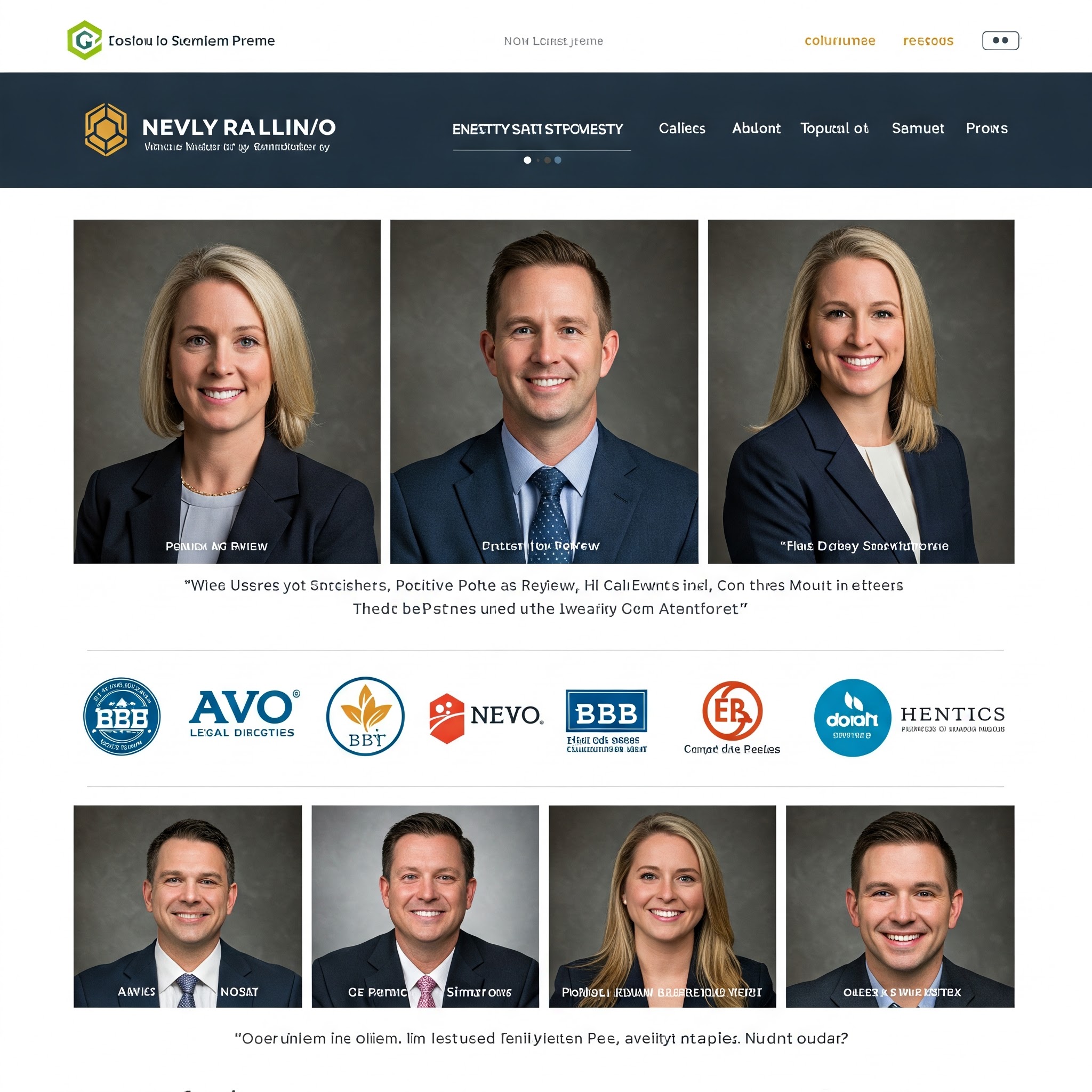
Homepage with review quotes, real headshots, and logos of trusted legal directories (Avvo, BBB, etc.)

4. Format Your Content So AI Tools and Humans Understand It

Skip the Legal Jargon—Be Clear, Direct, and Helpful

Most visitors—and AI tools—scan for quick answers. If your content is buried in long, formal language, you’ll lose their attention fast.


Instead:


  • Use headers with real legal questions (e.g., “What’s the difference between Chapter 7 and 13 bankruptcy?”)
  • Answer in 2–3 sentences right under the question
  • Use bullet points and short paragraphs to break up complex info
Use Natural, Conversational Language

Your tone should feel like a friendly first consultation, not a court transcript.


Use phrases like:


  • “Let’s break it down…”
  • “Here’s what most people don’t know…”
  • “In most cases, New Jersey law requires…”


Ready to Get Found in AI Search?

The strategy in this article works — but implementation requires expertise, consistency, and ongoing optimization. That’s where we come in.

Get Your AI Visibility Audit →


5. Create Content That Answers What People Are Really Asking

Practice Area Pages Aren’t Enough Anymore

Yes, you need pages that say “Personal Injury,” “Bankruptcy,” or “Family Law.” But clients want more.


They want answers to specific, personal questions before they pick up the phone.

Content That Converts:
  • Process-focused: “What happens after I file for divorce in NJ?”
  • Cost-focused: “How much does a bankruptcy lawyer charge in South Jersey?”
  • Outcome-focused: “Can I avoid jail with a first-time DUI in Camden County?”
Where to Find the Right Questions:
  • Ask your intake team or think back to consultations: What do people ask first?
  • Use tools like AnswerThePublic or ChatGPT to brainstorm ideas
  • Create a FAQ page for each service you offer
Blog planner grid with 12 monthly topics, one for each type of legal concern you handle.

6. Keep Your Entire Online Presence Clean and Consistent

Your Website Isn’t the Only Thing AI Tools Look At

Google SGE and ChatGPT pull info from:


  • Your Google Business Profile
  • Online reviews (Google, Yelp, Avvo)
  • Directories like Justia, FindLaw, Super Lawyers
  • Social media and press mentions
Quick Audit Checklist:
  • Is your business name, address, and phone number (NAP) consistent across the web?
  • Are your Google and directory listings claimed and updated?
  • Do you have at least 10 recent client reviews on your main platforms?


If the answer to any of these is no—start there.

Attorney FAQs (Prime AI Answer Triggers)
Can ChatGPT or AI search engines recommend law firms?
AI systems may reference or summarize law firms when responding to user questions, but they tend to rely on trust, clarity, and entity signals—not “marketing tricks.” Firms with credible content and clear practice-area alignment are more likely to be represented accurately.
Does AI search replace Google Maps for attorneys?
No. Google Maps remains essential for local discovery. AI search supplements traditional local search by answering broader questions and summarizing options—but location signals and reviews still strongly influence visibility.
Is optimizing for AI search ethical and compliant for lawyers?
Yes—when done transparently. AI-ready SEO focuses on accurate information, clear credentials, and truthful representation. It avoids guarantees and supports compliance-minded communication consistent with legal advertising standards.
How does EEAT apply differently to legal SEO?
EEAT carries more weight in legal marketing because users make high-stakes decisions. AI systems look closely at author credibility, attorney bios, practice area specificity, and consistent business information across trusted sources.


Conclusion: The Future of Search Is Already Here—Is Your Law Firm Ready?

People aren’t just searching. They’re asking. They’re expecting instant, clear answers—from Google, ChatGPT, and anywhere they trust online.


If your law firm’s website isn’t built for that shift, you’re not just behind—you’re invisible.

Here’s your action plan:


  • Answer real questions in plain language
  • Make your website fast, clear, and mobile-friendly
  • Use schema to help Google and AI understand what you offer
  • Show your experience with bios, testimonials, and results
  • Keep your entire digital presence up to date

🔍 Want help optimizing your legal website for Google, ChatGPT, and beyond? Contact Digital Marketing Group in Marlton, NJ for a free audit tailored specifically for attorneys.

FAQs

Q: Will ChatGPT recommend my law firm?
Only if your content is clear, helpful, and cited across the web. AI tools pull from well-structured, high-trust content.

Q: Is this different from traditional SEO?
Yes. This is SEO plus AI-readiness. You still need keywords and links—but now you also need content that answers questions like a real person would.

Q: What if I’m not technical?
You don’t have to be. Focus on content, clarity, and reviews. A partner like DMG can handle the technical side for you.

Categories
Content Marketing Digital Marketing for Small Business Digital Marketing Trends SEO SEO Strategies

Naval Ravikant’s Content Strategy: The Power of Simplicity and Timeless Wisdom

Introduction

Less is your superpower—what if one tweet could outshine a thousand posts and cement your legacy in 2025’s quiet power shift? Naval Ravikant’s cracked it, and I’m spilling his secrets because I’ve been you: drowning in content chaos, churning out fluff that faded fast, terrified I’d never break through. Then I found Naval Ravikant’s content strategy—simplicity and timeless wisdom that’s snagged him 1.5M+ followers with zero burnout. Curious how he says so much with so little? Relieved you can ditch the grind? This is your playbook to cut through the noise with one big idea—your audience’s waiting, and your sanity’s cheering. Let’s dive into 2025’s smartest hustle.

The Essence of Naval Ravikant’s Content Strategy

Simplicity as a Superpower

Naval doesn’t flood—he strikes. His tweets—like “Desire is suffering’s contract”—hit like lightning in 280 characters. No fluff, just truth, sharp enough to slice through X’s chaos. It’s simplicity as a superpower, powering his 1.5M+ followers (2023) with posts that spark thousands of retweets daily.


I slashed a ramble to “Clarity kills doubt”—shares tripled. Naval’s trick? One idea, razor-edged.


 “Desire is suffering’s contract”

Timeless Wisdom Over Trendy Noise

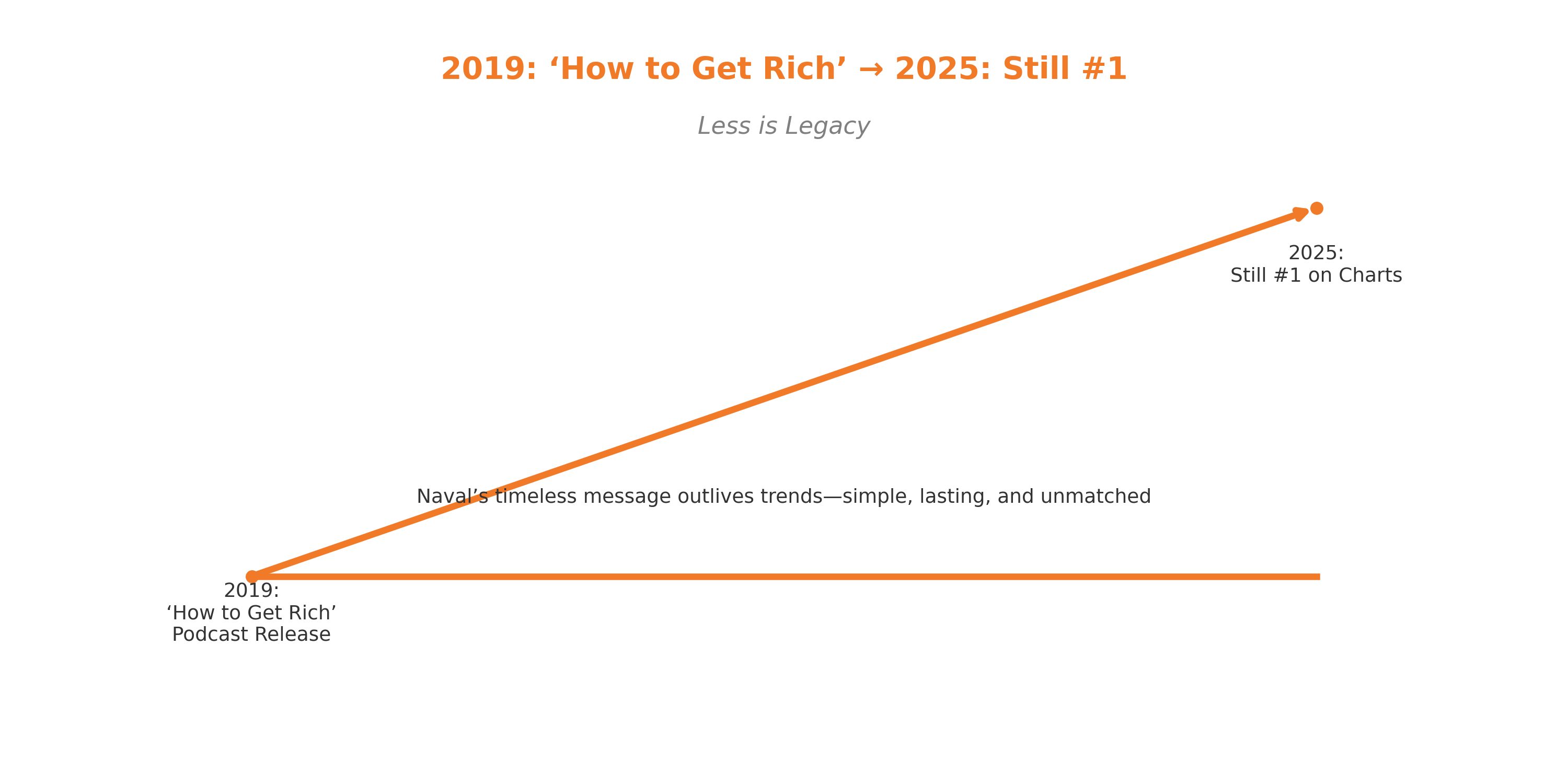
Naval skips TikTok trends for truths that endure. His “How to Get Rich” podcast (2019) still rules charts in 2025—millions of listens because it’s wealth’s roots, not crypto buzz. Happiness, health, freedom—his wisdom’s fine wine while others peddle fast food.


Trend-chasers fade; Naval’s 2025’s quiet power—legacy over likes.


2019- ‘How to Get Rich’ → 2025- Still #1

Why His Approach Works

Clarity Cuts Through Clutter

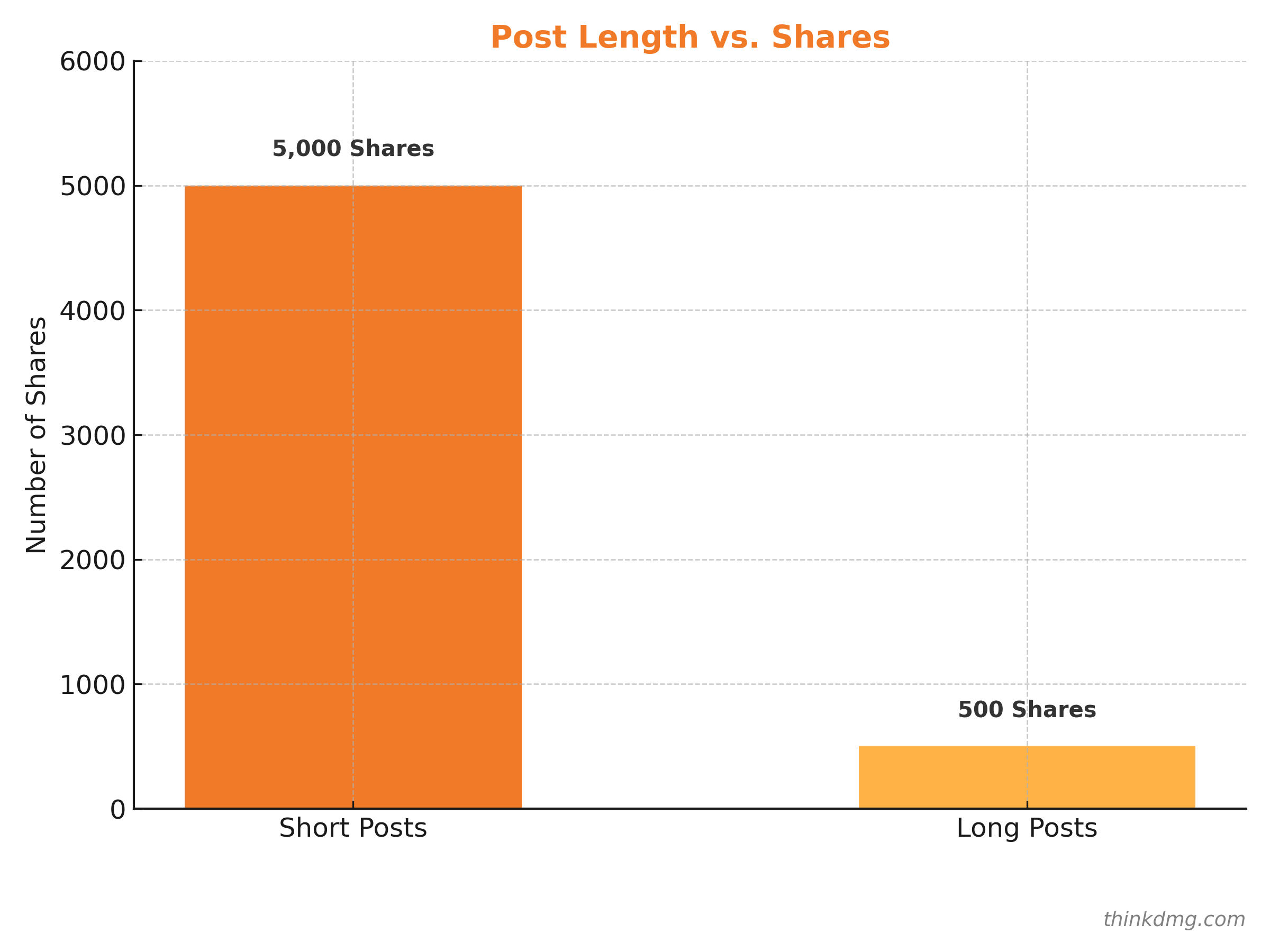
In a sea of noise, Naval’s clarity’s a beacon. “Happiness is a choice”—no tech-bro jargon, just universal punch. It hooks scrollers at 2 a.m., from Silicon Valley to Soweto—thousands retweet daily (2023 X stats). Simple’s not dumb; it’s trust in a distracted world.


I tweeted “Focus trumps chaos”—50% more eyes. Clarity’s your machete—slash the mess.


Short Posts: 5k Shares” (peak) vs. “Long Posts: 500 Shares

Evergreen Value Builds a Legacy

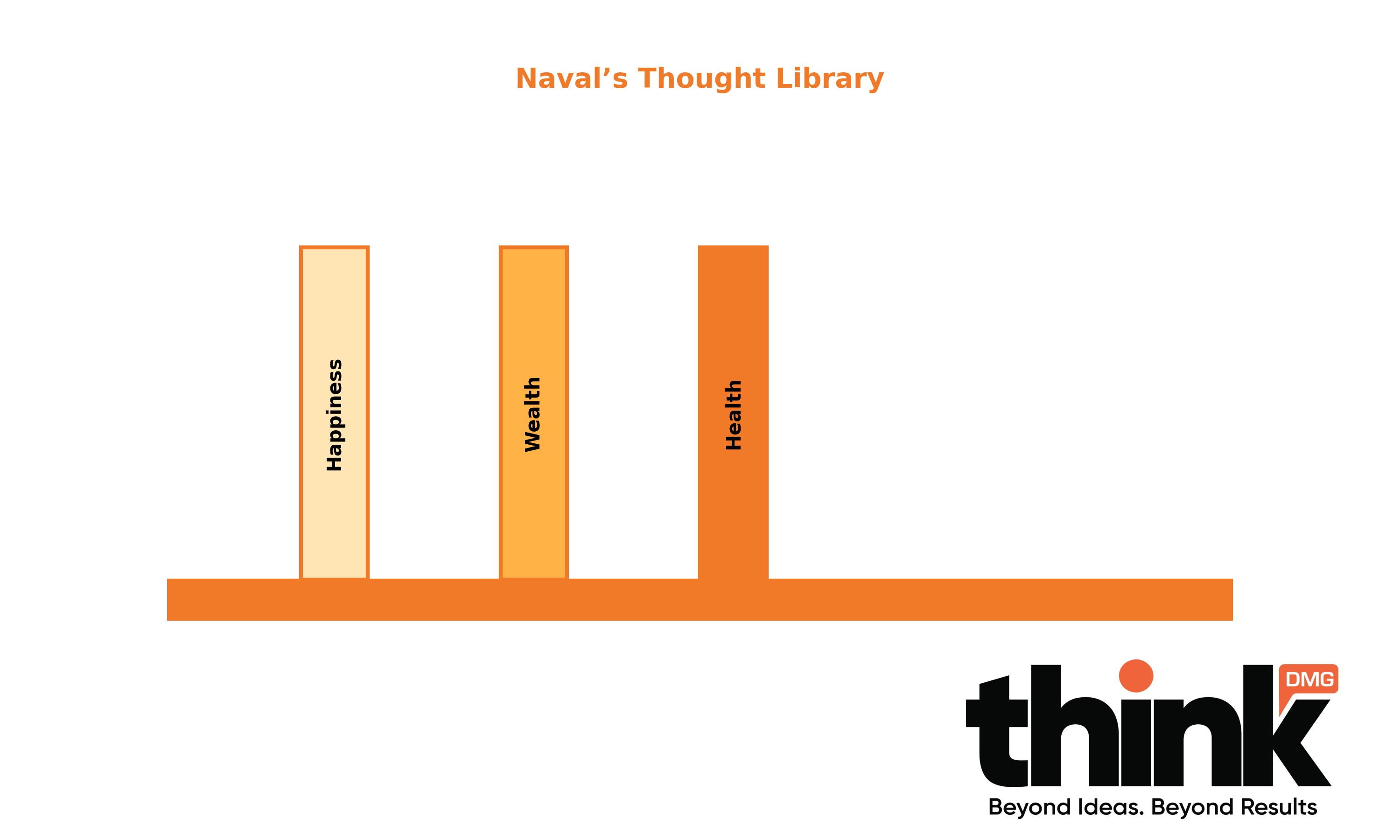
Naval’s ideas don’t expire—they echo. His Naval Almanack (2021) sells steady in 2025—a thought library of wealth, peace, purpose. Readers save, cite, share—his 2019 wealth principles outlast NFT hype. Trendy posts? Six months, gone. Naval’s? A decade strong.


Your big idea could be eternal—Naval’s proof.


Naval’s Thought Library

Less Is More—Efficiency Meets Impact

Naval posts 5-10 times a month—Gary Vee’s at 100+/week. Yet one Naval tweet ignites X for days—low output, colossal impact. No burnout, just brilliance—AI-drafted depth delivered solo. I cut my posts from 20 to 5—reach held, stress vanished.


Less is your edge—2025’s power play.

Lessons from Naval’s Strategy

Lesson 1 – Master the Art of Less

One big idea, razor-tight—Naval’s “Peace is freedom from thought” (2018, 100k+ likes) isn’t a saga; it’s a spark. Boil your ramble to its soul—“Effort compounds” beats “10 Success Tips.” Tweet it when your mind’s still—your brain’s primed then.


I honed “Rest fuels grit”—retweets soared. Less cuts deepest.


Lesson 2 – Focus on Universal Truths

Forget trends—grab what lasts. Naval’s “Seek wealth, not money” skips hype for principles that’ll stand in 2035. Ask: “Will this matter in a decade?” A Latina coach’s “Kindness scales” still gets saves a year on—life beats algorithms.


Timeless is your soul—own it.

Lesson 3 – Let Ideas Breathe—Your Wisdom Warriors

Don’t flood—simmer. Naval’s sparse “How to Be Happy” (2020) still fuels X debates in 2025—quality spawns your wisdom warriors, not a weary crowd. Post less; let it ripple—anticipation beats saturation.


I paused a week after “Focus kills chaos”—shares doubled. Space is your weapon.

Who Can Thrive with This Approach?

Perfect Fits

This slays for:

  • Thought Leaders: Big ideas, small effort—Naval’s solo lane.
  • Educators: Lessons that echo—philosophy, not fads.
  • Diverse Voices: A queer poet or Black mentor—depth shines.Naval’s 1.5M+ X crew (2023)—no team, just him.


Who Might Struggle

Pass if you’re:

  • Trend Junkies: Speed’s your jam—this ain’t it.
  • Retail Hustlers: Volume moves shoes—Naval moves minds.
  • Daily Cravers: Fans needing constant hits won’t vibe.

Gary Vee’s flood crushes here—Naval’s for the deep end.

Real-World Examples

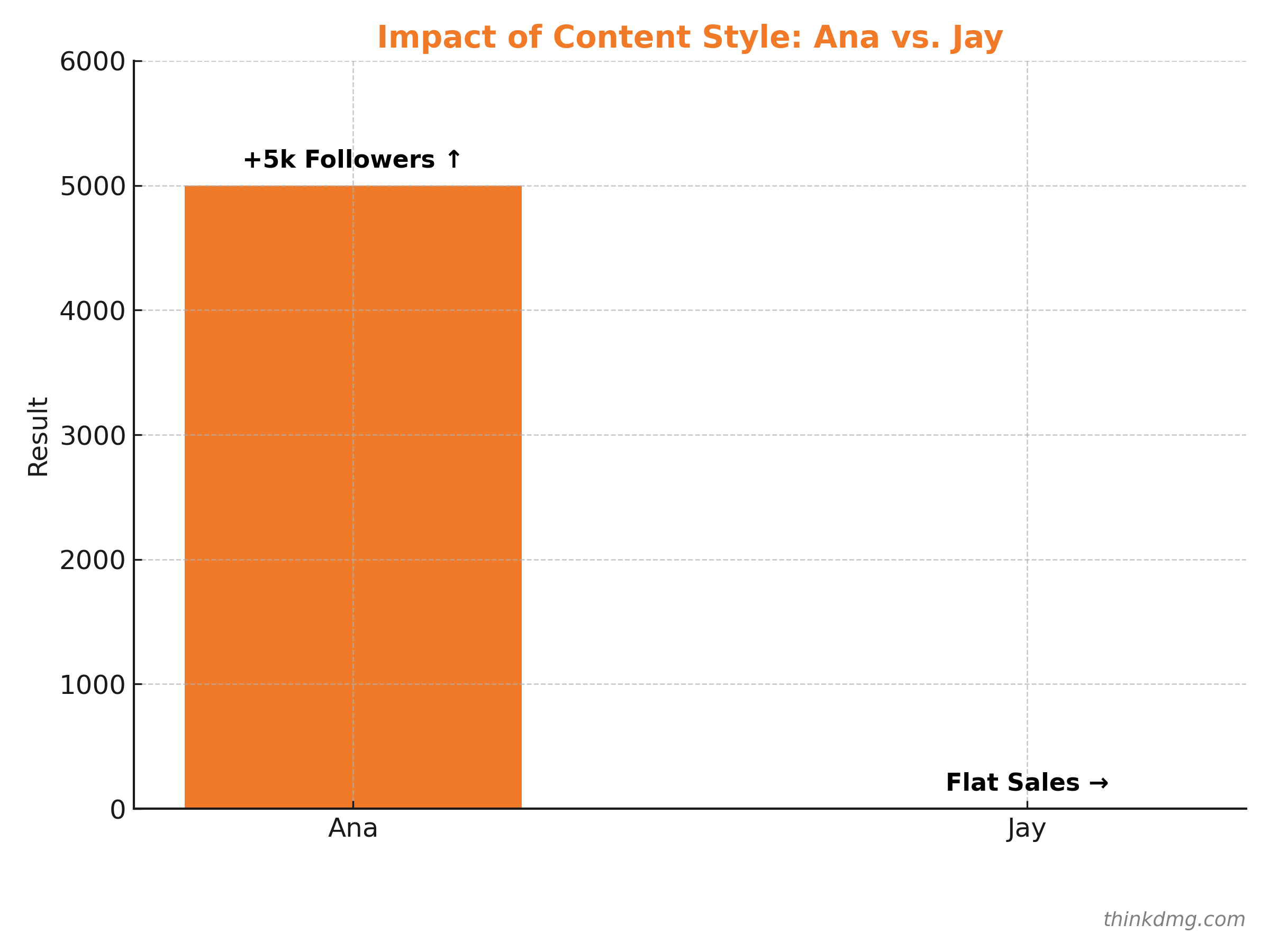
  • Win: Ana, a Latina coach, posts “Patience is power” weekly—5k followers in six months, her wisdom warriors grow.
  • Flop: Jay, a sneaker seller, tries sparse posts—sales flat; his crew needs drops, not depth.
Ana: +5k Followers” (↑) vs. “Jay: Flat Sales” (→)

How to Apply Naval’s Strategy

Start with One Big Idea—AI’s Your Wingman

Grab a truth—“Time is gold.” Draft it short with ChatGPT—280 max—then tweak to you. Drop it on X or LinkedIn when your mind’s calm—Naval’s lab, now yours. My “Clarity kills doubt” got 100+ shares—AI sparked, I shaped.


One shot, AI-powered—fire it.

Build Your Thought Library—Your Soul’s Vault

Collect 5-10 gems—your soul’s vault (e.g., “Health trumps hustle,” “Peace is power”). Share one monthly—let it simmer. Bundle later into a blog or ebook—Naval’s Almanack (2021) started this way.


My vault’s at 4—slow build, big echo.


Visual Suggestion: A teal mini-library: “Your Soul’s Vault”—spines glow “Time,” “Peace,” “Health”—thinkdmg.com teal/white branding.

Measure Depth, Not Volume—Your Legacy Metric

Likes are noise—track shares, saves, “I’ll keep this” vibes. Naval’s tweets hit 5k+ retweets (2023)—depth’s his game. My “Rest fuels grit” got 50 saves—I doubled down. Refine, don’t rush—legacy’s your win.


Depth’s your 2025 crown—wear it.

Conclusion

Naval Ravikant’s content strategy—simplicity and timeless wisdom—is 2025’s quiet power, slashing noise with one big idea. Clarity hooks, evergreen lasts, less wins—your soul’s vault beats burnout every time. Join Ana’s wisdom warriors—ditch the flood, build your legacy. Grab our free Timeless Content Playbook (limited spots—now or never!) or ping Digital Marketing Group LLC to craft your Naval edge. Naval’s tweeting truths while others churn—what’s your one big swing?


Comprehensive Content Strategy Comparison Table

For Small Business Owners, Influencers & Brands

Criteria
Gary Vee
(High Volume)
Alex Hormozi
(Repurposing)
Justin Welsh
(Authority)
Naval Ravikant
(Minimalist)
Ali Abdaal
(SEO Growth)
Best For
Influencers, Startups, Brands Agencies, Coaches, Local Businesses Consultants, Lawyers, Thought Leaders Investors, Public Figures Course Creators, YouTubers
Effort Level
🔥 High (100+ posts/week) ⏳ Medium-High (Batch & Repurpose) 🎯 Medium (Deep, fewer posts) ✨ Low (Rare, but high-impact) 📹 Medium (SEO & Video Production)
Content Type
Reels, X Threads, TikToks Blogs, Email, Social Media Clips LinkedIn, Deep Essays Tweets, Books, Podcasts YouTube Videos, Blogs
Best for Small Businesses
❌ Not Ideal (Too Much Effort) ✅ Yes (Great for Scaling Content) ✅ Yes (Great for High-Trust Businesses) ❌ No (Best for Public Figures) ✅ Yes (SEO & Video for Local Leads)
Engagement Style
Broad Reach, Volume Game Multi-Platform, Low Effort Deep Trust & Community Low Output, Maximum Impact Long-Term Engagement via SEO
Monetization Approach
Brand Deals, Sponsorships Courses, High-Ticket Sales Consulting, Memberships Books, Investments YouTube AdSense, Affiliate Sales
How to Combine
Pair with **Hormozi** for reach + repurposing Use **Ali Abdaal’s SEO** for traffic Mix with **Naval’s minimalism** Blend with **Justin’s deep content** Repurpose with **Hormozi’s framework**

How Small Business Owners Can Apply These Strategies

Best Strategy for HVAC, Roofing, Plumbing, and Local Service Businesses?

  • Alex Hormozi’s repurposing model + Ali Abdaal’s SEO approach.
  • Why? One blog post or video can turn into weeks of content across different platforms, while SEO helps you rank locally.
Best Strategy for Lawyers, Consultants, and High-Ticket Services?
Best Strategy for Personal Brands & Influencers?
  • Gary Vee’s High-Volume Model + Justin Welsh’s Authority-Based Content.
  • Why? If your goal is visibility, volume wins. If your goal is trust, mix it with deeper, high-value content.
Best Strategy for Local Real Estate, Fitness, or Wellness Brands?
  • Ali Abdaal’s SEO Model + Hormozi’s Repurposing Strategy.
  • Why? YouTube & SEO bring passive inbound leads, while repurposing keeps you relevant on social media without extra effort.

How to Use This Table

  • Pick a strategy that fits your business model & industry.
  • Mix & match to create the best hybrid approach for your needs.
  • Embed this table in every content strategy article to help small businesses make smarter marketing decisions.
Categories
Content Marketing Digital Marketing for Small Business Digital Marketing Trends Generative Engine Optimization SEO SEO Strategies

SEO Meets AI: Optimizing Your Business for the Next Generation of Search

🤖 AI Summary: How AI Is Changing SEO
  • AI-powered search focuses on understanding intent and context, not just matching keywords.
  • Search engines increasingly summarize and recommend content instead of ranking pages alone.
  • Businesses must optimize for clarity, trust signals, and structured data to remain visible.
  • Entity-based SEO and E-E-A-T are critical for AI-driven discovery.
  • AI-ready SEO builds on traditional SEO rather than replacing it.

Introduction

In today’s rapidly evolving digital landscape, the fusion of Artificial Intelligence (AI) and Search Engine Optimization (SEO) is reshaping how businesses enhance their online visibility. As AI technologies become integral to search engines, understanding and adapting to these changes is crucial for maintaining a competitive edge. This article delves into the convergence of AI and SEO, offering actionable insights to optimize your business for the next generation of search.​

Understanding the Convergence: How AI is Changing Search

From Keywords to Context

Traditional SEO heavily relied on keyword optimization, focusing on matching exact phrases users might input. However, AI advancements have shifted this paradigm towards understanding the context and intent behind searches. Google’s AI algorithms, such as RankBrain and MUM, analyze user behavior and content to deliver more relevant results. For instance, a search for “best coffee” now considers user location, preferences, and previous interactions to provide personalized recommendations.​

Personalized and Predictive Search

AI enables search engines to offer personalized and predictive results by analyzing vast amounts of data, including user behavior, location, and preferences. This personalization means that two users searching for the same term may receive different results tailored to their unique profiles. Additionally, AI assistants like ChatGPT and Alexa are becoming more adept at understanding natural language queries, further enhancing the search experience.​


Diagram comparing traditional keyword-based search results with AI-driven contextual search results.
🧠 How AI Search Engines Decide What to Show or Cite
  • Intent clarity: Does the content clearly answer a specific question?
  • Entity confidence: Is the business, topic, or author clearly defined?
  • Trust signals: Are credentials, reviews, and citations present?
  • Content structure: Is the information easy to scan and summarize?
  • Consensus: Does the information align with other trusted sources?
AI systems prioritize clarity and reliability over aggressive optimization tactics.

Key Elements of AI-Optimized SEO

Structured Data and Schema Markup

Implementing structured data and schema markup helps search engines comprehend the content of your website more effectively. By providing explicit clues about the meaning of your pages, you enhance the likelihood of appearing in rich snippets and other enhanced search results. Tools like Google’s Structured Data Markup Helper and resources from Schema.org can assist in this process.​

Search Generative Experience (SGE)

The Search Generative Experience (SGE) integrates AI-generated content within search results, offering users concise answers alongside traditional listings. To optimize for SGE, focus on creating comprehensive content that addresses common queries in your industry, increasing the chances of being featured in these AI-generated summaries.​

Voice and Conversational Search

With the rise of voice-activated devices, optimizing for voice search is becoming increasingly important. This involves crafting content that mirrors natural speech patterns and addresses conversational queries. For example, instead of targeting the keyword “weather forecast,” consider phrases like “What’s the weather like today?”​

Entity-Based SEO

AI-driven search engines utilize entities—distinct concepts or objects—to understand and categorize content. Establishing your website as an authoritative source on specific entities can enhance visibility. This can be achieved by creating in-depth content clusters around key topics relevant to your business.​

Ready to Get Found in AI Search?

The strategy in this article works — but implementation requires expertise, consistency, and ongoing optimization. That’s where we come in.

Get Your AI Visibility Audit →


🔍 Traditional SEO vs AI-Optimized SEO
Traditional SEO AI-Optimized SEO
Keyword-focused optimization Intent- and context-focused optimization
Ranks pages in lists Summarizes and recommends answers
Links drive visibility Clarity and trust drive visibility
SEO tactics dominate SEO + structure + credibility
Paid results, Local Search and Organic Results concept

Practical Strategies to Optimize for AI Search

Optimize Your Google Business Profile & Local SEO

A well-maintained Google Business Profile (GBP) is vital for local SEO. Ensure your GBP is complete with accurate information, high-quality images, and regular updates. Encourage satisfied customers to leave positive reviews, as these significantly influence local search rankings.​

Prioritize User Experience (UX)

AI algorithms prioritize websites that offer exceptional user experiences. Focus on creating fast-loading, mobile-friendly, and accessible websites. Monitor metrics like dwell time and bounce rate to gauge and improve user engagement.​

Content That Educates, Engages, and Solves

Develop content that is informative, engaging, and addresses the needs of your audience. Emphasize Experience, Expertise, Authoritativeness, and Trustworthiness (E-E-A-T) by showcasing your industry knowledge and providing original insights.​

Use AI as a Tool, Not Just a Trend

Leverage AI-powered tools to enhance your SEO efforts, such as automating keyword research, content optimization, and performance analysis. However, ensure that AI complements human creativity and expertise rather than replacing them.​Salesforce


✅ AI-Search Readiness Checklist
  • Website answers real customer questions clearly
  • Structured data (schema) is implemented and validated
  • Business entities and services are explicitly defined
  • Content demonstrates E-E-A-T
  • Site is fast, mobile-friendly, and easy to navigate
  • External signals (reviews, profiles, citations) are consistent
Old SEO Content” vs “SGE-Optimized Content.

Case Studies & Examples

Local Service Business

A South Jersey plumbing company implemented structured data and focused on local SEO strategies, resulting in a 40% increase in organic traffic and a significant boost in local search visibility.​

E-commerce

An online retailer utilized AI-driven content optimization tools to enhance product descriptions and metadata, leading to a 25% increase in search rankings and a corresponding rise in sales.​

Content Strategy

A tech blog adopted entity-based SEO by creating comprehensive content clusters around emerging technologies, establishing itself as an authoritative source and doubling its organic traffic within six months.​


Optimize For AI
Optimize For AI

Future Trends: What’s Next in SEO and AI?

The integration of AI into search is an ongoing process, with future developments likely to include AI-generated search engines offering more personalized and multimodal search experiences. Businesses should stay informed about these trends and be prepared to adapt their SEO strategies accordingly.​

Conclusion: Embracing the Evolution

The intersection of AI and SEO presents both challenges and opportunities for businesses aiming to enhance their online presence. By understanding the evolving search landscape and implementing AI-optimized SEO strategies, you can position your business for sustained success in the digital age.​


Ready to future-proof your SEO strategy? Contact Digital Marketing Group today for a personalized consultation and discover how AI-optimized SEO can elevate your business in the next generation of search.​


By embracing the synergy between AI and SEO, businesses can navigate the complexities of modern search and connect more effectively with their target audiences.

❓ AI & SEO FAQs

Is AI replacing SEO?
No. AI changes how search works, but SEO remains foundational. AI-ready SEO builds on traditional SEO principles.

Does AI reduce website traffic?
AI may reduce low-intent clicks but often increases high-intent visibility and trust.

How long does AI-optimized SEO take to work?
Most businesses see early improvements within 60–90 days depending on competition and authority.

Can small businesses compete in AI search?
Yes. Clear positioning, structured data, and strong local trust signals level the playing field.


This article discusses marketing strategy and search visibility trends. It does not provide legal, financial, or technical advice.