
Many law firms have the same uncomfortable marketing problem: the traffic report looks better than the intake report. Rankings improve, impressions rise, and the site gets more visits, but the firm does not see the same lift in qualified consultations or signed cases.
That gap is where law firm SEO either becomes a growth system or stays stuck as a visibility exercise. In 2026, the firms that win organic search are not simply publishing more legal content. They are building a search experience that matches how real people evaluate attorneys before they ever schedule a consultation.
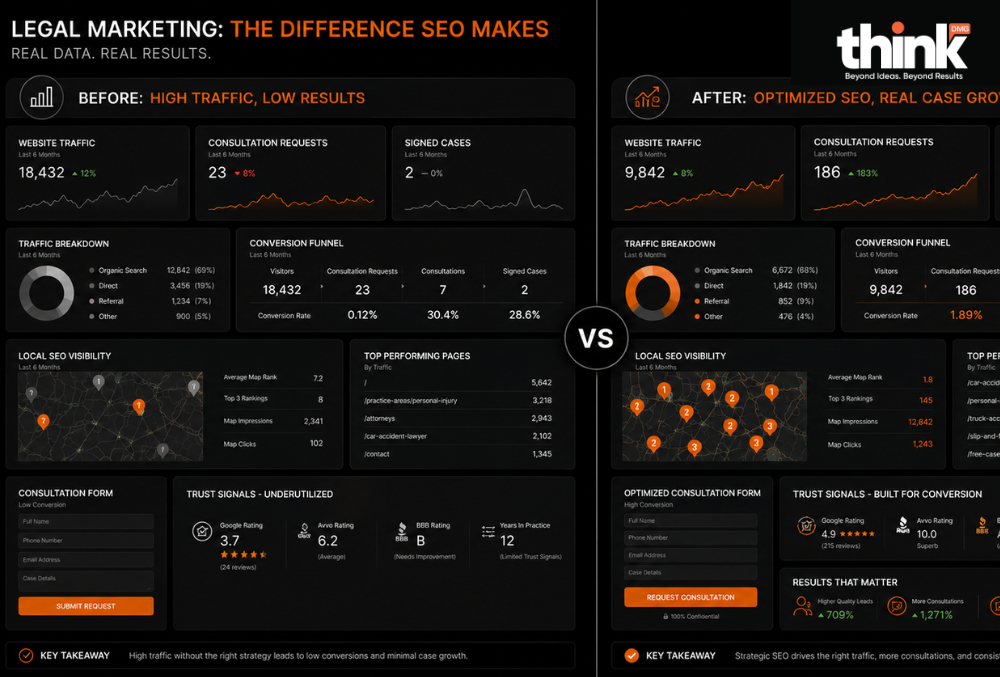
Law Firm SEO Has to Be Measured Against Signed Cases
Organic traffic matters, but it is not the business outcome. A family law firm, personal injury firm, estate planning attorney, or business litigation practice does not need random pageviews. It needs qualified people in the right geography, with the right legal problem, at the right moment of urgency.
That means the SEO strategy has to be evaluated by questions like:
- Which practice area pages produce consultation requests?
- Which local searches bring in people the firm can actually serve?
- Which content topics attract buyers instead of casual researchers?
- Which pages create enough trust for someone to call, submit a form, or book a consultation?
If a campaign cannot answer those questions, it is probably optimized for reporting instead of revenue.
Why Rankings Alone Do Not Create New Clients
A person searching for legal help is usually making a high-trust decision under pressure. They may be injured, facing a dispute, planning for a major life event, or trying to protect their business. They are not just comparing keywords. They are looking for confidence.
That creates a disconnect for many law firm SEO campaigns. A page can rank and still fail if it does not quickly answer the visitor’s real concerns:
- Does this firm handle my exact type of case?
- Does this attorney work in my state or local court system?
- Can I trust them with something personal, expensive, or urgent?
- What happens after I contact them?
Search visibility gets the visitor to the page. The page still has to earn the next step.
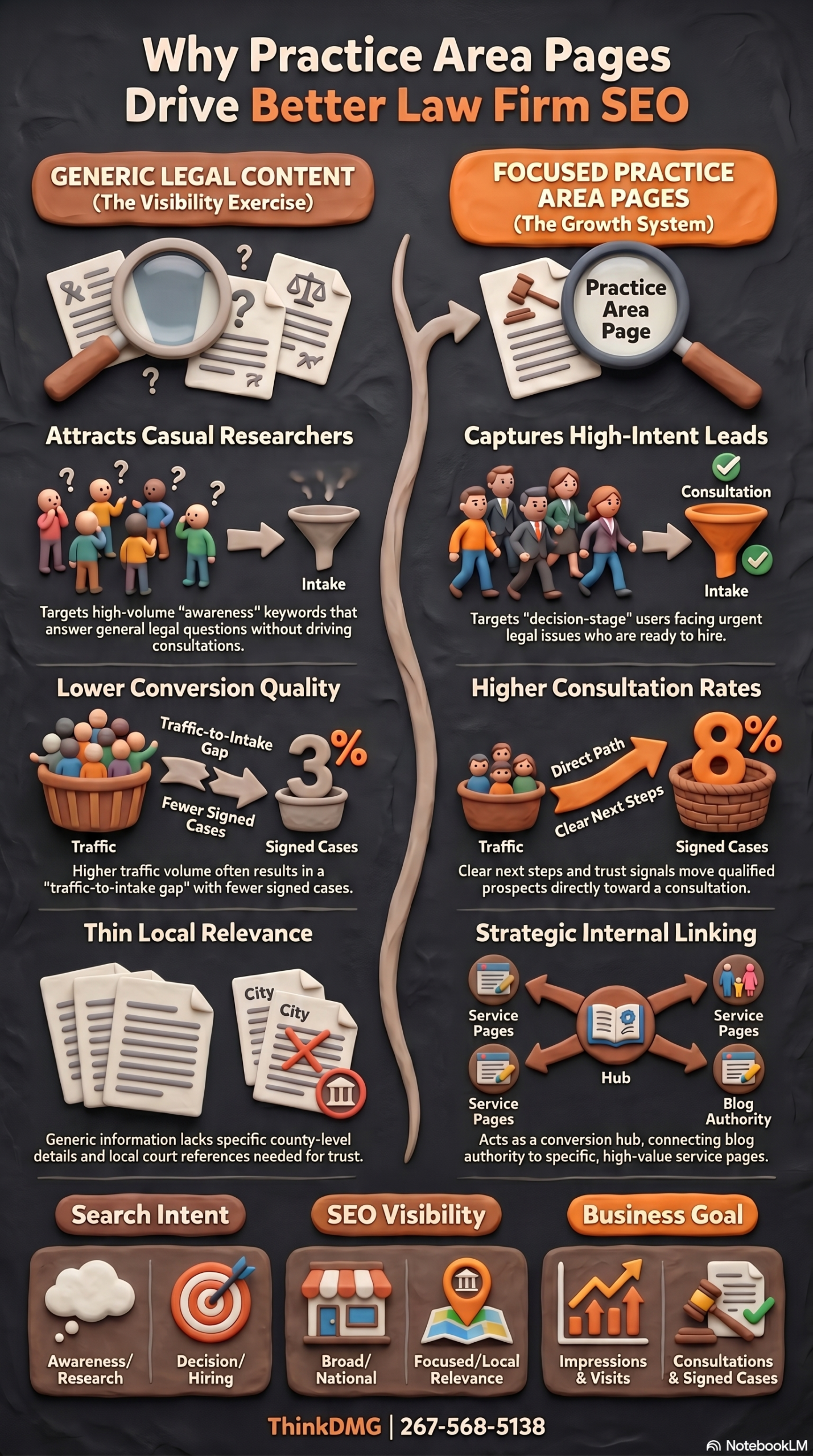
The Highest-Value Pages Are Usually Practice Area Pages
For most firms, the strongest SEO assets are not blog posts. They are practice area pages built around services people are actively looking to hire for. A blog post can support authority, answer questions, and build topical depth, but the practice area page is usually where the conversion happens.
A strong practice area page should do more than define the legal issue. It should clarify who the firm helps, what situations the firm handles, why the issue requires experienced guidance, and how the consultation process works. The tone should be clear and reassuring rather than stuffed with legal language.
For example, a personal injury page should not simply explain negligence. It should speak to medical bills, insurance pressure, missed work, case evaluation, timelines, and what the client can expect after contacting the firm. An estate planning page should not just define wills and trusts. It should help people understand the risks of delay, the difference between common planning tools, and how the process reduces confusion for the family.
This is where SEO services, conversion strategy, and website structure have to work together.
Local Relevance Is More Than Adding City Names
Local SEO for attorneys is often misunderstood. Thin pages that swap one city name for another rarely build durable visibility or trust. Search engines and prospective clients both need substance.
A stronger local strategy connects the firm’s services to the real market it serves. That may include county-specific pages, office location pages, local court references where appropriate, attorney availability by region, local review signals, and content that reflects the legal questions people in that area actually ask.
For New Jersey law firms, that might mean developing clear content for the firm’s strongest counties, not pretending to serve every town equally. A focused local footprint is usually more believable than a bloated location-page network.

Content Should Match the Client Journey
Good legal content has a job. Some content builds awareness. Some helps a person compare options. Some moves a qualified prospect toward a consultation. A balanced content plan should include all three.
- Awareness content: answers early questions, such as what to do after an incident or when a legal issue may require help.
- Consideration content: helps people evaluate whether to hire an attorney and what to look for in a firm.
- Decision content: supports conversion through practice pages, attorney bios, case result pages, consultation pages, and trust-building proof.
Many firms overproduce awareness content because it is easy to brainstorm. The better opportunity is often in consideration and decision content, where the audience is smaller but closer to hiring.
That is why content marketing for law firms should be planned around intake quality, not just publishing cadence.
Trust Signals Should Be Built Into the Site
Prospective clients compare law firms quickly. They look for reviews, attorney credentials, case experience, clear contact options, and signs that the firm understands their situation. Those signals should not be buried.
Useful trust elements include:
- Specific attorney bios that explain relevant experience, not just credentials.
- Practice area pages with clear next steps and realistic expectations.
- Recent reviews and professional responses where allowed by ethics rules.
- Case studies or representative matters when appropriate and compliant.
- Fast mobile contact options for people ready to call now.
The website should make it easy for a visitor to feel, “This firm handles my problem, understands the stakes, and gives me a clear next step.”
Technical SEO Still Matters
Technical issues can quietly limit an otherwise strong campaign. Slow mobile pages, confusing site architecture, missing internal links, duplicate content, crawl problems, and weak schema can all reduce the performance of legal SEO assets.
For law firms, technical SEO should support three priorities: search engines can crawl the important pages, users can move through the site easily, and conversion paths work cleanly on mobile. If a page ranks but loads slowly or hides the contact option, the campaign is leaking opportunity.
When the site itself needs work, a focused web design improvement can produce more value than publishing another batch of generic blog posts.

What a Strong Law Firm SEO Plan Looks Like
A practical legal SEO plan should begin with the firm’s business goals, not just a keyword list. The strongest campaigns usually include:
- A review of intake data and the firm’s most profitable case types.
- Practice area page improvements for high-value services.
- Local SEO around the strongest service areas.
- Content mapped to awareness, consideration, and decision-stage searches.
- Technical cleanup and internal linking improvements.
- Review generation and reputation support.
- Measurement that connects organic traffic to qualified consultations and signed matters.
The important shift is simple: do not ask whether SEO is creating more traffic. Ask whether it is creating more of the right conversations.
FAQ: Law Firm SEO in 2026
How long does SEO take for a law firm?
Most firms should expect meaningful movement over several months, with stronger compounding gains over a longer horizon. The timing depends on competition, location, site quality, content depth, reviews, and how aggressively the firm improves conversion assets.
Should a law firm focus on SEO or Google Ads first?
It depends on timeline and budget. Ads can create faster visibility, while SEO builds durable authority over time. Many firms use both, but the website and intake process should be strong before scaling either channel.
What is the biggest SEO mistake law firms make?
The biggest mistake is treating traffic as the goal. A law firm SEO campaign should be built around qualified leads, consultation requests, and signed cases.
Build an SEO System That Supports Intake
Law firm SEO works best when it is treated as a client acquisition system. The rankings matter. The content matters. The technical foundation matters. But all of it should point toward the same outcome: helping the right prospect trust the firm enough to take the next step.
Digital Marketing Group helps service-based businesses build organic visibility that supports real growth. If your firm wants to evaluate whether its SEO is producing the right kind of opportunity, contact ThinkDMG and start with a clearer view of what is actually working.
