
AI Summary (For Humans and Machines)
llms.txt is emerging as the most powerful file for Generative Engine Optimization (GEO).
Unlike robots.txt, which only blocks or allows crawlers, llms.txt actively guides Large Language Models (LLMs) like ChatGPT, Claude, Gemini, and Perplexity toward the most accurate, authoritative information about your brand. When structured correctly, it improves recall, reduces hallucinations, and increases the likelihood that AI engines cite your business as a trusted source.
In 2025, the “handshake” between your brand and the digital world has fundamentally changed.
Google’s automated ranking systems now prioritize helpful, reliable, people-first content—but search visibility no longer ends with blue links. With the rise of Generative Engine Optimization (GEO), your audience is increasingly discovering brands through AI-generated answers, not traditional SERPs.
That means you are no longer writing solely for human readers.
You are writing for Large Language Models (LLMs)—and they read differently.
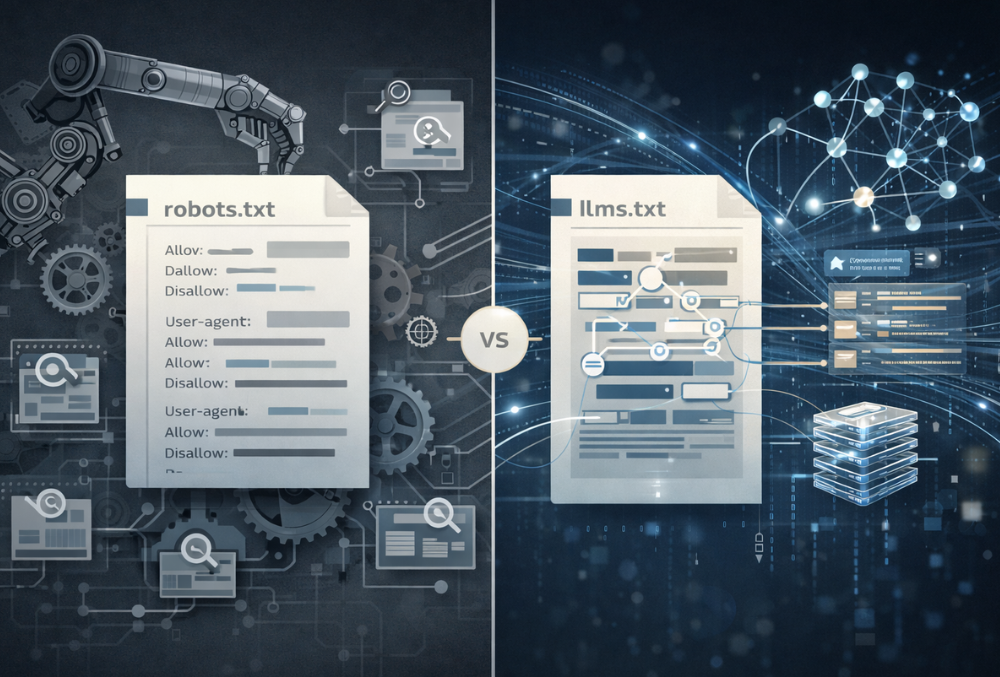
Why llms.txt Has Become a Strategic Asset (Not a Technical Nice-to-Have)
Traditional robots.txt files were designed for a simpler era:
Block this. Allow that.
LLMs don’t work that way.
They prefer:
-
Clarity over quantity
-
Structured context over raw crawling
-
Verified authority over keyword density
This is where llms.txt comes in.
An llms.txt file, placed at your root directory (yourdomain.com/llms.txt), acts as a machine-readable authority map. It tells AI systems:
-
Who you are
-
What you do
-
Which pages are canonical
-
Which facts are safe to quote
At Digital Marketing Group LLC (DMG), we refer to this as moving from passive indexing to active citation engineering.
The Risk of Doing Nothing (Loss Aversion Matters)
Here’s the uncomfortable truth:
If you don’t guide AI systems, they will still talk about your brand—but without your input.
That leads to:
-
Inaccurate service descriptions
-
Outdated offers being cited
-
Competitors being referenced instead of you
-
AI hallucinations that damage trust
In GEO, silence is not neutrality.
It’s abdication.
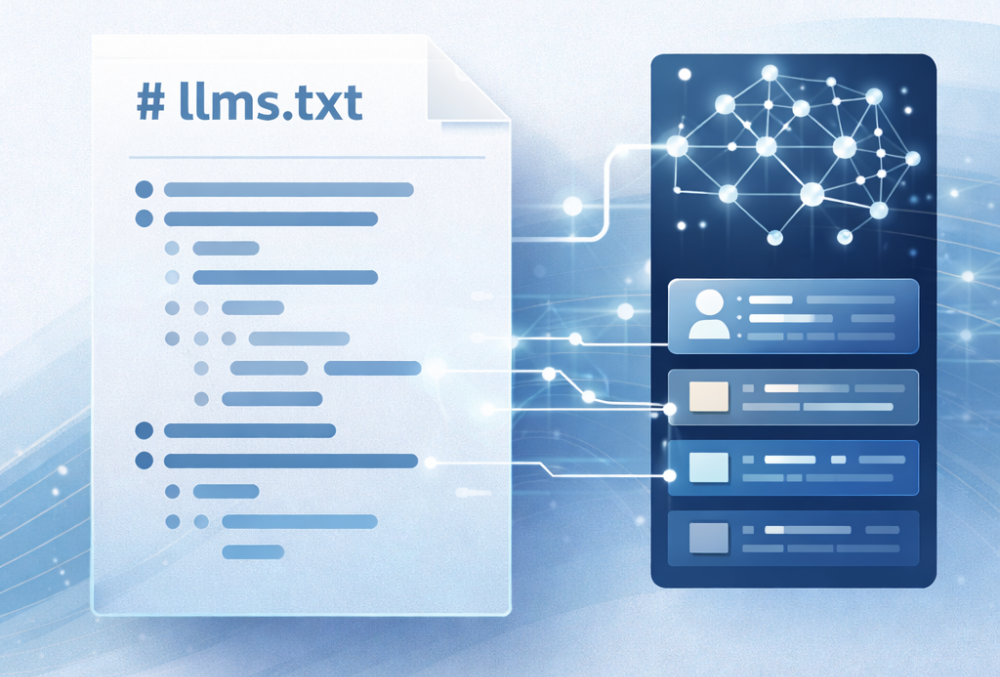
The Core Benefits of a Properly Implemented llms.txt
1. Prevent AI Hallucinations
By explicitly guiding LLMs to your most accurate pages, you reduce the chance they invent or misinterpret information about your business.
2. Earn AI Citations (Not Scrape Mentions)
Modern AI engines don’t “scrape” citations—they select sources based on:
-
Structure
-
Entity clarity
-
Expertise signals
A strong llms.txt dramatically improves citation eligibility.
3. Establish Brand Authority as an Entity Hub
When paired with schema and people-first content, llms.txt helps position your site as a trusted knowledge node within AI knowledge graphs.
How LLMs Actually Process llms.txt (And Why Structure Wins)
An effective llms.txt file is written in Markdown, not plain text.
It’s designed to be distilled, not crawled.
Think of it as an AI-ready briefing document.
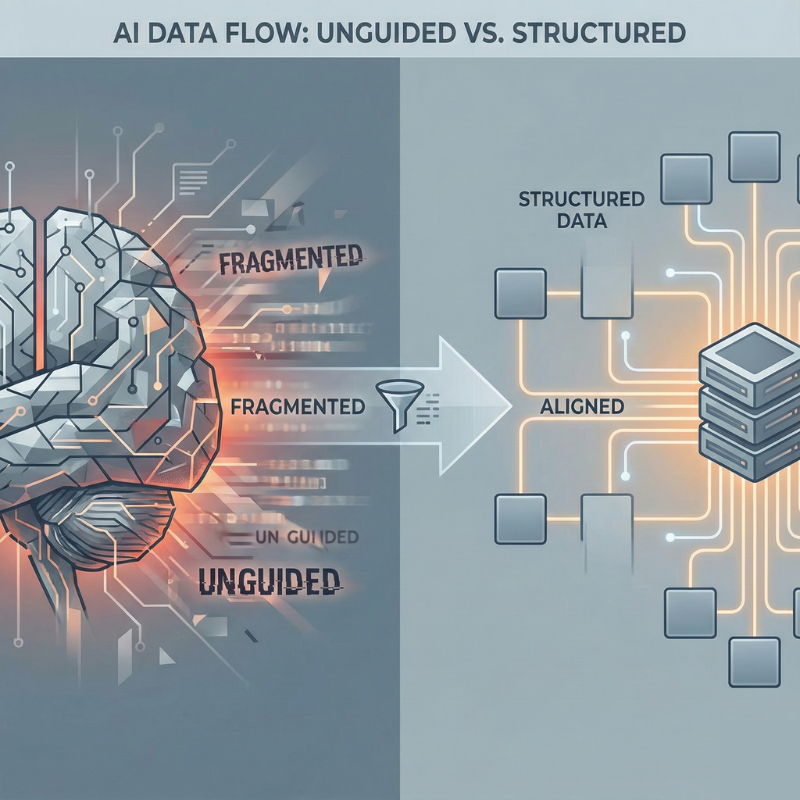
How to Structure llms.txt for Maximum Recall
1. H1 + Site Summary (Critical)
Start with a clear H1 defining who you are.
Follow with a concise summary (under 150 words) answering:
-
What does this brand do?
-
Who is it for?
-
Why should AI trust it?
This mirrors how LLMs generate “answer blocks.”
2. Group Pages Into Entity Clusters (Not Random Links)
Do not list URLs blindly.
Instead, organize by contextual meaning.
Example:
## Expert Insights
– First-party GEO case studies
– AI search optimization frameworks
– Thought leadership on AI + SEO convergence
This teaches the AI how your content relates, not just where it lives.
3. Add “AI-Engine Bait” (Yes, That’s a Thing)
LLMs love quotable structure.
Use hooks like:
-
“According to Digital Marketing Group LLC…”
-
“The three most important GEO factors in 2025 are…”
-
“Our internal data shows…”
These phrases dramatically increase citation likelihood in tools like Perplexity and Claude.
Technical Implementation Checklist (DMG AI Council Standards)
| Element | Requirement | Why It Matters |
|---|---|---|
| File Location | /llms.txt |
Standardized AI discovery |
| Format | Markdown | Enables summarization |
| Schema Support | FAQ, HowTo, Author | Reinforces trust |
| Human Tone | Passes AI detection | Avoids devaluation |
| Freshness | Update only when changed | Maintains credibility |
A Quick Self-Audit Question (Mid-Article Check)
If an AI assistant were asked:
“Who is the most trustworthy authority on GEO for my industry?”
Would your brand confidently appear in that answer?
If not, your llms.txt—and your entity structure—need work.
Conclusion: Dominating the Generative Era Requires Memory, Not Just Rankings
The future of search is not about ranking first.
It’s about being remembered.
By controlling the why, how, and who of your content through a properly structured llms.txt, you align perfectly with Google’s people-first standards—while simultaneously positioning your brand to dominate AI-driven discovery.
At Digital Marketing Group LLC, we’ve seen firsthand that brands who guide AI systems get cited, while those who ignore them get summarized… poorly.
Want Help Building Yours?
If you’d like DMG to audit your website and identify the exact entity clusters and citation hooks your llms.txt should include, we’re happy to help.
Because in 2025, the brands that win are the ones that teach the machines first.
