Keep your finger on the pulse of digital marketing with updates on the latest trends, technological advancements, and innovative practices shaping the future of the industry.
SEO Meets AI: Optimizing Your Business for the Next Generation of Search
🤖 AI Summary: How AI Is Changing SEO
AI-powered search focuses on understanding intent and context, not just matching keywords.
Search engines increasingly summarize and recommend content instead of ranking pages alone.
Businesses must optimize for clarity, trust signals, and structured data to remain visible.
Entity-based SEO and E-E-A-T are critical for AI-driven discovery.
AI-ready SEO builds on traditional SEO rather than replacing it.
Introduction
In today’s rapidly evolving digital landscape, the fusion of Artificial Intelligence (AI) and Search Engine Optimization (SEO) is reshaping how businesses enhance their online visibility. As AI technologies become integral to search engines, understanding and adapting to these changes is crucial for maintaining a competitive edge. This article delves into the convergence of AI and SEO, offering actionable insights to optimize your business for the next generation of search.
Understanding the Convergence: How AI is Changing Search
From Keywords to Context
Traditional SEO heavily relied on keyword optimization, focusing on matching exact phrases users might input. However, AI advancements have shifted this paradigm towards understanding the context and intent behind searches. Google’s AI algorithms, such as RankBrain and MUM, analyze user behavior and content to deliver more relevant results. For instance, a search for “best coffee” now considers user location, preferences, and previous interactions to provide personalized recommendations.
Personalized and Predictive Search
AI enables search engines to offer personalized and predictive results by analyzing vast amounts of data, including user behavior, location, and preferences. This personalization means that two users searching for the same term may receive different results tailored to their unique profiles. Additionally, AI assistants like ChatGPT and Alexa are becoming more adept at understanding natural language queries, further enhancing the search experience.
Diagram comparing traditional keyword-based search results with AI-driven contextual search results.
🧠 How AI Search Engines Decide What to Show or Cite
Intent clarity: Does the content clearly answer a specific question?
Entity confidence: Is the business, topic, or author clearly defined?
Trust signals: Are credentials, reviews, and citations present?
Content structure: Is the information easy to scan and summarize?
Consensus: Does the information align with other trusted sources?
AI systems prioritize clarity and reliability over aggressive optimization tactics.
Key Elements of AI-Optimized SEO
Structured Data and Schema Markup
Implementing structured data and schema markup helps search engines comprehend the content of your website more effectively. By providing explicit clues about the meaning of your pages, you enhance the likelihood of appearing in rich snippets and other enhanced search results. Tools like Google’s Structured Data Markup Helper and resources from Schema.org can assist in this process.
Search Generative Experience (SGE)
The Search Generative Experience (SGE) integrates AI-generated content within search results, offering users concise answers alongside traditional listings. To optimize for SGE, focus on creating comprehensive content that addresses common queries in your industry, increasing the chances of being featured in these AI-generated summaries.
Voice and Conversational Search
With the rise of voice-activated devices, optimizing for voice search is becoming increasingly important. This involves crafting content that mirrors natural speech patterns and addresses conversational queries. For example, instead of targeting the keyword “weather forecast,” consider phrases like “What’s the weather like today?”
Entity-Based SEO
AI-driven search engines utilize entities—distinct concepts or objects—to understand and categorize content. Establishing your website as an authoritative source on specific entities can enhance visibility. This can be achieved by creating in-depth content clusters around key topics relevant to your business.
Ready to Get Found in AI Search?
The strategy in this article works — but implementation requires expertise, consistency, and ongoing optimization. That’s where we come in.
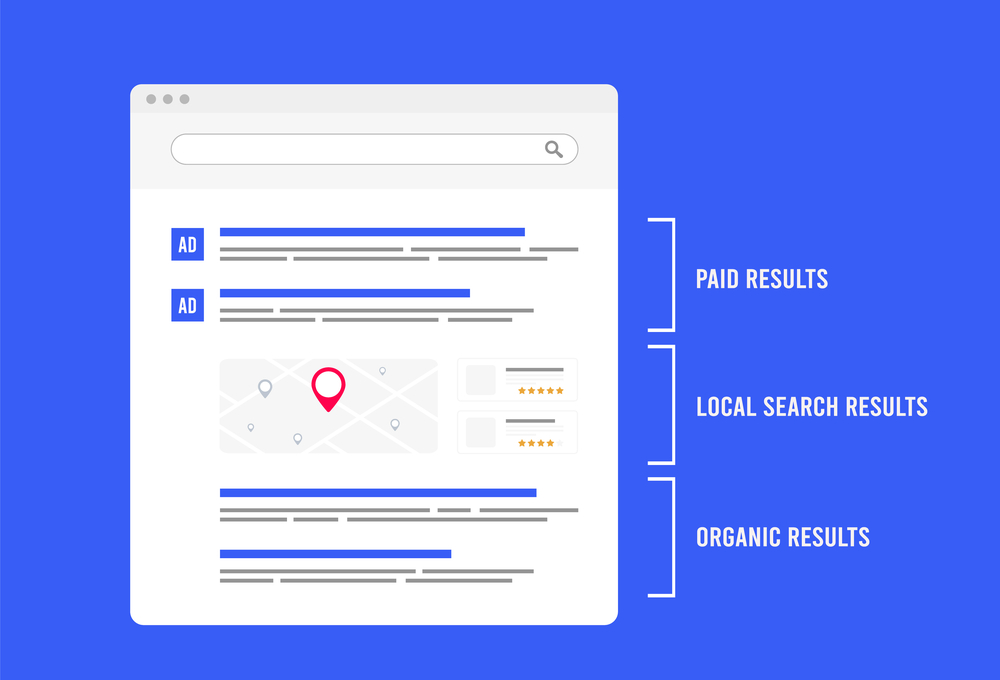
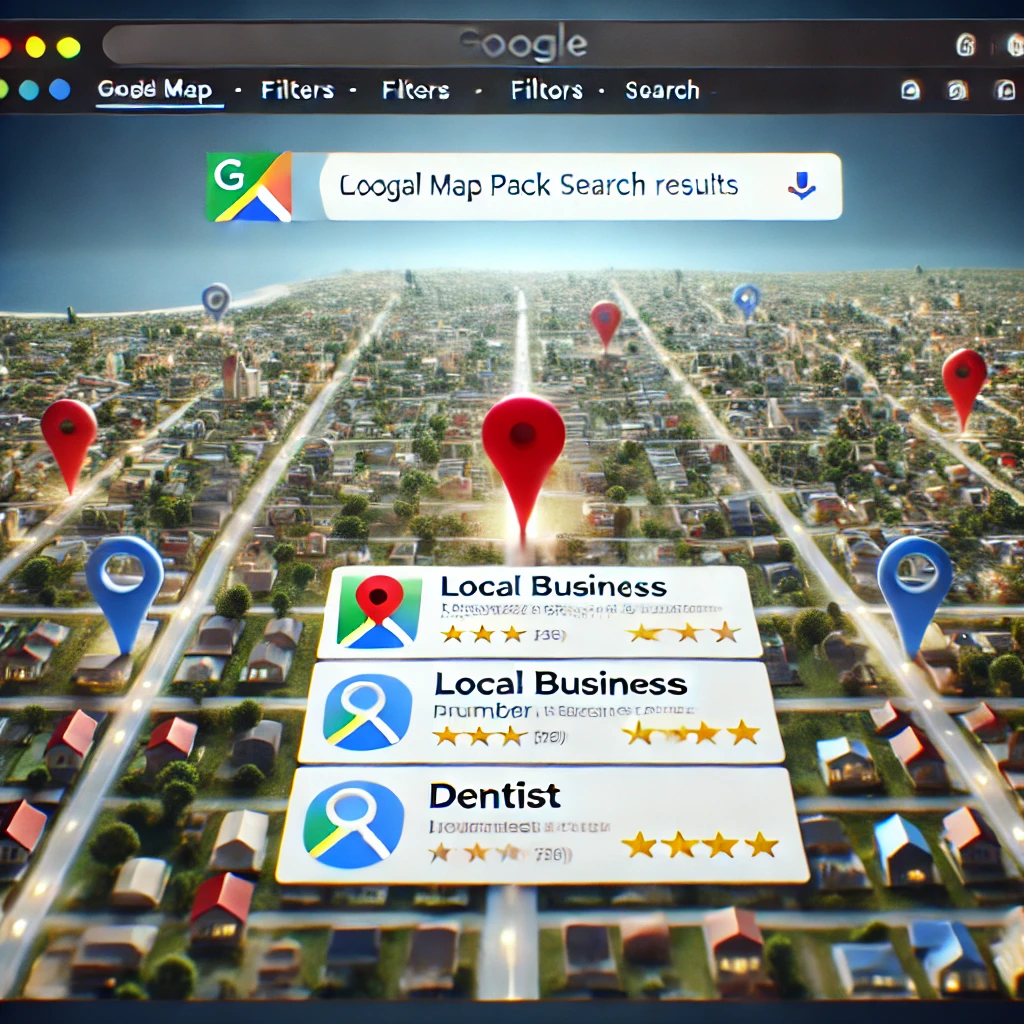
Paid results, Local Search and Organic Results concept
Practical Strategies to Optimize for AI Search
Optimize Your Google Business Profile & Local SEO
A well-maintained Google Business Profile (GBP) is vital for local SEO. Ensure your GBP is complete with accurate information, high-quality images, and regular updates. Encourage satisfied customers to leave positive reviews, as these significantly influence local search rankings.
Prioritize User Experience (UX)
AI algorithms prioritize websites that offer exceptional user experiences. Focus on creating fast-loading, mobile-friendly, and accessible websites. Monitor metrics like dwell time and bounce rate to gauge and improve user engagement.
Content That Educates, Engages, and Solves
Develop content that is informative, engaging, and addresses the needs of your audience. Emphasize Experience, Expertise, Authoritativeness, and Trustworthiness (E-E-A-T) by showcasing your industry knowledge and providing original insights.
Use AI as a Tool, Not Just a Trend
Leverage AI-powered tools to enhance your SEO efforts, such as automating keyword research, content optimization, and performance analysis. However, ensure that AI complements human creativity and expertise rather than replacing them.Salesforce
✅ AI-Search Readiness Checklist
Website answers real customer questions clearly
Structured data (schema) is implemented and validated
Business entities and services are explicitly defined
Content demonstrates E-E-A-T
Site is fast, mobile-friendly, and easy to navigate
External signals (reviews, profiles, citations) are consistent
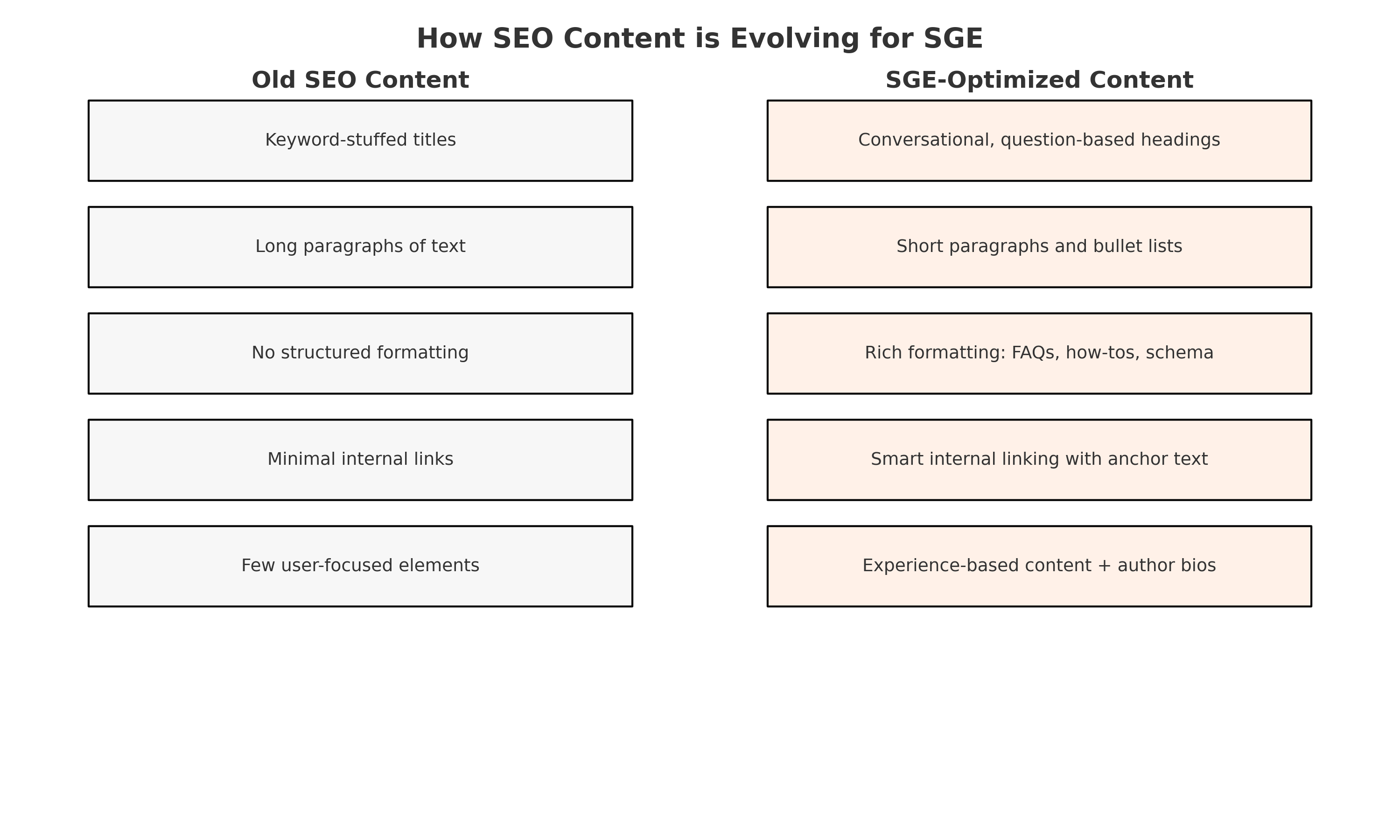
Old SEO Content” vs “SGE-Optimized Content.
Case Studies & Examples
Local Service Business
A South Jersey plumbing company implemented structured data and focused on local SEO strategies, resulting in a 40% increase in organic traffic and a significant boost in local search visibility.
E-commerce
An online retailer utilized AI-driven content optimization tools to enhance product descriptions and metadata, leading to a 25% increase in search rankings and a corresponding rise in sales.
Content Strategy
A tech blog adopted entity-based SEO by creating comprehensive content clusters around emerging technologies, establishing itself as an authoritative source and doubling its organic traffic within six months.
Optimize For AI
Future Trends: What’s Next in SEO and AI?
The integration of AI into search is an ongoing process, with future developments likely to include AI-generated search engines offering more personalized and multimodal search experiences. Businesses should stay informed about these trends and be prepared to adapt their SEO strategies accordingly.
Conclusion: Embracing the Evolution
The intersection of AI and SEO presents both challenges and opportunities for businesses aiming to enhance their online presence. By understanding the evolving search landscape and implementing AI-optimized SEO strategies, you can position your business for sustained success in the digital age.
Ready to future-proof your SEO strategy? Contact Digital Marketing Group today for a personalized consultation and discover how AI-optimized SEO can elevate your business in the next generation of search.
By embracing the synergy between AI and SEO, businesses can navigate the complexities of modern search and connect more effectively with their target audiences.
❓ AI & SEO FAQs
Is AI replacing SEO?
No. AI changes how search works, but SEO remains foundational. AI-ready SEO builds on traditional SEO principles.
Does AI reduce website traffic?
AI may reduce low-intent clicks but often increases high-intent visibility and trust.
How long does AI-optimized SEO take to work?
Most businesses see early improvements within 60–90 days depending on competition and authority.
Can small businesses compete in AI search?
Yes. Clear positioning, structured data, and strong local trust signals level the playing field.
This article discusses marketing strategy and search visibility trends. It does not provide legal, financial, or technical advice.
The YouTube SEO Formula- How to Optimize Videos for Maximum Growth
What if just one smart video could generate a steady stream of leads for your small business—without a studio setup or big marketing budget? That’s the power of YouTube SEO when done right.
In this guide, we’ll break down the YouTube SEO formula that creators like Ali Abdaal and Justin Welsh use to drive millions of views—then show you how to apply it to grow your business with zero fluff. Whether you run a café, service-based business, or local brand, this is your go-to playbook for turning videos into visibility, trust, and long-term customers.
Why the YouTube SEO Formula Works for Small Businesses
YouTube isn’t just for influencers—it’s the second-largest search engine in the world, with over 2.5 billion users. Even more powerful? 70% of its traffic is search- and recommendation-drivensource.
That means your video titled “5 Café Profit Hacks” can work 24/7, attracting your ideal customers without spending a cent on ads.
Short-form videos (like Instagram Reels) often disappear in a day or two. But a YouTube video optimized with the right SEO can generate views, trust, and leads for years.
Step 1 – Choose the Right Keywords for Your Niche
Your keywords are the compass of your content. If you’re targeting “how to grow a coffee shop” or “plumbing business tips,” that’s what your customers are searching for.
Step 2 – Optimize Titles, Thumbnails, and Descriptions
Your title is your first impression. Keep it under 60 characters and include your keyword at the front.
Good Example: “5 Retail Growth Tips for 2025” “Café Profit Hacks That Actually Work”
Your thumbnail should:
Feature your brand colors
Include bold, readable text
Show your face or logo
Your description should:
Be at least 200 words
Include the focus keyword
Link to your website
Include a strong CTA
And don’t forget tags:
Use 5–10 tags: a mix of broad and niche
Examples: “small business marketing”, “how to start a bakery”, “retail SEO”
Engagement can increase trust by 33%
Step 3 – Use Tags and Hashtags to Expand Reach
Tags help YouTube understand your video context, while hashtags make it searchable on mobile.
Use:
2–3 branded hashtags (#YourBusinessName)
2–3 topical hashtags (#smallbiztips, #localSEO)
Combined with your tags, this strategy helps videos show up in both YouTube and Google search.
Step 4 – Increase Engagement to Build Trust
Engagement is critical for ranking in YouTube’s algorithm. The more people comment, like, or share, the more YouTube boosts your video.
How to build engagement:
Reply to the first 5–10 comments on every video
Ask viewers to answer a question in the comments
Use a pinned comment with a CTA
Step 5 – Create Evergreen Video Content
Trendy videos fade. Evergreen videos—like “How to Price Your Products”—pull in leads for years.
Ali Abdaal’s 2020 video “Deep Work” still gets millions of views today. That’s the power of content that stays relevant.
For small business owners, try topics like:
“How to Start a Business in [Your Town]”
“Top 5 Ways to Attract Local Customers”
“Retail Survival Guide for 2025”
🟢 Bonus Tip: YouTube favors consistency. Even posting twice a month can build momentum.
Step 6 – Track Results and Tweak for Growth
YouTube gives you all the tools to measure your performance through YouTube Studio.
Watch these metrics:
CTR (Click-Through Rate)
Average View Duration
Audience Retention
If your video has a 40% drop-off in the first minute, trim your intro. If your thumbnail gets a low CTR, try brighter colors or clearer text.
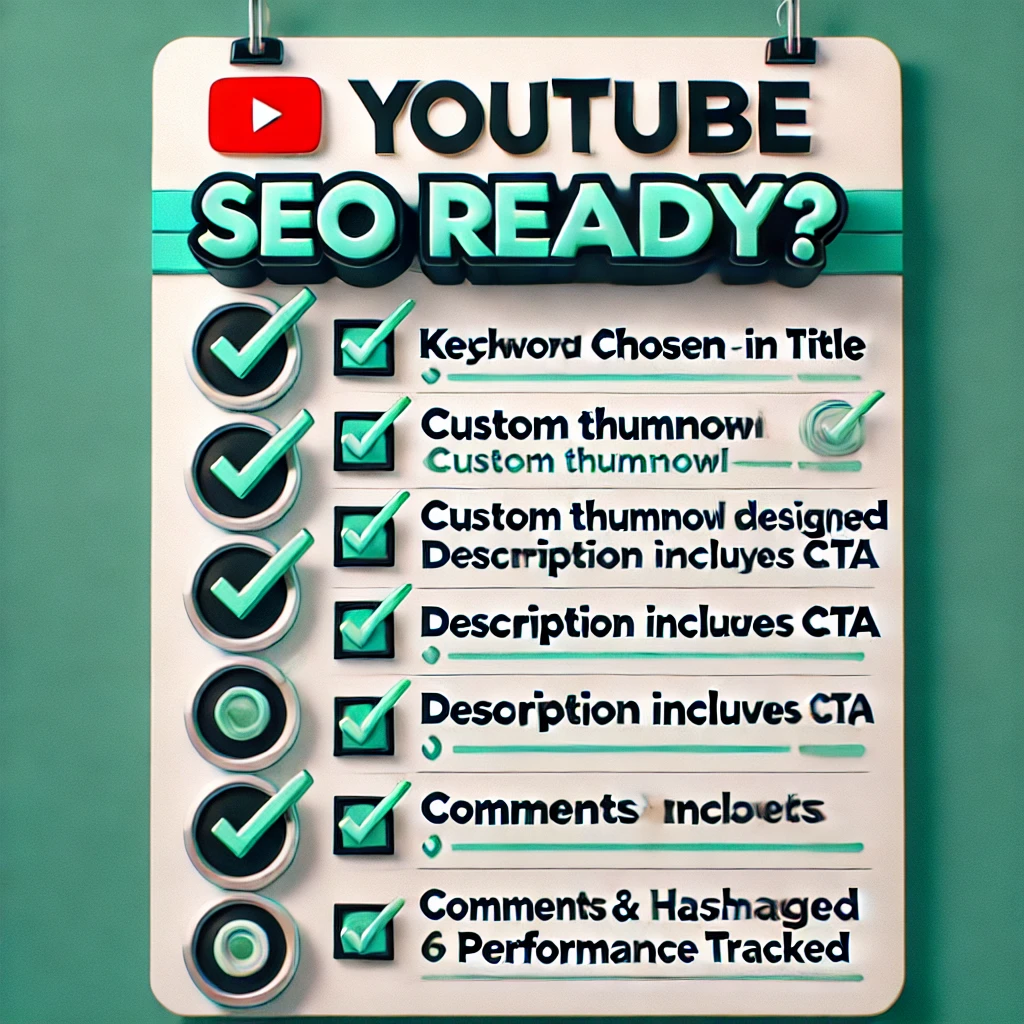
The YouTube SEO Checklist
🟩 Pre-Upload:
Keyword research complete
Focus keyphrase in title
Tags and hashtags added
🟩 Design:
Thumbnail optimized
Video length matches topic
🟩 Post-Upload:
Description is 200+ words
Comments replied to
Performance tracked weekly
YouTube SEO Ready?
Conclusion – Turn YouTube into Your Growth Engine
The YouTube SEO formula is your competitive edge—especially if you’re a small business owner with limited time and budget. You don’t need expensive gear or daily uploads. You just need the right SEO foundation.
With the right keywords, titles, thumbnails, and a little engagement, you can turn one video into a long-term lead generator.
Ready to grow your YouTube channel?
Get your FREE YouTube SEO Kit for Small Businesses or Schedule a consultation with Digital Marketing Group, South Jersey’s local SEO experts.
Why GEO Is the Next Big Thing for Local Businesses in 2024
If you’re a local business owner trying to stay visible in search results, brace yourself—because the rules of the SEO game are changing fast. And the new MVP? GEO—Generative Engine Optimization.
Introduction: What If Google Stops Showing Your Website?
Imagine pouring thousands into SEO, only for your traffic to dry up overnight because AI starts answering your customers’ questions before they even click. No phone calls, no leads, no conversions—just digital tumbleweeds.
This isn’t fear-mongering. It’s already happening.
In 2024, the rise of AI-powered search—like Google’s Search Generative Experience (SGE) and Bing’s Copilot—means the way people find local businesses is evolving. Generative Engine Optimization (GEO) is the strategy that ensures your business doesn’t just survive this shift—it thrives.
If you’ve been focused on ranking for “Plumber near me” or “Best coffee shop in [Your Town],” GEO is the key to being included in AI-generated answers, not excluded.
Let’s break down why GEO is becoming a must-have for local businesses—and how to make it work for you.
What Is GEO (Generative Engine Optimization)?
GEO is the process of optimizing your content so that it gets featured or cited in answers generated by AI engines (think: ChatGPT, Google SGE, Bing Copilot).
GEO vs. Traditional SEO
Feature
Traditional SEO
GEO
Optimizes for
SERPs (search engine result pages)
AI-generated answers
Focus
Keywords, metadata, backlinks
Semantic relevance, authority, structured content
Goal
Rank on Page 1
Be cited or referenced by AI assistants
With GEO, you’re not just trying to climb the rankings—you’re positioning your content as a trusted source for AI to pull from.
How GEO Impacts Local Search Results
Local SEO used to be simple: optimize your Google Business Profile, get reviews, and include your service area. Now? AI is summarizing the best plumbers, dentists, and landscapers in your town—often without showing the top 10 links at all.
Local Searches Go Conversational
Queries like:
“What’s the best HVAC company in South Jersey?”
“Where can I get same-day roof repair near me?”
…are now being answered directly by generative engines that summarize based on context and credibility, not just keyword usage.
The New “Local Pack” Is AI-Curated
Instead of Google showing a map and 3 listings, engines like SGE now display:
A conversational answer
Business mentions pulled from websites, reviews, directories, and helpful content
So if your content isn’t built to be summarized, you risk being left out of the conversation.
Why GEO Matters for Local Businesses
Here’s why early GEO adopters will crush the competition in 2024:
1. You’ll Get Featured in AI Responses
GEO-optimized content helps your brand show up when AI gives answers. It’s like getting quoted in an encyclopedia instead of buried in a phone book.
2. You Build Local Authority
Engines cite content they trust. By showing consistent expertise, trustworthiness, and relevance to local queries, you become a go-to source.
3. It Boosts Clickless Conversions
Even if users don’t click, they see your name. GEO gives your business visibility in a world of no-click answers, leading to direct searches and word-of-mouth referrals.
4. You’re Ahead of the Curve
Most local competitors are still focused on old-school SEO. Adopting GEO now gives you a massive first-mover advantage.
GEO Best Practices for Local Businesses in 2024
1. Create Conversational, People-First Content
Write in Q&A format.
Use natural language (like voice search queries).
Include “People Also Ask” style headings.
Example: “What’s the average cost of an emergency plumber in Glassboro, NJ?”
Want to be the plumber, law firm, or med spa that AI trusts enough to recommend? Then you need to:
Create content that answers questions.
Optimize with context and local data.
Build trust with EEAT and quality UX.
Call to Action:
Want to dominate local search in the AI era? Schedule a free consultation with Digital Marketing Group, LLC today and let us show you how GEO can turn your website into a lead-generating machine.
The Secret to Local Business Growth: Why SEO & YouTube Beat Social Media Every Time
Introduction: The Growth Strategy No One’s Telling You About
If you’re a local business owner, chances are you’ve poured time, money, and energy into social media. You’ve posted on Instagram, made Facebook updates, maybe even dabbled in TikTok. But despite the likes, shares, and emojis… the phone still isn’t ringing. Sound familiar?
You’re not alone.
Many local businesses fall into the “social media trap,” believing that constant posting equals growth. But what if the platforms you’re spending the most time on are giving you the least return?
Here’s the truth: If you want real, long-term local business growth, you need to focus on SEO and YouTube. These platforms aren’t just more powerful—they work harder, smarter, and longer than social media ever will.
Social media promises visibility, connection, and “going viral.” But the reality?
Instagram’s organic reach is less than 9%
Facebook sits even lower—often under 5%
TikTok content disappears in days (if not hours)
You post today, and tomorrow it’s gone. You’re stuck in a loop of chasing attention—without building traction.
Why It Doesn’t Convert
Here’s the kicker: most people on social media aren’t looking for your service. They’re scrolling to be entertained. Unlike search engines, where users type in “best plumber in Marlton NJ,” social content rarely aligns with buyer intent.
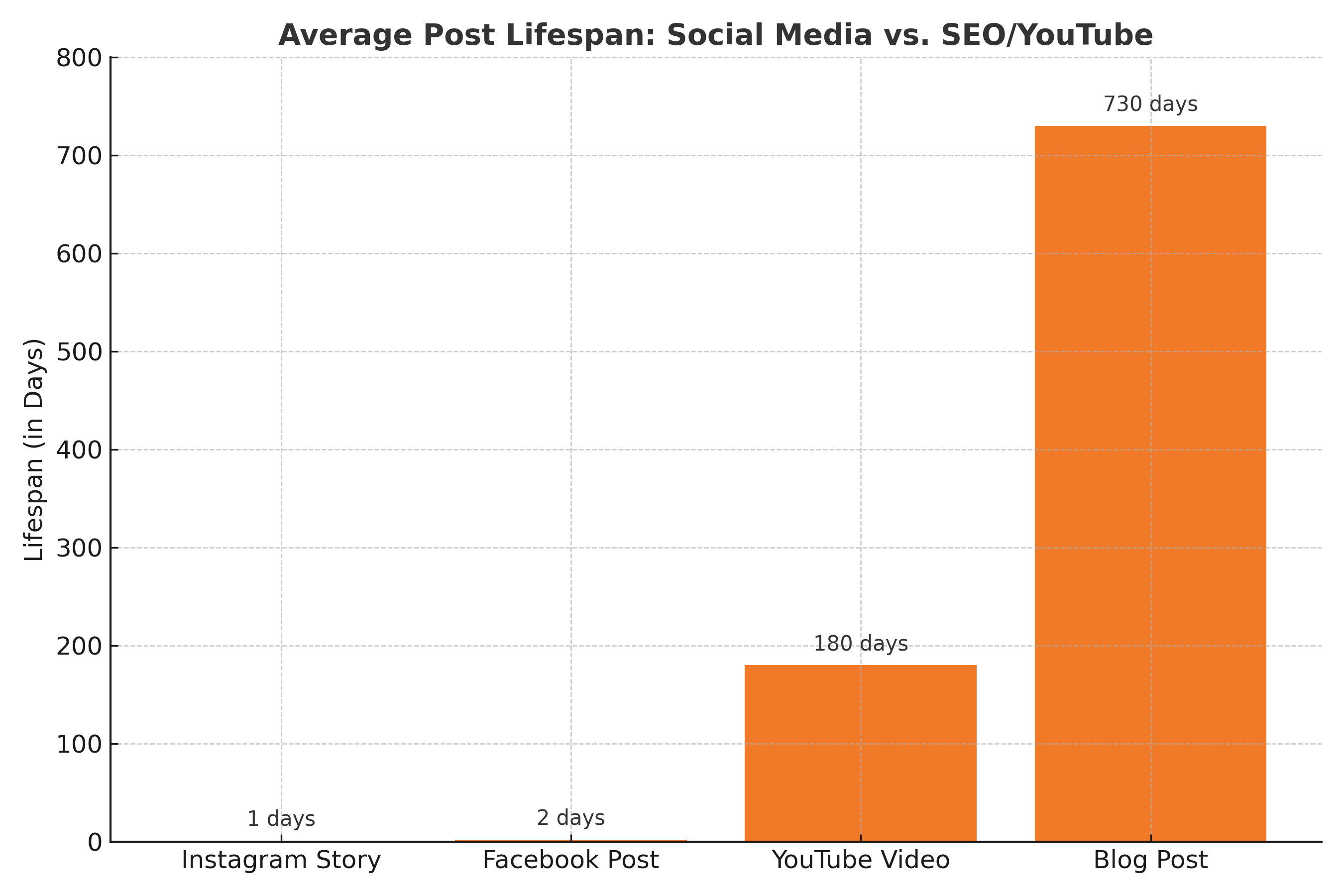
bar graph comparing average post lifespan:
Instagram Story (24 hours)
Facebook Post (2 days)
YouTube Video (months+)
Blog Post (years)
2. Local SEO: The Silent Powerhouse Behind Local Growth
What Is Local SEO, Really?
Local SEO is how your business shows up when someone searches “near me” or uses location-based phrases like “best dentist in Cherry Hill.” It includes:
Optimizing your Google Business Profile
Targeting local keywords
Generating positive reviews
Creating helpful blog content about your services and community
Why It Works Better Than Social
Search = Intent. When someone Googles your service, they’re closer to making a decision than someone casually scrolling.
🔍 Stat: 78% of local mobile searches lead to an offline purchase within 24 hours (Google).
Real-World Example
An HVAC company in South Jersey optimized its site for “furnace repair Marlton NJ.” Within 3 months, they appeared in the Google 3-pack and saw a 60% increase in phone inquiries—without posting on Instagram even once.
3. YouTube: The 24/7 Salesperson You’re Ignoring
YouTube Is a Search Engine, Not Just a Video Platform
Most business owners treat YouTube like TikTok—but it’s actually the second-largest search engine in the world. YouTube content is searchable, evergreen, and often ranks on Google too.
And unlike Reels, a well-optimized YouTube video can generate leads for months or years.
What Kind of Videos Should Local Businesses Make?
You don’t need a film crew or viral idea. Here’s what works:
Explainer videos: “How to know if your roof needs replacing”
Local lists: “Top 5 cafés in Moorestown, NJ”
Customer testimonials
Service walk-throughs
These build trust, educate, and convert.
YouTube Supports SEO
Embed your videos in blog posts, service pages, or your Google Business Profile. Transcribe them for SEO. Link to them in emails. You’re building content that compounds.
🧠 Visual Suggestion: Thumbnails of sample local business videos + an infographic showing “YouTube → Website → Local Rankings → Leads”
4. SEO + YouTube = A Local Growth Engine That Doesn’t Sleep
When you combine SEO and YouTube, you unlock a content strategy that:
Reaches people at the moment they need you
Builds credibility and visibility across search platforms
Continues generating leads long after it’s published
Let’s say you’re a personal injury lawyer. You write a blog titled “What to Do After a Car Accident in NJ,” embed a YouTube explainer, and link to your services. That content can rank for months—and bring in leads on autopilot.
💡 Pro Tip: Use tools like Ubersuggest or Keywords Everywhere to find local topics people are searching for, then create blog posts and videos around them.
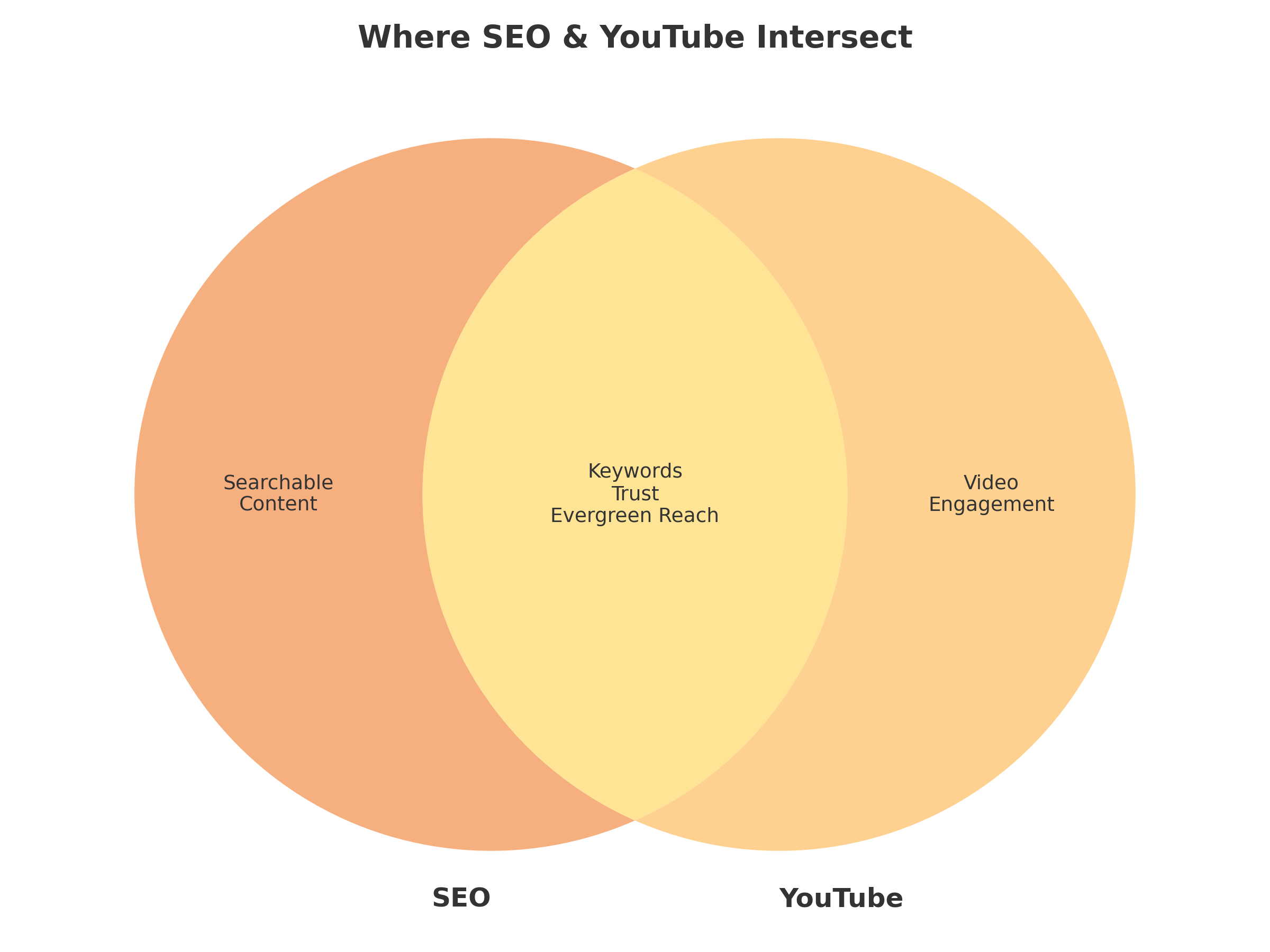
A Venn diagram showing where SEO and YouTube intersect
5. But Isn’t Social Media Still Useful?
Yes—but not as your foundation.
Social media is a great place to:
Distribute your best content (from SEO/YouTube)
Share behind-the-scenes and build community
Retarget existing audiences with ads
It’s the icing, not the cake.
📢 Use it to promote your YouTube videos. Not as your primary content engine.
6. Your 30-Day Local Growth Plan
Here’s how to get started today:
Week 1: Foundation
Claim and optimize your Google Business Profile
Identify top local service keywords
Week 2: Create Your First Blog
Write a blog answering a common customer question
Optimize for search and location (e.g., “plumber Cherry Hill NJ”)
Week 3: Record & Publish Your First YouTube Video
Start simple: FAQs, service explanations, intro to your team
Add keyword-rich title and description
Link it back to your blog or service page
Week 4: Share + Track
Share your content on social media
Track results with Google Search Console and YouTube Analytics
Gather reviews to boost local trust
🧠 Visual Suggestion: Printable checklist or interactive calendar titled “Your 30-Day SEO + YouTube Plan”
Conclusion: Growth Doesn’t Come from Chasing Algorithms
Social media has its place—but if you’re serious about growing your local business, the real ROI lies in SEO and YouTube.
They don’t just give you followers—they give you leads. They don’t demand daily posts—they work while you sleep. They don’t vanish—they compound over time.
Ready to stop posting and start growing?
👉 Contact Digital Marketing Group for a free Local Content Audit. We’ll show you how to attract more local leads—without burning out.
Alex Hormozi’s Secret to Scaling Content Without Extra Effort
Content repurposing is the process of turning one strong idea into many useful posts, videos, emails, and articles for different channels.
Alex Hormozi is known for using this approach at scale. Instead of creating every post from scratch, his team starts with one long-form idea and breaks it into smaller pieces.
For local service businesses, the same idea can work in a much simpler way. A roofing company, law firm, HVAC contractor, or medical practice does not need to post like a national creator. You need a system that turns your best advice into steady, useful content.
This article explains how to use the Hormozi-style repurposing model without copying influencer content. The goal is more useful touchpoints, better brand recall, and less content waste.
Why Traditional Content Creation Burns Teams Out
Many small businesses treat every post as a new project. They brainstorm, write, record, edit, and publish from zero each time.
That creates a bottleneck. The owner gets busy. The team runs out of ideas. The blog slows down. Social posts become random.
The fix is not always more content. The fix is a better content system.
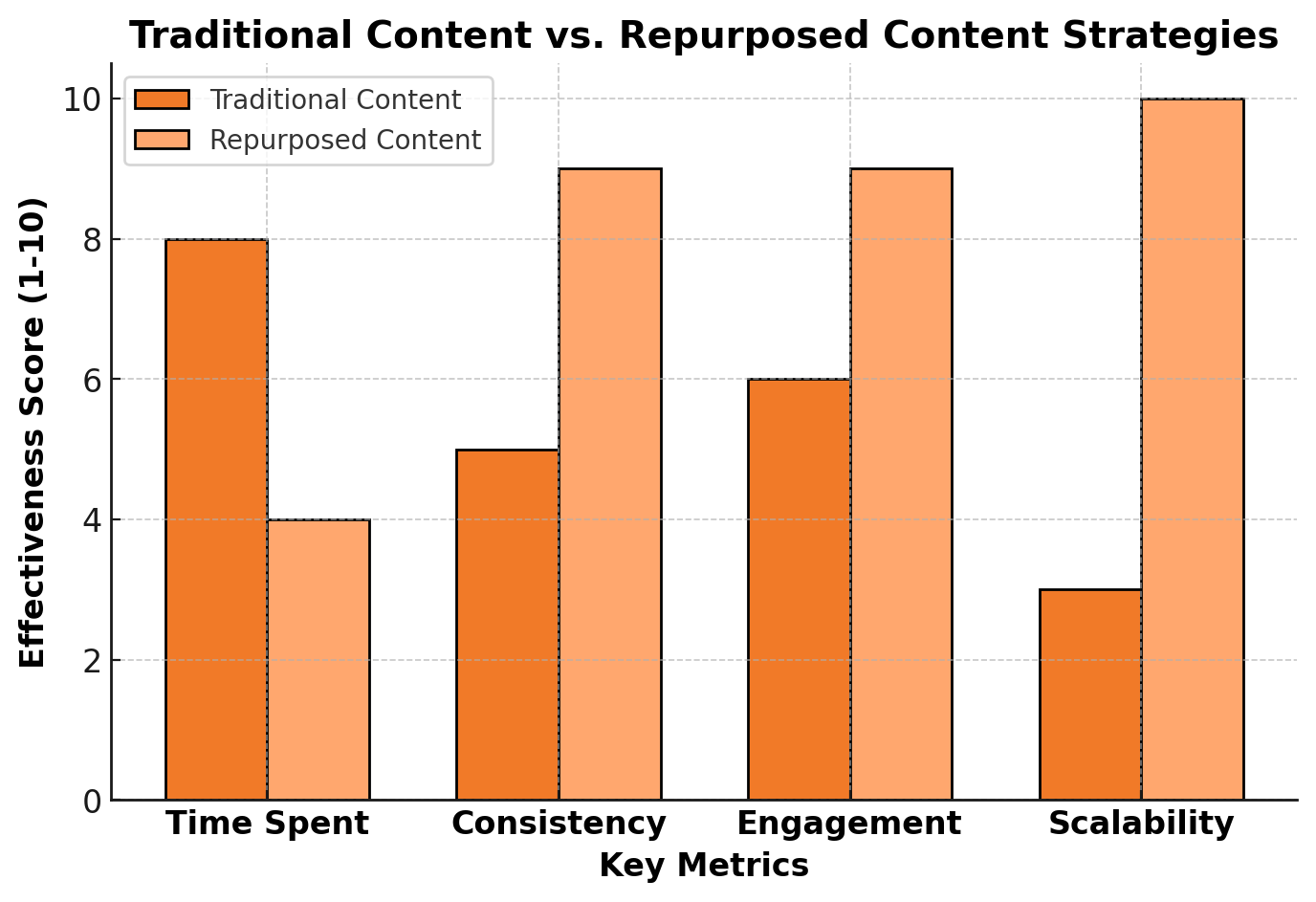
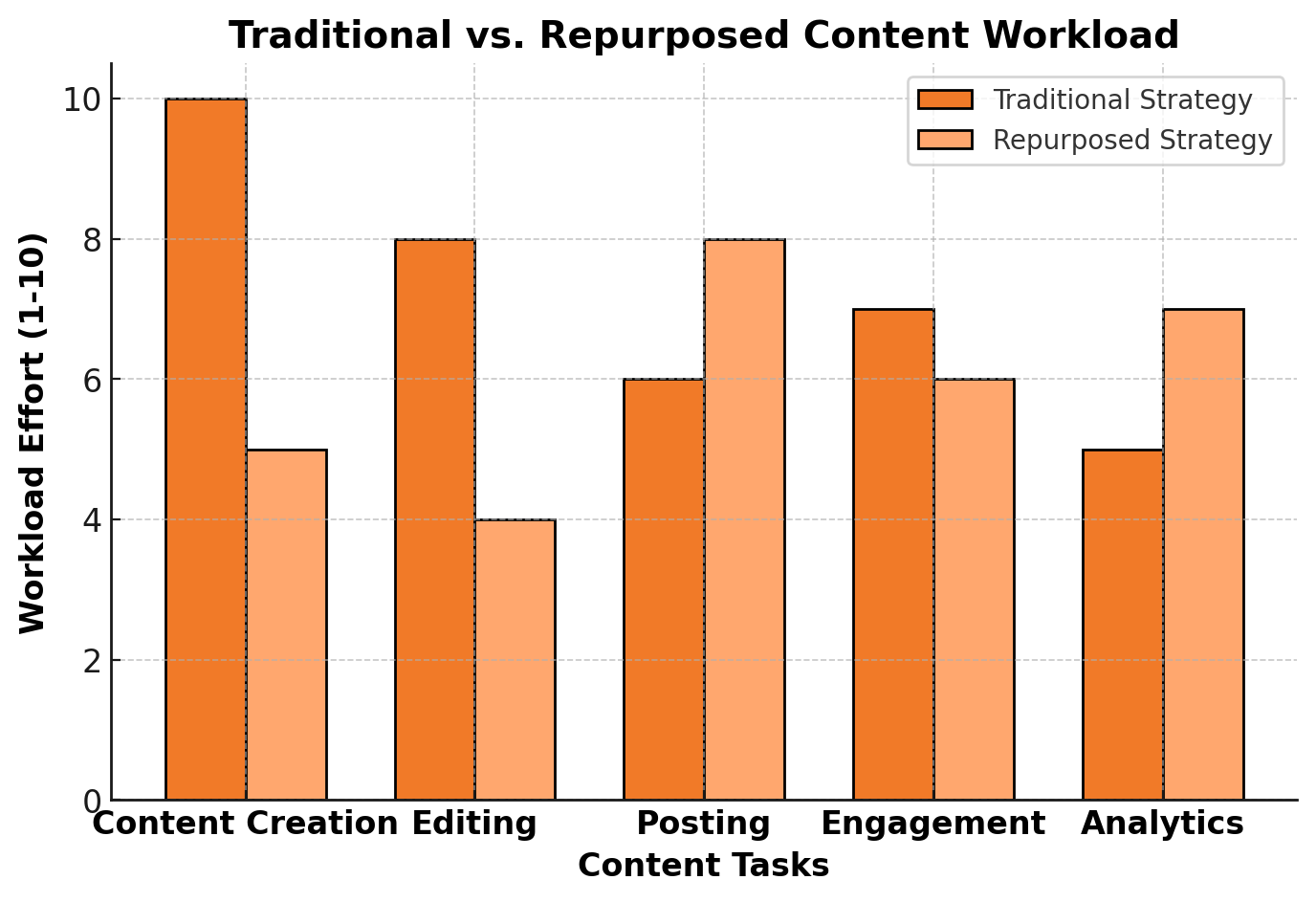
Traditional Content vs. Repurposed Content Strategies
The Hormozi Content Repurposing Idea
The core idea is simple: start with one large piece of content, then turn it into smaller assets.
That large piece could be a podcast, webinar, YouTube video, client question, service guide, or long blog post. Once it exists, you can pull out short clips, quotes, checklists, emails, and social posts.
For example, one local roofing guide about storm damage could become:
A blog post about storm damage warning signs.
A short video explaining when to call a roofer.
A checklist for homeowners after heavy wind.
A Google Business Profile post for emergency service.
An email to past customers before storm season.
A short FAQ for the roof repair service page.
This is not effortless. It still takes planning and review. But it is much easier than starting from zero every week.
The DMG Local Content Repurposing Framework
We use a simple version of this model for local service businesses. It keeps the focus on useful content, not social media noise.
Step
What To Do
Local Business Example
1. Start with one core topic
Choose a service, question, or buyer problem.
A Cherry Hill HVAC company chooses AC repair signs.
2. Create the main asset
Write one guide, record one video, or answer one common question in depth.
The team writes a guide on when to repair or replace an AC unit.
3. Break it into smaller pieces
Pull short posts, FAQs, emails, clips, and checklists from the main asset.
The guide becomes five social posts and one email.
4. Match each piece to a channel
Use the right format for Google, email, social, and your website.
The checklist goes on the blog. The reminder goes to email.
5. Track what earns calls
Measure calls, form fills, clicks, and page visits.
The AC repair post gets calls, so the company builds more repair content.
This is where content marketing services can help. A strong system turns business knowledge into assets that support search, trust, and lead generation.
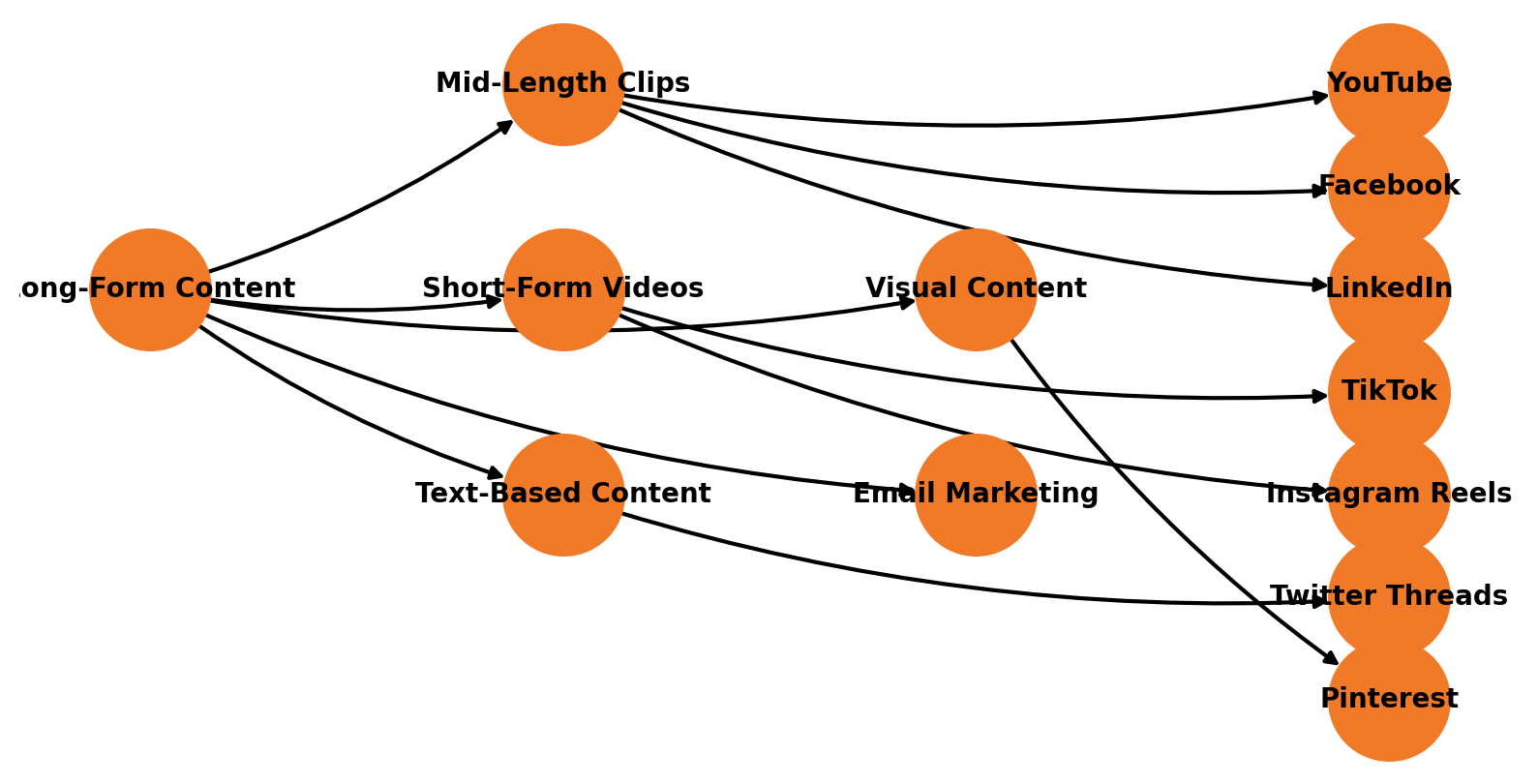
Long-Form Content workflow diagram
How This Works For Local Service Businesses
Local businesses do not need creator-style volume. They need content that answers buyer questions and supports real services.
A Camden County law firm could record a 20-minute video about estate planning mistakes. That video can become a blog post, three FAQs, one email, and several short LinkedIn posts.
A South Jersey plumbing company could start with a guide about water heater warning signs. That can become a service page section, a checklist, a Google post, and a short video.
The best content comes from real questions customers already ask. Those questions are often better than trend-based ideas.
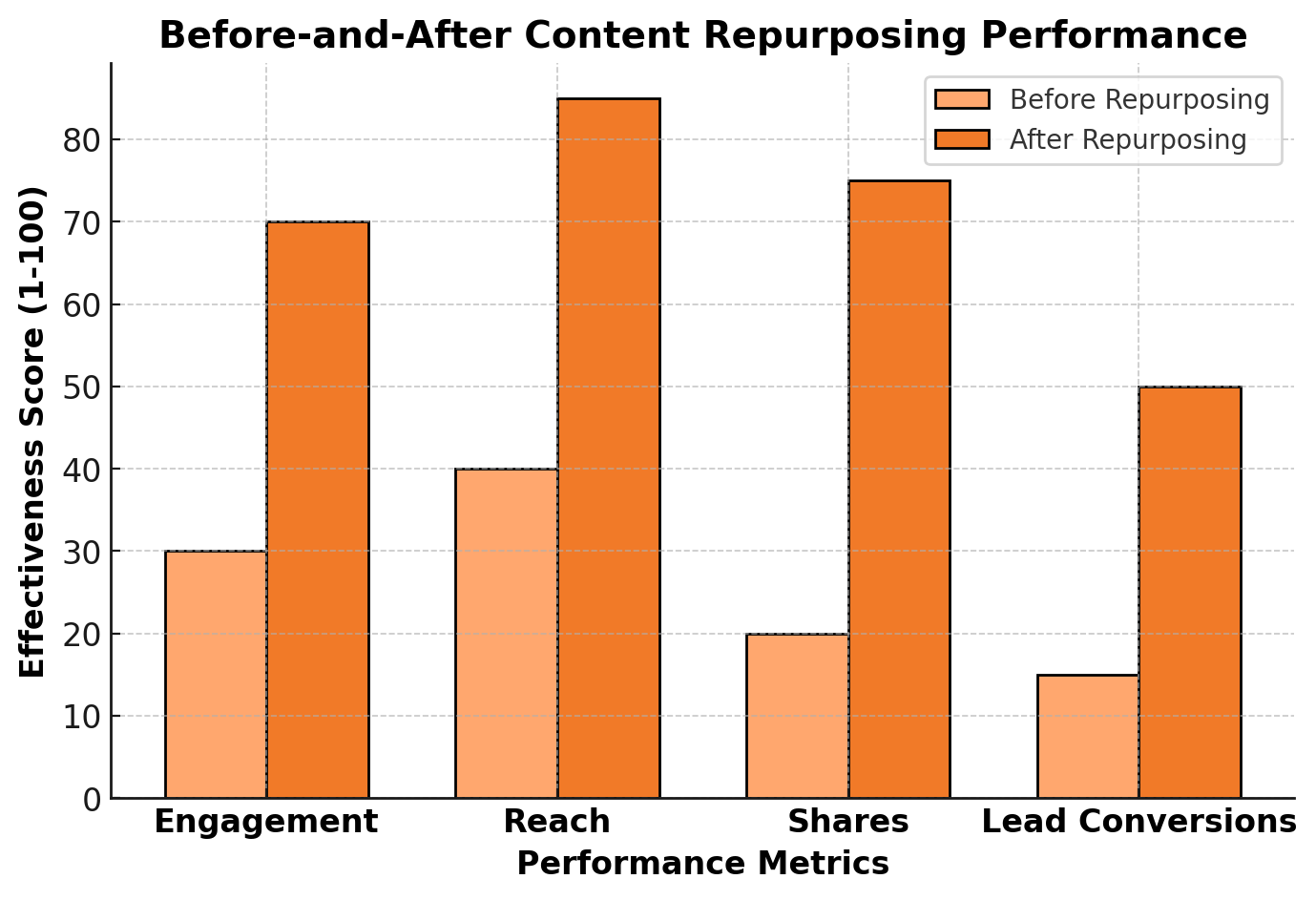
before-and-after comparison chart
What To Repurpose First
Start with content that already has value. Do not repurpose weak ideas just to fill a calendar.
Good source assets include:
Service pages that explain high-value offers.
Blog posts that already earn search traffic.
Sales call questions that come up every week.
Project photos with a clear before-and-after story.
Videos that explain common problems.
Customer education emails.
If a topic already helps buyers make a decision, it is a strong repurposing candidate.
Best Tools For Content Repurposing
Tools can speed up the process, but they should not replace judgment. Each post still needs a clear purpose.
Tool
Best For
Use With Care
Descript
Editing videos and transcripts
Review captions before publishing.
CapCut
Fast short-form video edits
Keep brand style consistent.
ChatGPT
Drafting captions, summaries, and outlines
Fact-check every claim.
Otter.ai
Transcribing calls, podcasts, or videos
Clean up speaker errors.
Metricool
Scheduling and tracking social posts
Do not judge content only by likes.
Canva
Creating simple graphics and carousels
Avoid generic templates that look off-brand.
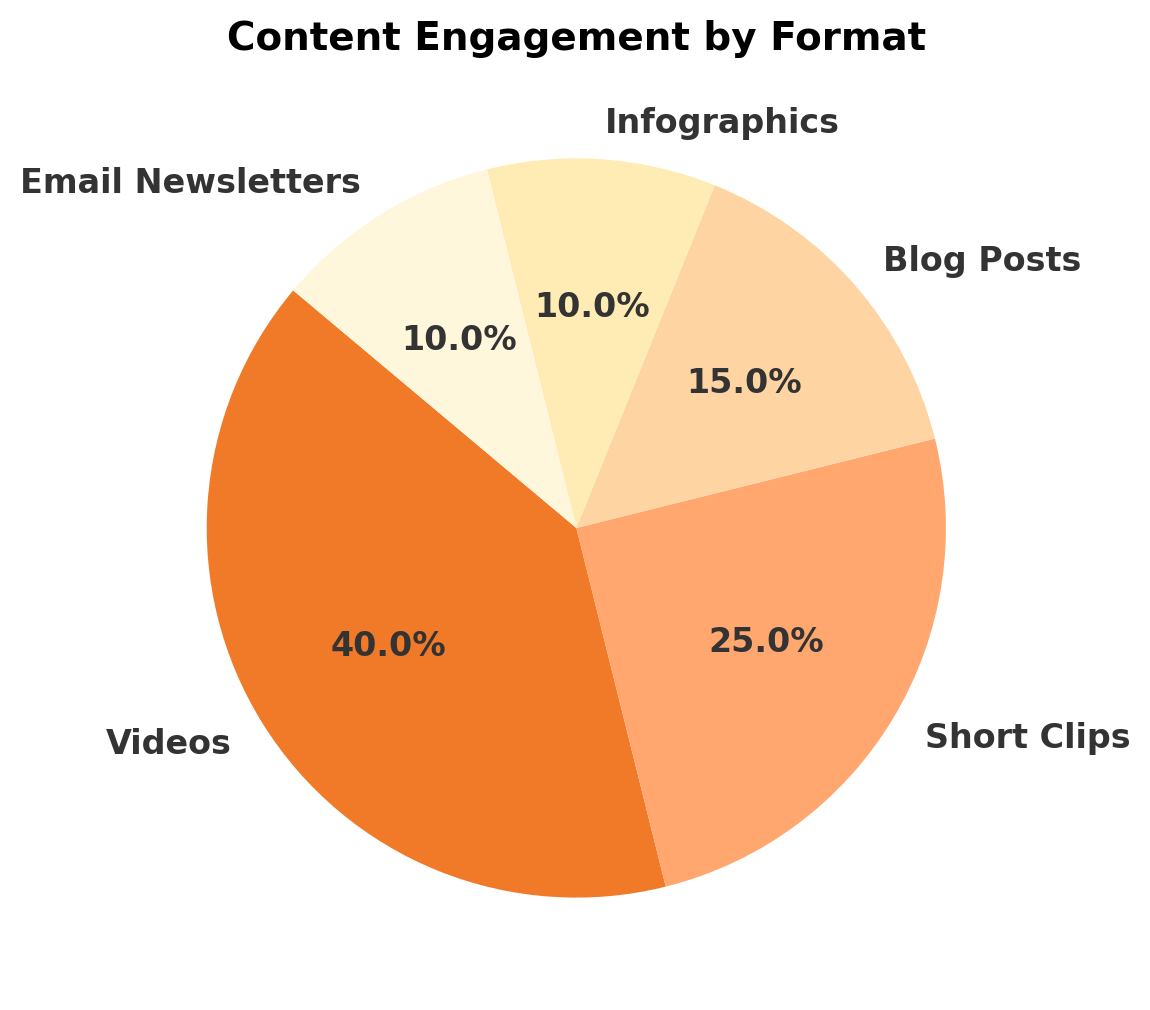
pie chart illustrating content engagement by format
How To Build A Weekly Repurposing System
A simple system beats a complex content plan that no one follows.
Step 1: Pick One Main Topic
Choose a topic tied to a real service or buyer question. For example, a Gloucester County roofer might choose roof leak warning signs.
Step 2: Create One Strong Asset
Write a guide, record a short video, or answer the question in a clear format. Keep the answer useful and plain.
Step 3: Pull Out Smaller Pieces
Turn the main asset into three to six smaller pieces. Use quotes, FAQs, checklists, short clips, and email tips.
Step 4: Add A Clear Next Step
Each piece should tell the reader what to do next. That may mean reading a service page, calling the office, or booking a consultation.
Step 5: Review Results Monthly
Track which topics lead to calls, form fills, and useful conversations. Then create more content around what works.
If you want help turning your existing content into a practical system, schedule a strategy call with our team.
Common Mistakes To Avoid
Posting The Same Thing Everywhere
Each platform has a different job. A blog post can be detailed. A social post should be short. An email should feel direct and useful.
Repurposing Without A Service Goal
Every content idea should support a service, question, or lead-generation goal. Otherwise, it becomes noise.
Trusting Automation Too Much
Automation can save time. It can also spread weak content faster. Review each asset before it goes live.
Ignoring Search Intent
A video clip may get views, but a service page may bring calls. Know what each piece is meant to do.
Using Unsupported Claims
Avoid claims like “10x growth” unless you can prove them. Local business owners need useful guidance, not hype.
comparison chart of workload between traditional vs. repurposed content strategies
Influencer Models, Translated For Local Business
The original version of this article compared several creator styles. That can still be useful when the lesson is adapted for local businesses.
Model
Useful Lesson
Local Business Translation
Alex Hormozi
Start with one strong idea and repurpose it.
Turn one buyer question into a guide, email, short video, and FAQ.
Gary Vee
Show up often.
Post steady updates, but keep them useful and service-focused.
Justin Welsh
Build authority with clear points of view.
Explain your process, standards, and advice in plain English.
Naval Ravikant
Say fewer things with more clarity.
Use simple, memorable advice instead of filler.
Ali Abdaal
Build useful long-term assets.
Create search-friendly guides that keep helping buyers.
The key is not to copy a creator. The key is to borrow the part that fits your business.
Frequently Asked Questions
What is content repurposing?
Content repurposing turns one strong idea into several useful assets, such as blog posts, emails, short videos, FAQs, and social posts.
Can local businesses use Alex Hormozi’s content strategy?
Yes, but they should adapt it. Local businesses need helpful content tied to services, not high-volume creator content.
What should a local business repurpose first?
Start with buyer questions, service pages, high-performing blog posts, videos, project photos, and sales call topics.
How many pieces should one article become?
There is no fixed number. A strong article may become three to ten useful pieces if each one has a clear purpose.
What is the biggest mistake with repurposing?
The biggest mistake is posting the same content everywhere without changing the format, goal, or call to action.
The Bottom Line
Alex Hormozi’s content model is useful because it shows how one strong idea can travel farther.
For local businesses, the better lesson is simple: create fewer throwaway posts and build more reusable content assets.
Start with real customer questions. Build one helpful source asset. Break it into smaller pieces. Link each piece back to a service or next step.
Ever scroll through TikTok or X and wonder how Gary Vaynerchuk pumps out over 100 pieces of content a week while you’re sweating over one measly Instagram post? What if I told you his secret isn’t some unreachable superpower—it’s a system you can steal, tweak, and run with, even if you’re a one-person show? I’ve been there—staring at a blank screen, paralyzed by perfection, terrified I’m falling behind. But Gary’s “Document, Don’t Create” philosophy flipped the game for me, and it can for you too. In this article, we’re cracking open his playbook to show you how to create 100+ pieces of content per week—no burnout, no excuses. Curious how he does it? Relieved it’s not as hard as it looks? Let’s dive in and turn your hustle into a content flood.
Gary Vaynerchuk’s “Document, Don’t Create” Strategy
The Gary Vaynerchuk content strategy is a high-volume approach based on the philosophy of “Document, Don’t Create.” It involves capturing everyday moments and turning them into 100+ pieces of content per week across multiple platforms. This method prioritizes volume and consistency over polished perfection, using a repurposing system and accessible tools to build brand omnipresence and audience trust.
Understanding Gary Vee’s Content Machine
The “Document, Don’t Create” Foundation
Gary Vaynerchuk isn’t scripting Hollywood blockbusters—he’s filming his life. His mantra, “Document, Don’t Create,” is about turning your day—meetings, rants, coffee runs—into raw, real content. Forget polished perfection; it’s volume that wins. One podcast? That’s 50+ social posts in Gary’s world.
In Crushing It! (2018), he writes, “Documenting is the fastest way to scale your voice.” It’s not about inventing brilliance daily—it’s about sharing what’s already there. That’s the genius: your life’s a content goldmine, and Gary’s the guy with the pickaxe.
The Volume Mindset
Why 100+ pieces? To own attention. Gary’s everywhere—TikTok, X, LinkedIn, Instagram—because he knows consistency beats complexity. It’s not about one viral hit; it’s about being the voice people can’t escape. Buffer’s 2022 Social Media Report proves it: daily posters get three times the engagement of weekly ones.
Gary’s not just posting—he’s building a habit in his audience’s brain. You can too.
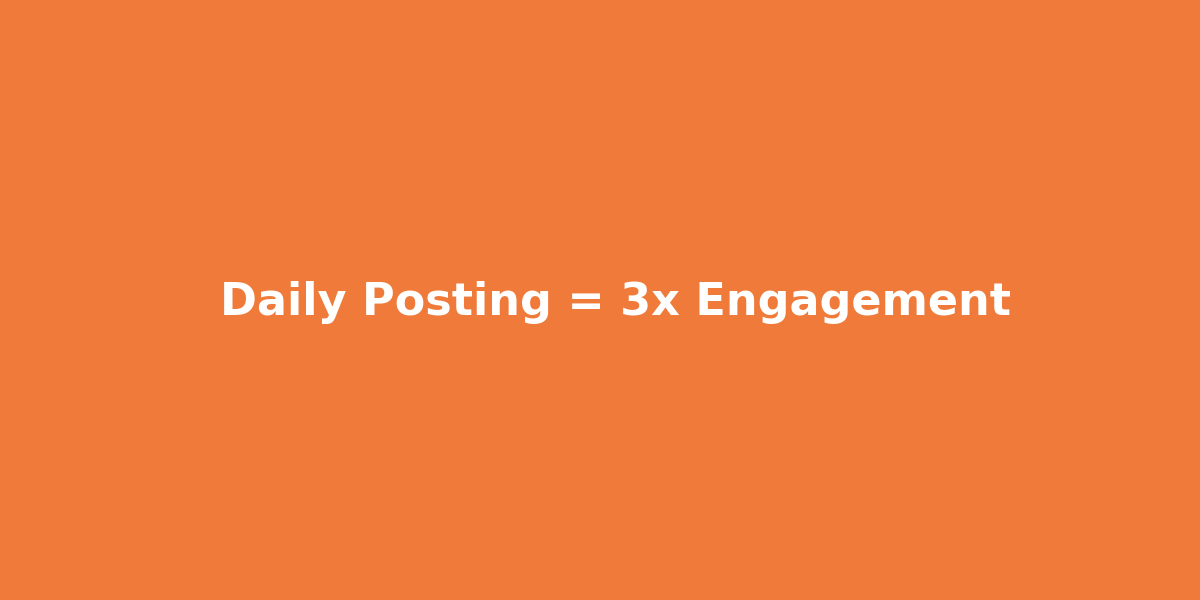
Daily Posting = 3x Engagement
Step-by-Step: How to Hit 100+ Pieces Per Week
Step 1 – Capture Everything
Your phone’s your studio. Record everything: a client call, a random epiphany on your commute, your dog photobombing your work-from-home setup. Aim for 1-2 hours of raw footage or notes weekly—Gary does this on the fly, per his 2023 X posts.
Last week, I filmed a 5-minute rant about a failed ad campaign. That’s 20 posts waiting to happen. Your life’s messier than you think—and that’s perfect.
Content Creation Time Breakdown
Task
Time Required
Notes
Capture
1 hr
Record content
Edit
2 hrs
Edit & refine
Post
Auto
Automated scheduling
Step 2 – Break It Down
One long-form piece is your content factory. A 10-minute vlog? Slice it into:
10 TikTok clips (15-60 sec each)
5 X posts (key takeaways)
3 Instagram carousels (3 slides each)
That’s 20+ pieces from one source—Gary’s team hits 50+ from a podcast (VaynerMedia, 2021). Alex Hormozi’s similar trick yields 30+ assets (2022 case study). The math’s simple: chop smart, multiply fast.
Step 3 – Leverage Tools and Teams
Solo? No sweat—free tools are your crew:
CapCut: Edit videos in minutes—add captions for inclusivity.
Canva: Whip up graphics—think bold quotes.
Otter.ai: Transcribe rants into text—fast and free.
Got a team? Delegate like Gary’s VaynerMedia squad—editors chop, schedulers post. Automate with Later (free tier) or Repurpose.io ($12/month) to hit scale. Gary’s iPhone-to-empire jump proves it’s doable (per interviews).
Essential Content Creation Tools
Tool
Price
Function
Features
CapCut
Free
Video
Easy
Canva
Free
Graphics
Quick
Otter.ai
Free
Text
Fast
Step 4 – Distribute Everywhere
Spread it like wildfire:
TikTok: Short, punchy—“This mistake cost me $500!”
LinkedIn: Deep—“Here’s what I learned from failure.”
X: Bold—“Stop overthinking. Post now.”
Schedule 15-20 posts daily across 5+ platforms—by Sunday, you’re at 100+. HubSpot’s 2024 study says multi-platform consistency boosts reach by 60%. Gary’s living proof.
Overcoming Common Roadblocks
“I Don’t Have Enough to Say”
You do—trust me. Document your lunch debate, your kid interrupting a Zoom, your latest “aha!” moment. Gary’s jet-lagged rants go viral—mundane’s his superpower. His 1,000+ Wine Library TV episodes started with wine chats.
Your flops are content too—share them.
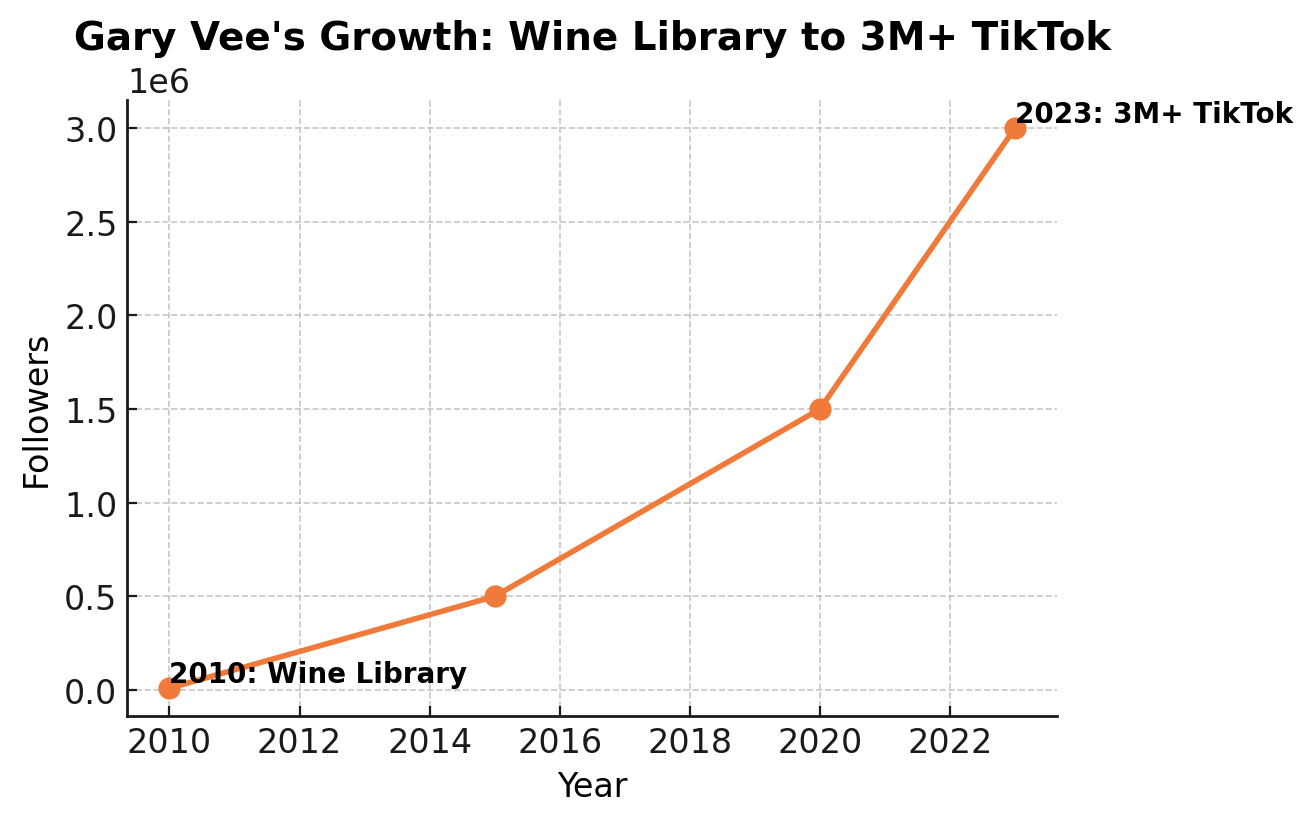
Wine Library Growth Chart
“I Don’t Have Time”
Bull. Batch 1 hour of capture weekly—phone on, yap away. Edit in 2 hours (or outsource for $20 on Fiverr). Automate posting with Later. Gary’s team batches like pros (2020 X thread). I did this on a Saturday—50 posts by Monday.
Time’s not the issue—priority is.
Time Breakdown
Task
⏰ Time Required
Notes
Capture
1 hr
Record content
Edit
2 hrs
Edit & refine
Post
Auto
Automated scheduling
“My Audience Will Get Bored”
Not if you mix it up. Video today, text tomorrow, a meme next. Test what sticks—Gary drops flops, doubles down on hits. Buffer (2022) says variety offsets fatigue. My followers loved a rant but skipped a carousel—I pivoted. You can too.
Real Results from the Gary Vee Way
Gary’s Own Wins
Gary built VaynerMedia and his personal brand on this. Millions follow him because he’s unavoidable—100+ posts/week on TikTok alone netted 3M+ followers (2023). It’s not luck; it’s volume. From Wine Library to TikTok king, he’s the poster child for “more wins.”
Everyday Hustlers Crushing It
Baker Maria: 100 posts/week—recipes, oven fails, customer smiles. Gained 5k Instagram followers in three months.
Coach Jay: Repurposed webinars into 120 pieces—doubled leads in six weeks.
Tips to Make It Sustainable
Start Small, Scale Up
Don’t aim for 100 out the gate—try 20 pieces week one. Build the habit, then ramp up. Gary didn’t start at 100; he grew into it (Wine Library days). Ease in, win big.
Stay True to You
Don’t ape Gary’s loud hustle vibe—use your voice. Quiet? Share calm insights. Funny? Drop memes. Authenticity’s your fuel—Gary said it at VidCon 2017: “Be yourself, or it’s torture.”
Measure What Matters
100 posts mean zilch without results. Track likes, shares, sales—not just output. Neil Patel’s 2024 tip: “Focus on ROI, not vanity.” My first 50 posts? Half flopped, half soared—I kept the winners.
Conclusion
Gary Vaynerchuk’s content machine isn’t rocket science—it’s a hustle you can hack. Capture your life, break it down, spread it wide, and watch 100+ pieces pile up weekly. It’s not about time or genius; it’s about doing it—messy, real, relentless. Ready to flood your feeds and own your space? Contact Digital Marketing Group LLC to kickstart your strategy. You’ve got the plan—stop stalling, start posting. Your audience is waiting.
Comprehensive Content Strategy Comparison Table
For Small Business Owners, Influencers & Brands
Criteria
Gary Vee
(High Volume)
Alex Hormozi
(Repurposing)
Justin Welsh
(Authority)
Naval Ravikant
(Minimalist)
Ali Abdaal
(SEO Growth)
Best For
Influencers, Startups, Brands
Agencies, Coaches, Local Businesses
Consultants, Lawyers, Thought Leaders
Investors, Public Figures
Course Creators, YouTubers
Effort Level
🔥 High (100+ posts/week)
⏳ Medium-High (Batch & Repurpose)
🎯 Medium (Deep, fewer posts)
✨ Low (Rare, but high-impact)
📹 Medium (SEO & Video Production)
Content Type
Reels, X Threads, TikToks
Blogs, Email, Social Media Clips
LinkedIn, Deep Essays
Tweets, Books, Podcasts
YouTube Videos, Blogs
Best for Small Businesses
❌ Not Ideal (Too Much Effort)
✅ Yes (Great for Scaling Content)
✅ Yes (Great for High-Trust Businesses)
❌ No (Best for Public Figures)
✅ Yes (SEO & Video for Local Leads)
Engagement Style
Broad Reach, Volume Game
Multi-Platform, Low Effort
Deep Trust & Community
Low Output, Maximum Impact
Long-Term Engagement via SEO
Monetization Approach
Brand Deals, Sponsorships
Courses, High-Ticket Sales
Consulting, Memberships
Books, Investments
YouTube AdSense, Affiliate Sales
How to Combine
Pair with **Hormozi** for reach + repurposing
Use **Ali Abdaal’s SEO** for traffic
Mix with **Naval’s minimalism**
Blend with **Justin’s deep content**
Repurpose with **Hormozi’s framework**
How Small Business Owners Can Apply These Strategies
Best Strategy for HVAC, Roofing, Plumbing, and Local Service Businesses?
Alex Hormozi’s repurposing model + Ali Abdaal’s SEO approach.
Why? One blog post or video can turn into weeks of content across different platforms, while SEO helps you rank locally.
Best Strategy for Lawyers, Consultants, and High-Ticket Services?
Justin Welsh’s Evergreen Thought Leadership + Alex Hormozi’s repurposing.
Why? High-trust industries need credibility. Fewer, high-quality posts work better than constant social media noise.
Best Strategy for Personal Brands & Influencers?
Gary Vee’s High-Volume Model + Justin Welsh’s Authority-Based Content.
Why? If your goal is visibility, volume wins. If your goal is trust, mix it with deeper, high-value content.
Best Strategy for Local Real Estate, Fitness, or Wellness Brands?
Ali Abdaal’s SEO Model + Hormozi’s Repurposing Strategy.
Why? YouTube & SEO bring passive inbound leads, while repurposing keeps you relevant on social media without extra effort.
How to Use This Table
Pick a strategy that fits your business model & industry.
Mix & match to create the best hybrid approach for your needs.
Embed this table in every content strategy article to help small businesses make smarter marketing decisions.
Meet the Volume King of Content Marketing
If there’s one name synonymous with high-output content strategy, it’s Gary Vee. Known for his relentless “Document, Don’t Create” philosophy, Gary transformed raw, everyday moments into a media empire. Whether you’re a solopreneur or a Fortune 500 brand, understanding his approach is essential to unlocking the power of modern content marketing.
📌 Gary Vaynerchuk (Gary Vee)
Title: CEO, VaynerMedia
Notable Works:Crushing It!, Jab, Jab, Jab, Right Hook
Fun Fact: Grew his family wine business from $3M to $60M before building a personal brand followed by millions.
Quote:“The biggest mistake people make is trying to create instead of documenting.”
Frequently Asked Questions (FAQs)
Q: Is 100+ pieces of content per week realistic for one person?
A: Yes—with the right systems. Gary’s model shows you only need 1-2 hours of raw recording and a few hours to slice and automate. Tools like Otter.ai and CapCut make it doable solo.
Q: What’s the difference between “Documenting” and “Creating”?
A: Documenting is about sharing your real-time experiences, thoughts, and failures without perfection. Creating usually means scripting and polishing—Gary skips that to stay fast and authentic.
Q: How do I know what to document?
A: Anything counts—client calls, mistakes, daily routines, even your dog interrupting a Zoom call. Gary turned wine tastings into a media empire by sharing the mundane consistently.
Q: Won’t my audience get tired of me posting so much?
A: Not if you vary formats—video clips, memes, tweets, carousels. Engagement rises with frequency when content is diverse. Gary’s audience grew precisely because he kept showing up.
Q: What tools can I use if I’m solo?
A: Use CapCut (video editing), Otter.ai (transcription), Canva (graphics), and Later or Repurpose.io (scheduling). These tools replicate a small content team for free or cheap.
Q: Can this strategy work for my HVAC or roofing business?
A: Yes. Pair Gary’s volume with Alex Hormozi’s repurposing or Ali Abdaal’s SEO model to turn how-to videos or job site footage into dozens of posts while building local visibility.
Q: How do I make this sustainable over time?
A: Start with 20 posts/week, then ramp up. Track what performs, keep the hits, drop the duds. Gary scaled from wine reviews to global content by building habits, not chasing perfection.
The Alex Hormozi Content Strategy: How to Repurpose One Video into 30+ Pieces
Updated October 2026.
📚 Quick Summary: The Alex Hormozi Content Strategy—Repurpose One Video into 30+ Assets
Turn 1 video into 30+ content pieces: Hormozi’s strategy uses a single long-form video to create a month’s worth of short clips, blog posts, infographics, and more.
Built for reach without burnout: Record once, distribute everywhere—perfect for scaling content without daily creation stress.
Step-by-step system for max ROI: From mid-length YouTube clips to short-form TikToks, blog posts, and email newsletters, every piece serves a platform-specific purpose.
Best for scalable offers: Coaches, SaaS founders, and service businesses benefit most—especially those with evergreen expertise.
Common pitfalls: Posting generic clips without platform optimization and ignoring analytics can tank performance. Personalization + feedback loops = key.
Success requires tools or a team: Tools like CapCut, ChatGPT, and Repurpose.io help streamline production—solo creators may need automation or outsourcing.
Imagine spending just one hour recording a video and transforming it into 30+ pieces of high-impact content. According to the Content Marketing Institute, 72% of marketers say repurposing content leads to better engagement and improved ROI. Alex Hormozi’s approach leverages this principle to scale reach efficiently while minimizing additional workload. across multiple platforms. What if you could maximize your reach, build your brand, and scale your business without spending extra time creating content from scratch?
This is exactly what Alex Hormozi’s content repurposing strategy enables you to do. By leveraging the power of long-form content, you can create an entire month’s worth of engaging posts, short videos, blogs, and more—without additional effort.
In this guide, we’ll break down Hormozi’s step-by-step method, explaining how you can apply it to save time, reach more people, and grow your audience effectively.
What is the Alex Hormozi Content Strategy?
What is the Alex Hormozi Content Strategy?
The Repurposing Model Explained
Alex Hormozi’s content strategy follows a “content splintering” approach:
Start with a long-form video (podcast, webinar, or deep-dive tutorial).
Break it down into smaller, digestible clips tailored for different platforms.
Convert key insights into text, visuals, and other media formats.
Distribute across multiple channels to maximize reach.
Why This Strategy Works
Maximizes content output with minimal additional effort. Increases visibility by catering to different audience preferences. Improves content longevity, making one video work for months.
Case Study: Gym Launch
Gym Launch, the company Hormozi co-founded, is the canonical example of this approach in action: long-form business coaching content, systematically broken into clips, posts, and articles, compounding into serious reach. Hormozi credits the repurposing system — not any single viral hit — with building the company’s audience engine. Treat specific multiplier claims you see repeated online with skepticism unless they’re tied to a dated, primary source.
The Hormozi Content Framework: Record → Splinter → Adapt → Distribute
Everything in this guide boils down to a four-phase framework. Name it, and it becomes something your team can actually run instead of just admire. 1. Record. One long-form asset per cycle — a 30–60 minute video, podcast, or deep-dive tutorial. This is the only net-new creation in the entire system. 2. Splinter. Break the recording into its component ideas: stories, frameworks, hot takes, proof points, FAQs. One hour of video typically yields 10–15 splinters. 3. Adapt. Rebuild each splinter natively for its platform — not cross-posted, re-expressed. A YouTube chapter becomes a TikTok hook, a LinkedIn post, and an email paragraph, each rewritten for the channel it lives on. 4. Distribute. Publish on a calendar, then feed performance data back into what you record next. The 8-step monthly plan below is this framework in action.
Step-by-Step Guide: The Full Repurposing Strategy (Monthly Plan)
Step 1: Record 4 Long-Form Videos Per Month
Why? A steady pipeline of evergreen content fuels ongoing repurposing.
Ideal Length: 30-60 minutes per video.
Examples: Business growth tips, expert interviews, industry trends.
Step 2: Cut Each Video into 4-5 Mid-Length Clips (5-10 Min)
Platforms: YouTube, LinkedIn, Facebook.
Purpose: Standalone educational content.
Example Clips: ‘How to Scale a Business Without Paid Ads’
Step 3: Extract 10-15 Short Clips (30-90 Seconds Each)
Why? Summarizes insights into bite-sized, shareable content.
Example Threads: ‘A 10-Step Content Repurposing System’
Step 6: Design 5+ Visual Infographics & Carousels
Platforms: Instagram, Pinterest, LinkedIn.
Example Infographics: ‘The Content Repurposing Funnel’
Step 7: Repurpose Content for Weekly Email Newsletters
Why? Keeps audience engaged outside of social media.
Example: ‘This Week’s Top Content Hacks’
Step 8: Engage & Distribute Across Platforms
Best Practices:
Schedule content using Metricool, Later, or Hootsuite.
Engage with audience through comments, shares, and DMs.
Analyze performance and refine content strategy.
The Hormozi Video Editing Style (And How to Copy It)
A lot of searches for Hormozi’s strategy are really asking about the edits — so let’s answer it directly. The style isn’t about fancy effects. It’s about retention: Captions always. Burned-in, word-by-word captions styled for readability — most viewers watch muted. Jump cuts on every breath. Remove pauses, filler words, and dead air; the pace should feel like 1.25x speed even at normal speed. Hook in the first 3 seconds. State the payoff before the context: ‘Here’s how one video becomes 30 posts’ beats ‘Hey guys, welcome back.’ Pattern interrupts. B-roll, zooms, on-screen text, or graphics every 5–10 seconds to reset attention. Talking head, minimal setup. Clean background, good lighting, decent mic — that outperforms an expensive set with weak delivery every time. You don’t need Hormozi’s team for any of this. Descript or CapCut handles captions and jump cuts — the discipline is in the hook and the pacing.
The YouTube Pipeline: Turning One Long-Form Video into Shorts, Clips, and Posts
YouTube is the engine room of this strategy, because one long-form video feeds everything downstream: 1. Publish the long-form video (30–60 minutes) on YouTube with chapters — the chapters become your splinter map. 2. Transcribe it with Descript or Otter.ai. The transcript is raw material for blog posts, newsletters, and LinkedIn articles, not just an accessibility add-on. 3. Cut 4–5 mid-length clips (5–10 minutes) from the strongest chapters for YouTube and LinkedIn. 4. Cut 10–15 Shorts (30–90 seconds) from the punchiest moments for YouTube Shorts, TikTok, and Reels. 5. Mine the transcript for 4 blog posts, 10+ social posts, and a newsletter issue. One recording session, one transcript, one editing pass — then a month of distribution. That’s the pipeline — build once, scale forever in practice.
Tools & Automation for Scaling Content Repurposing
Example: A fitness brand initially repurposed long-form YouTube content directly onto TikTok without adjusting for the platform’s fast-paced style. Engagement was low until they started adding subtitles, fast cuts, and viral hooks tailored for TikTok’s audience.
Over-relying on automation without personal touch.
Example: A coaching business relied solely on AI-generated captions and auto-scheduling tools but noticed a drop in engagement. Once they started manually interacting in the comments and tweaking automated content to match their brand voice, engagement improved by 40%.
Ignoring engagement metrics and performance data.
Example: A marketing agency kept posting repurposed clips without analyzing performance. After conducting a content audit, they discovered their Instagram Reels outperformed Facebook videos 3:1, leading them to shift their focus to short-form video content for better ROI.
How to Fix These Mistakes
Customize content for each platform. Monitor performance and iterate based on insights. Engage with your audience to boost visibility.
Is Hormozi’s Strategy Right for Your Business?
Not every business should run this playbook. Here’s the honest filter: It fits if: you sell something scalable — coaching, consulting, SaaS, or services with repeatable delivery; you can commit to a weekly recording rhythm or a monthly batch day; your buyers research before they buy, so authority content actually moves them. It doesn’t fit if: you’re a solo operator with no editing help and no budget for tools — the production load will bury you; your brand trades on exclusivity or artistry, where volume dilutes the mystique; your offer is one-and-done, so there’s nothing to nurture toward. Test it before you commit: record one 5-minute video of your best business tip. Splinter it into five pieces — a Reel, a LinkedIn post, an X thread, an email, a short blog post. Publish over two weeks and watch what earns replies, not just views. If nothing moves, the strategy isn’t the problem to solve first — the offer is.
The Local Business Adaptation: Less Volume, More Intent
Local service businesses don’t need creator-level volume. They need the same system aimed at buyer intent. This is the adaptation we run for contractors, med spas, law firms, and home-services clients: 1. Start with one buyer question, not one video topic. ‘When should I repair vs. replace my AC?’ beats ‘HVAC tips.’ 2. Create one strong asset — a guide, a short video, or a thorough answer. 3. Splinter it into 3–6 pieces, each with a job. The checklist goes on the blog, the reminder goes to email, the before-and-after goes on the Google Business Profile, the FAQ goes on the service page. 4. Give every piece a next step. Read the service page, call the office, book the consultation. Content without a call to action is just publishing. 5. Review monthly. Track which topics produce calls and form fills — then make more of those. Real customer questions beat trend-chasing every time. Your sales calls are the best content brief you’ll ever get.
Conclusion: Maximize Content, Minimize Effort
Key Takeaways
One long-form video → 30+ pieces of content → Increased brand visibility.
Repurposing saves time, builds authority, and scales marketing.
Using AI and automation makes the process even more efficient.
What’s your biggest challenge in content repurposing? Let’s discuss in the comments!
Q1: What exactly is Alex Hormozi’s content strategy?
A: It’s a repurposing method where one long-form video is strategically splintered into over 30 smaller content pieces—like short clips, blog posts, emails, and social posts—allowing you to stay visible everywhere without constantly creating new material.
Q2: Who is this strategy best suited for?
A: Coaches, consultants, SaaS founders, and service businesses with scalable offers benefit most. If you can deliver ongoing value (like tutorials, thought leadership, or case studies), this model is a growth engine.
Q3: Can solo creators use this strategy without a team?
A: Yes—but you’ll need automation tools like CapCut (for clips), ChatGPT (for text), and Repurpose.io (for scheduling). Solo creators should start small with one video per month and build systems as they scale.
Q4: What platforms does this strategy support?
A: YouTube, TikTok, Instagram Reels, Facebook, LinkedIn, X (Twitter), blogs, email newsletters, and even Pinterest. Each platform gets content tailored to its format and audience preferences.
Q5: How long should the original long-form video be?
A: Ideally, 30–60 minutes. That gives enough depth to extract mid-length clips, short snippets, key insights for blog posts, and visual content like carousels or infographics.
Q6: What mistakes should I avoid when repurposing content?
A:
Don’t repost the same clip across platforms without optimizing for each audience.
Don’t rely solely on automation—engage manually too.
Don’t ignore analytics—refine based on what works.
Q7: How can I measure success with this strategy?
A: Track metrics like engagement (likes, shares, saves), conversions (leads, sales), and reach across platforms. Look for content that performs well and double down on those formats and topics.
Q8: Where can I get a step-by-step breakdown or template?
Q: How do I repurpose one video into 30 pieces of content?
A: Record one 30–60 minute video and transcribe it. Then splinter it: 4–5 mid-length clips for YouTube and LinkedIn, 10–15 short clips for TikTok, Reels, and Shorts, 4 blog posts from the transcript, 10+ social posts, 5+ carousels or infographics, and a newsletter issue. The 8-step monthly plan above walks through each step in order.
10 Creator Frameworks Explained (For Real-World Business Use)
This section details ten creator-led marketing frameworks designed for real-world business growth, including strategies from Rachel Pedersen, Justin Welsh, and Alex Hormozi. Each framework is explained with its ideal business type, how it works, and key takeaways for implementation. This structured approach helps businesses match their goals and resources to a proven content strategy.
⚠️ Quick Summary: Why Most Marketing Firms Are Failing at AI (and How You Can Win)
Most agencies don’t understand AI: 76% of firms still rely on outdated tactics like cold email blasts, static SEO, and manual ad optimization.
They fear change: Many firms downplay AI because they lack the skills to implement predictive analytics, real-time targeting, or AI-enhanced content strategies.
They misuse content tools: Agencies stop at basic AI blog generation—ignoring optimization, distribution, and performance feedback loops.
Ad budgets are being wasted: Without AI, campaigns miss conversion signals, overspend on testing, and fail to adapt in real time.
You can profit by doing what they don’t: Work with AI-first teams, implement predictive lead scoring, optimize for AI search engines, and deploy automated funnels.
Real-world results: AI-driven companies cut lead costs by 60%, close 3x faster, and scale with fewer staff.
Introduction: The AI Marketing Crisis & Your Competitive Advantage
Most businesses invest heavily in marketing, expecting consistent lead flow, higher conversions, and scalable revenue growth. But despite aggressive spending, they struggle to outrank competitors, reduce customer acquisition costs, and generate quality leads.
The culprit? Most marketing agencies are failing at AI.
They claim to use AI. They sprinkle in automation tools. But they don’t actually understand how AI can transform lead generation, SEO, content, and paid ads. Instead of helping businesses scale faster and reduce costs, they rely on outdated strategies that AI-driven businesses are now dominating.
This isn’t just a trend—it’s a permanent shift.
If your competitors’ agencies aren’t evolving with AI, they’re wasting marketing budgets—and you have an opportunity to capitalize on their failure.
This guide will show you how to:
✔ Identify why most marketing firms are falling behind
✔ Leverage AI-powered strategies to lower costs and increase conversions
✔ Get a competitive edge over businesses stuck with outdated agencies
Most agencies aren’t run by technologists—they’re led by marketers trained in manual, outdated processes. Their teams fear AI because it threatens their traditional job functions, so instead of embracing it, they downplay its importance.
A recent survey by the AI Marketing Institute found that 76% of marketing firms are not actively integrating AI into their strategies. That means nearly 4 out of 5 agencies are failing their clients by ignoring AI’s ability to generate leads, optimize ad spend, and enhance search rankings.
They’re Using Outdated SEO Strategies
SEO has changed dramatically in the last three years. AI-powered search engines like Perplexity.ai, Grok, and Gemini prioritize intent-based content, structured data, and real-time relevance—not just keyword stuffing.
Yet, most marketing agencies still optimize for outdated Google algorithms, leading to:
Lower rankings in AI-powered search results
Poor organic traffic performance
Lost visibility to competitors who optimize for AI-driven platforms
They Still Rely on Manual Lead Generation
Traditional lead generation is slow, expensive, and ineffective compared to AI-driven approaches. Most agencies still rely on:
❌ Cold email blasts that get ignored
❌ Generic ad targeting that wastes budget
❌ Outdated CRM workflows that don’t adapt to real-time customer behavior
AI changes everything by:
✔ Predicting buyer intent in real-time
✔ Pre-qualifying leads before human interaction
✔ Automating engagement with hyper-personalized messaging
Companies leveraging AI-driven lead qualification close deals 3X faster than those relying on traditional sales funnels.
They Don’t Know How to Use AI for Content Marketing
Most agencies use AI to generate blog posts—but that’s where their strategy ends. They fail to implement:
AI-driven content optimization (tailoring content to search intent)
Predictive engagement tracking (adjusting content based on performance)
AI-enhanced content distribution (automating omnichannel visibility)
As a result, their content ranks lower, generates fewer leads, and delivers weaker engagement than businesses using AI-first strategies.
They’re Overcharging for Inefficient Ad Campaigns
AI-driven advertising can now analyze billions of data points in real-time, predicting which ads will convert before a single dollar is spent.
Yet, most agencies still:
Manually test ad creatives instead of letting AI predict winners
Run static campaigns instead of AI-optimized, real-time adjustments
Overpay for customer acquisition due to inefficient targeting
Businesses using AI-optimized ad platforms lower their cost-per-acquisition by up to 40% while increasing conversion rates.
How to Profit While Other Businesses Stick With Outdated Agencies
How to Profit While Other Businesses Stick With Outdated Agencies
Work With an AI-First Marketing Firm
If your marketing agency can’t explain how they use AI in their strategies, it’s time to ask hard questions:
✔ “How do you optimize for AI-powered search engines?”
✔ “Are you using predictive analytics for lead generation?”
✔ “What AI-driven tools do you use for ad optimization?”
If they don’t have real answers, they’re guessing—and that means you’re wasting money.
Automate Lead Generation & Sales Funnels
AI isn’t just changing marketing—it’s revolutionizing sales.
Most marketing firms aren’t just failing at AI—they’re failing their clients.
The businesses that embrace AI-first marketing today will dominate while their competitors scramble to catch up. This is your opportunity to take the lead.
If you’re serious about:
✔ Reducing marketing costs
✔ Increasing high-quality leads
✔ Scaling your business efficiently
It’s time to see what AI-powered marketing can do for your bottom line.
Q1: Why are most marketing firms struggling to implement AI effectively?
A: Most firms lack the technical expertise to properly integrate AI. They rely on outdated tactics, use AI superficially, and resist the shift because it threatens their traditional workflows. As a result, they fail to leverage AI’s full potential for lead generation, content strategy, and ad optimization.
Q2: What makes AI-powered marketing more effective than traditional methods?
A: AI marketing uses real-time data to personalize outreach, optimize ad spend, and predict buyer behavior. This leads to higher conversion rates, reduced customer acquisition costs, and scalable lead generation—all with less manual effort.
Q3: How can I tell if my current marketing agency is failing at AI?
A: Ask them:
“What AI tools do you use for lead generation and ad optimization?”
“How do you adapt content for AI-powered search engines?”
“Are your strategies built on real-time predictive analytics?”
If they can’t answer clearly, they’re likely underperforming.
Q4: What are the benefits of switching to an AI-first marketing strategy?
A: Companies that adopt AI-first marketing see:
Up to 60% lower cost-per-lead
3X faster deal closing
Better targeting with real-time personalization
Scalable campaigns without burning out your team
Q5: How can I start using AI in my marketing today?
A: Start with a marketing audit to identify inefficiencies. Then:
Use AI tools for lead scoring (e.g., HubSpot AI, Apollo.io)
Automate outreach with personalized sequences
Install AI chatbots to qualify leads 24/7
Let AI optimize your ad campaigns in real time
Q6: Is AI marketing only for large enterprises?
A: Not at all. Small and mid-sized businesses can benefit even more. AI tools are now accessible, affordable, and often more efficient than hiring additional staff—making them ideal for companies that want to grow without scaling overhead.
Can Local Reviews Impact My AEO Ranking? Here’s the Answer
Introduction: Are Your Reviews the Secret to Higher AEO Rankings?
Picture this: A potential customer asks Siri, Alexa, or Google Assistant, “What’s the best Italian restaurant near me?”—but your restaurant doesn’t show up, even though you’ve got a stunning website and killer SEO strategy.
What’s missing?
The answer might be hiding in plain sight: your local reviews.
In the era of Answer Engine Optimization (AEO), where AI-driven platforms like Google’s Search Generative Experience (SGE), ChatGPT, and voice assistants rule the search landscape, your business’s online reviews are more than just digital word-of-mouth—they’re powerful ranking signals.
If you’ve been wondering, “Can local reviews impact my AEO ranking?”—the answer is a resounding YES. And in this article, we’ll explain:
How local reviews influence AEO rankings
The key review factors answer engines care about
Actionable strategies to turn your reviews into a ranking powerhouse
Because in today’s AI-powered search world, if your reviews aren’t optimized, your business is invisible.
What Is Answer Engine Optimization (AEO) and Why Does It Matter?
🤔 Understanding AEO
Answer Engine Optimization (AEO) is the process of optimizing your content so that it appears as direct answers in AI-driven platforms like:
Unlike traditional SEO, which focuses on ranking webpages in search results, AEO aims to:
Deliver concise, accurate answers to user queries
Appear in featured snippets, knowledge panels, and voice search results
Prioritize contextual relevance over simple keyword matching
💡 Quick Stat: “By 2025, over 50% of online searches will be conducted via voice or AI-powered platforms.” (Source: Comscore)f
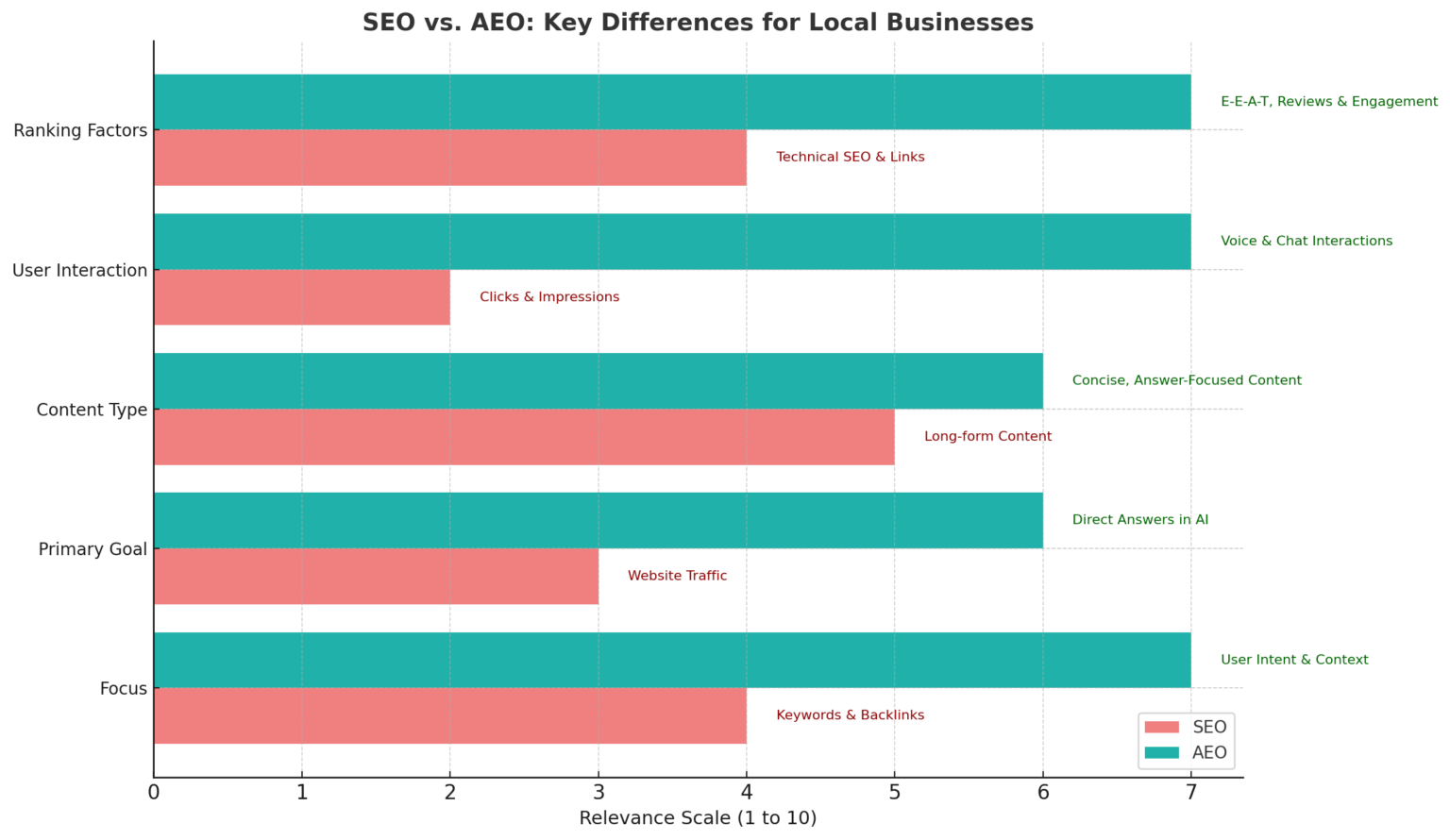
SEO Vs. AEO: Key Differences For Local Businesses
Do Local Reviews Impact AEO Rankings?
✅ Short Answer: Yes—local reviews have a direct impact on AEO rankings.
Here’s why:
📊 How Reviews Influence AEO:
⭐ 1. Trust and Credibility Signals
Answer engines are designed to mimic human behavior. Just as people trust recommendations from others, AI algorithms trust businesses with strong, positive reviews.
E-E-A-T Connection: Reviews enhance a business’s Experience, Expertise, Authoritativeness, and Trustworthiness—all critical for AEO.
👥 2. Influence on User Engagement Metrics
AI-powered search platforms track user engagement:
Businesses with high review ratings get more clicks, dwell time, and conversions.
When someone asks, “Best coffee shop near me,” AI doesn’t just look at your website—it analyzes your Google reviews, ratings, and even the keywords customers mention.
🔗 4. Impact on Featured Snippets and Knowledge Panels
Strong review signals can influence your chances of appearing in:
Featured snippets
Local packs
Knowledge panels
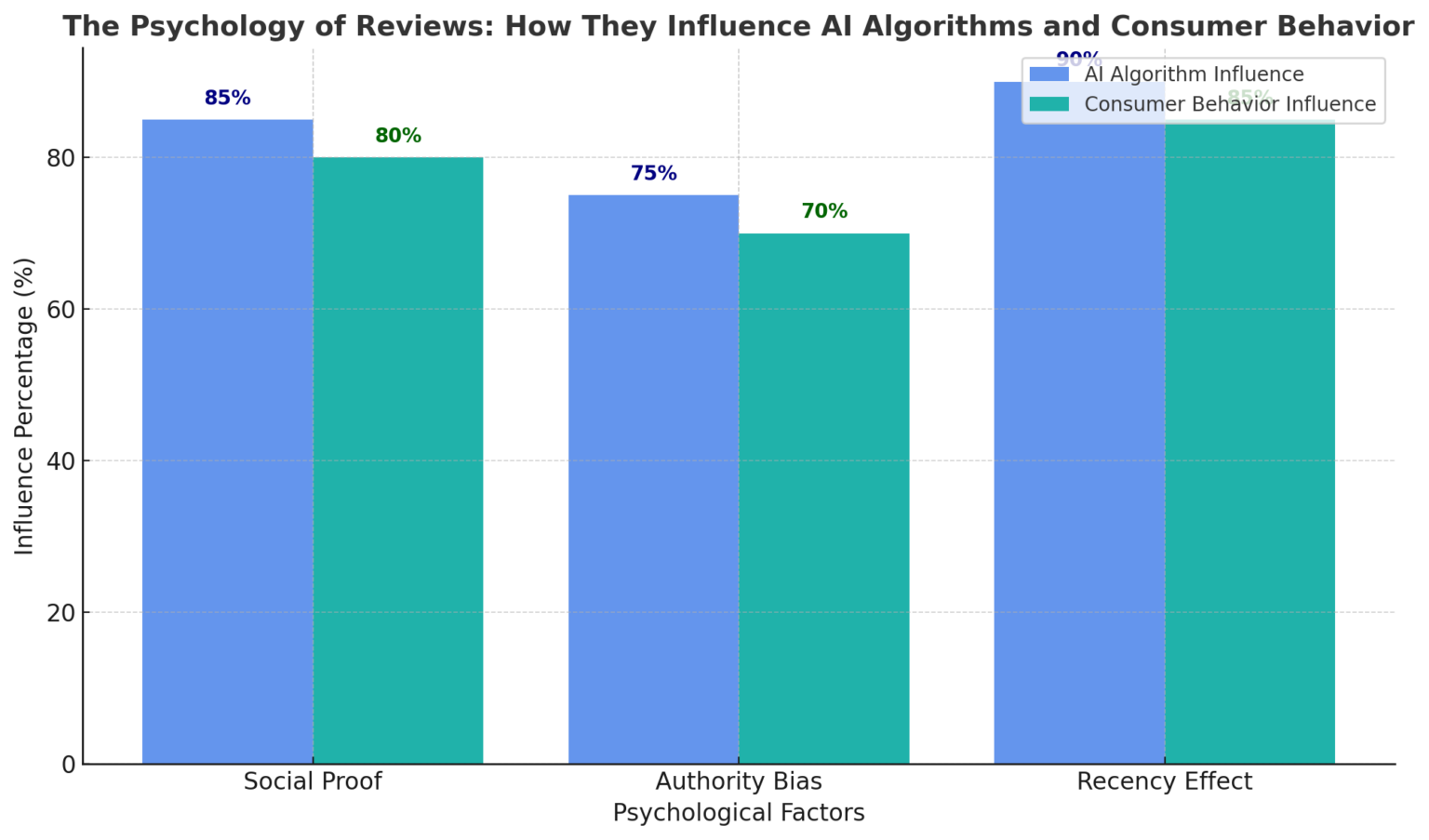
Why Answer Engines Prioritize Reviews: The Psychology Behind It
🧠 Cognitive Biases at Play:
👀 1. Social Proof
People trust businesses that others vouch for. AI mimics this behavior, favoring companies with a strong volume of positive reviews.
🎯 2. Authority Bias
High review counts and ratings create a perception of authority—both for humans and AI algorithms.
⏱️ 3. Recency Effect
Recent reviews carry more weight. Answer engines prioritize businesses with fresh, up-to-date feedback because it signals ongoing quality.
The Psychology Of Reviews: How They Influence AI Algorithms And Consumer Behavior
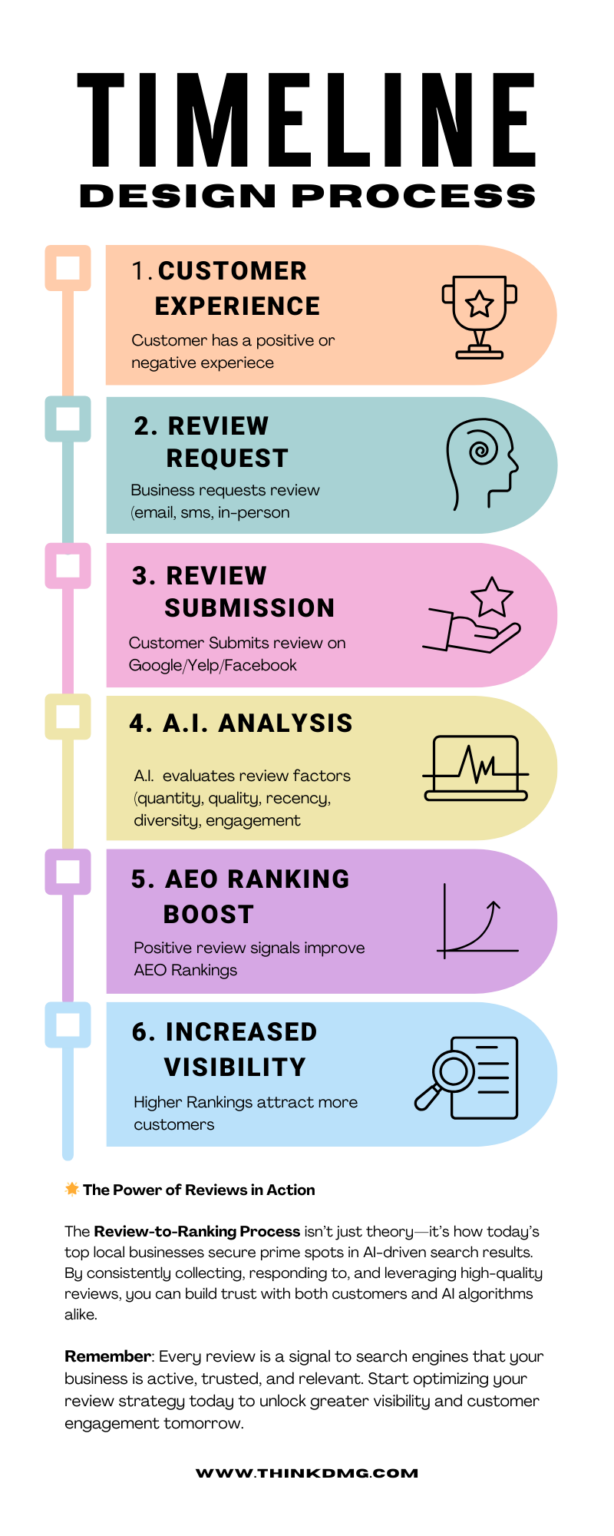
Key Review Factors That Affect AEO Rankings
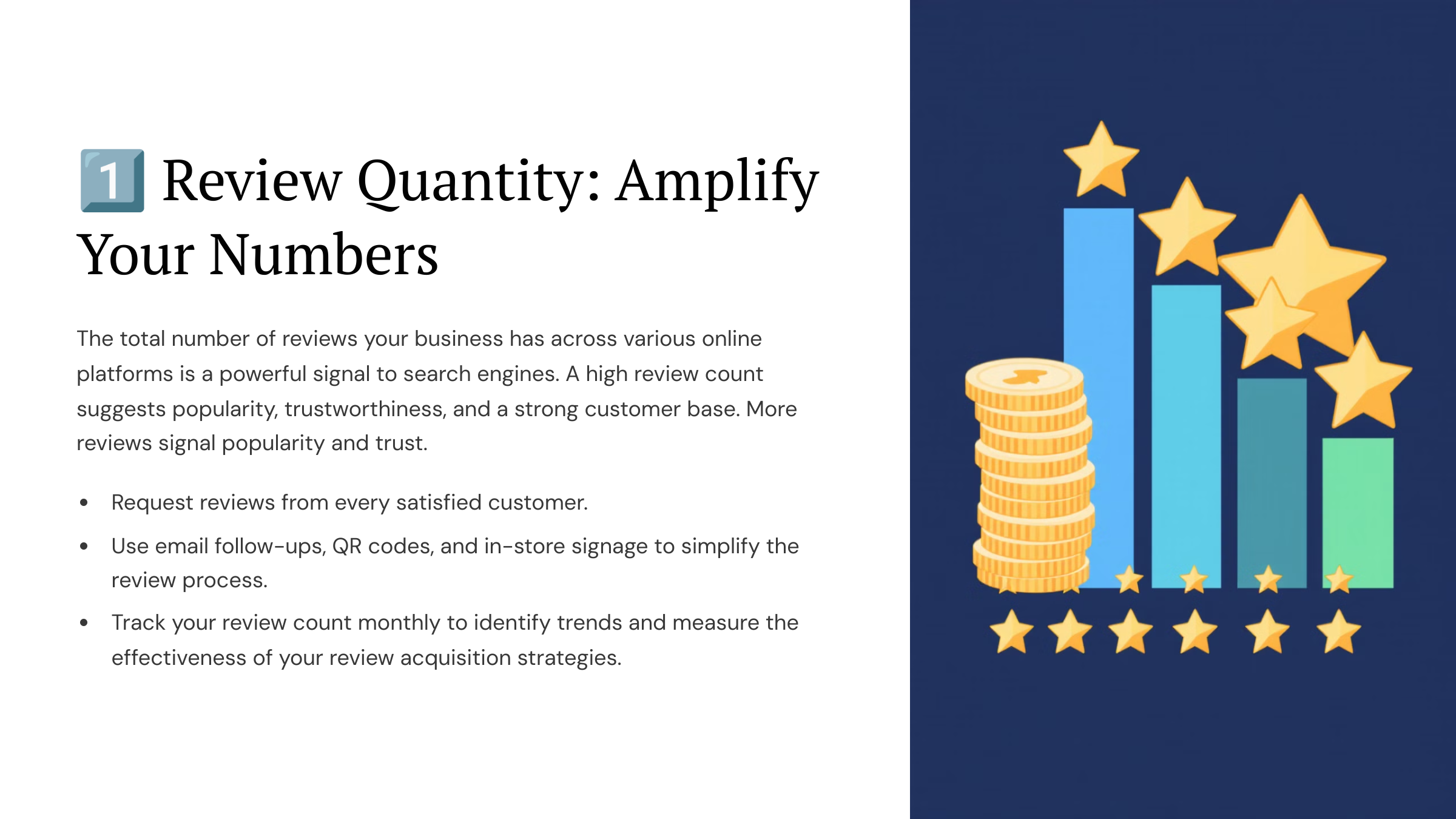
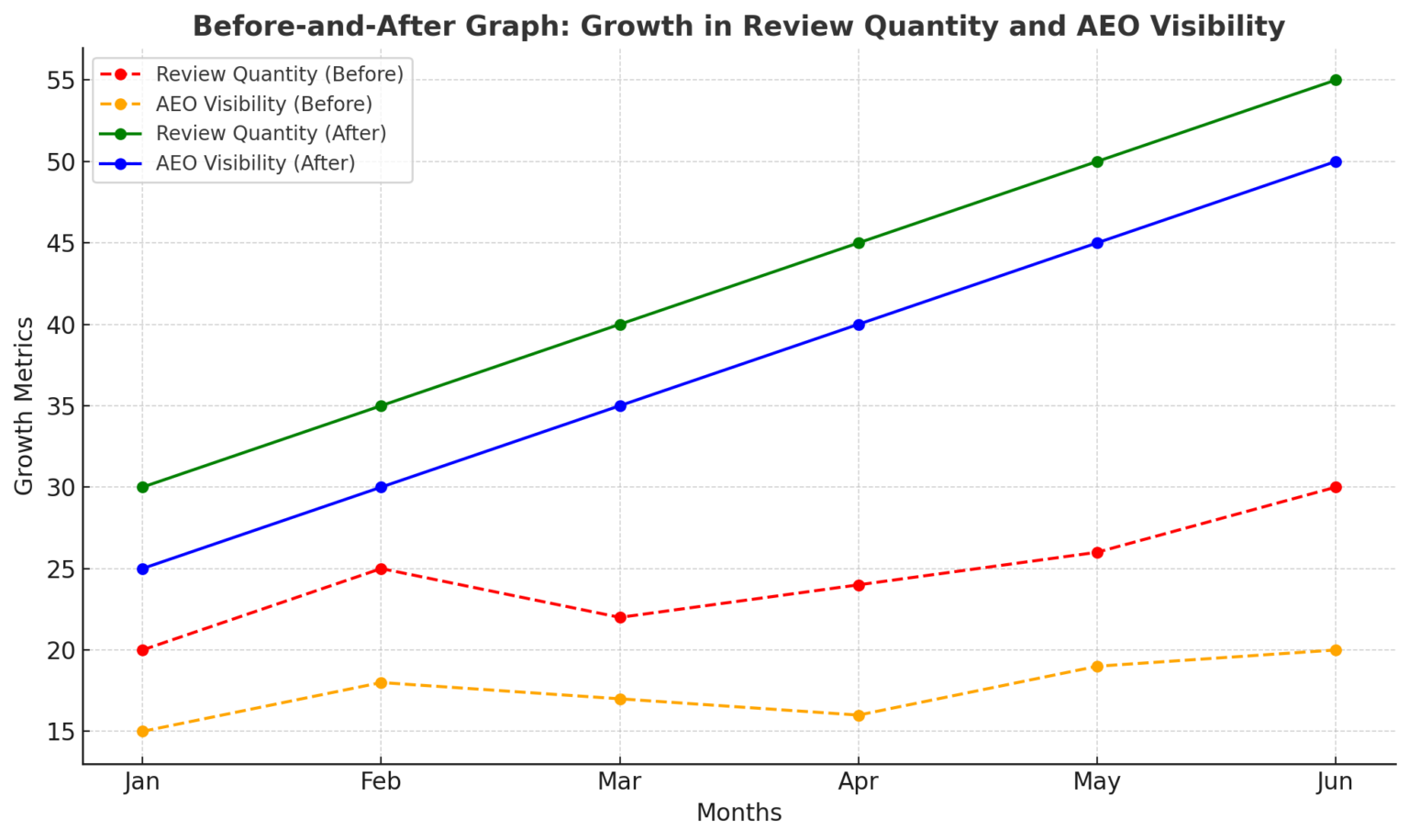
⭐ 1. Review Quantity
Why It Matters: A high number of reviews indicates popularity and trustworthiness.
Tip: Consistently encourage customers to leave reviews.
💬 2. Review Quality
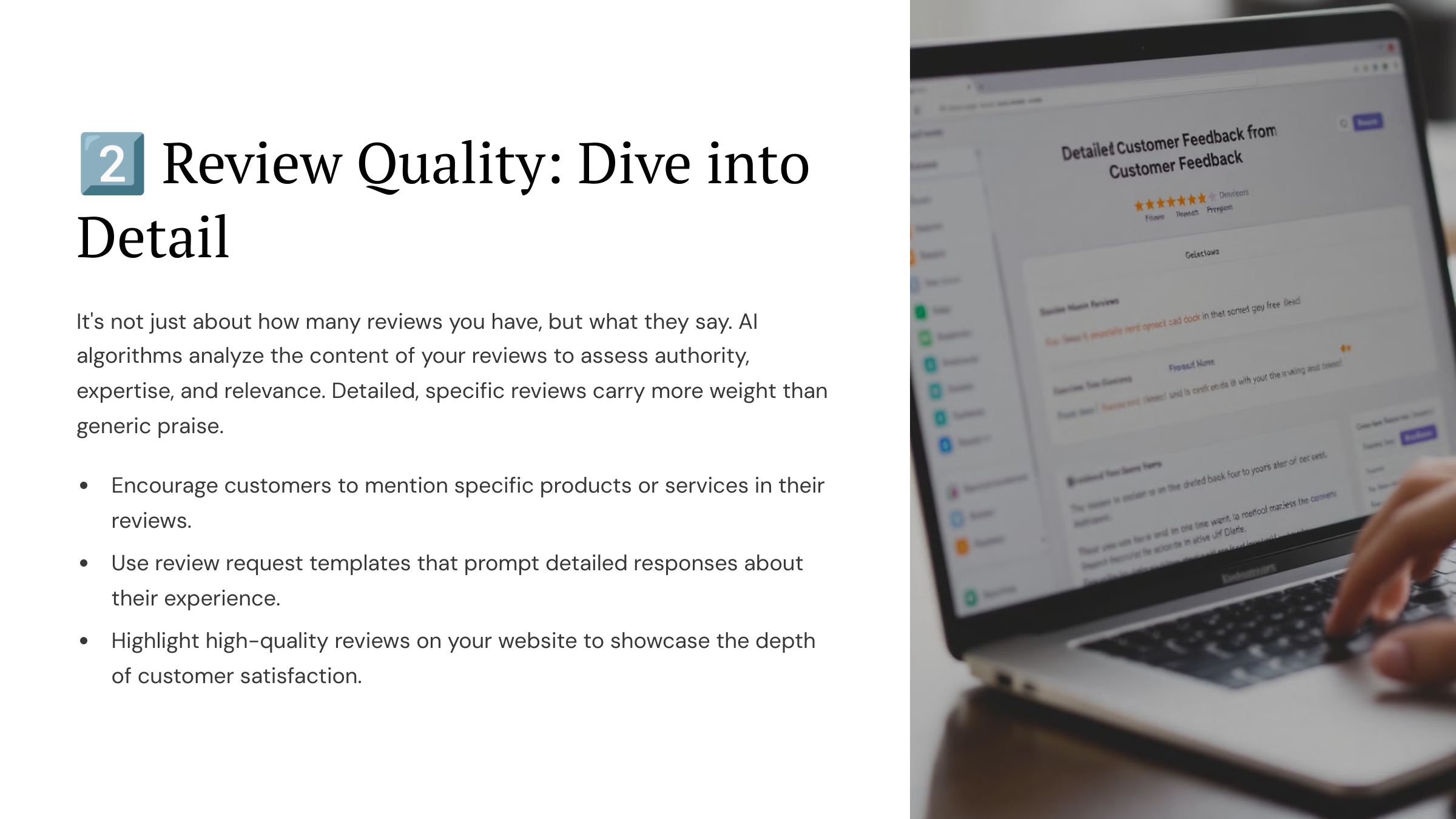
Why It Matters: Detailed, descriptive reviews provide more context for AI algorithms.
Tip: Ask customers to mention specific products, services, or experiences.
📅 3. Review Recency
Why It Matters: Fresh reviews show that your business is active and relevant.
Tip: Send follow-up emails after purchases to request new reviews.
📍 4. Review Diversity
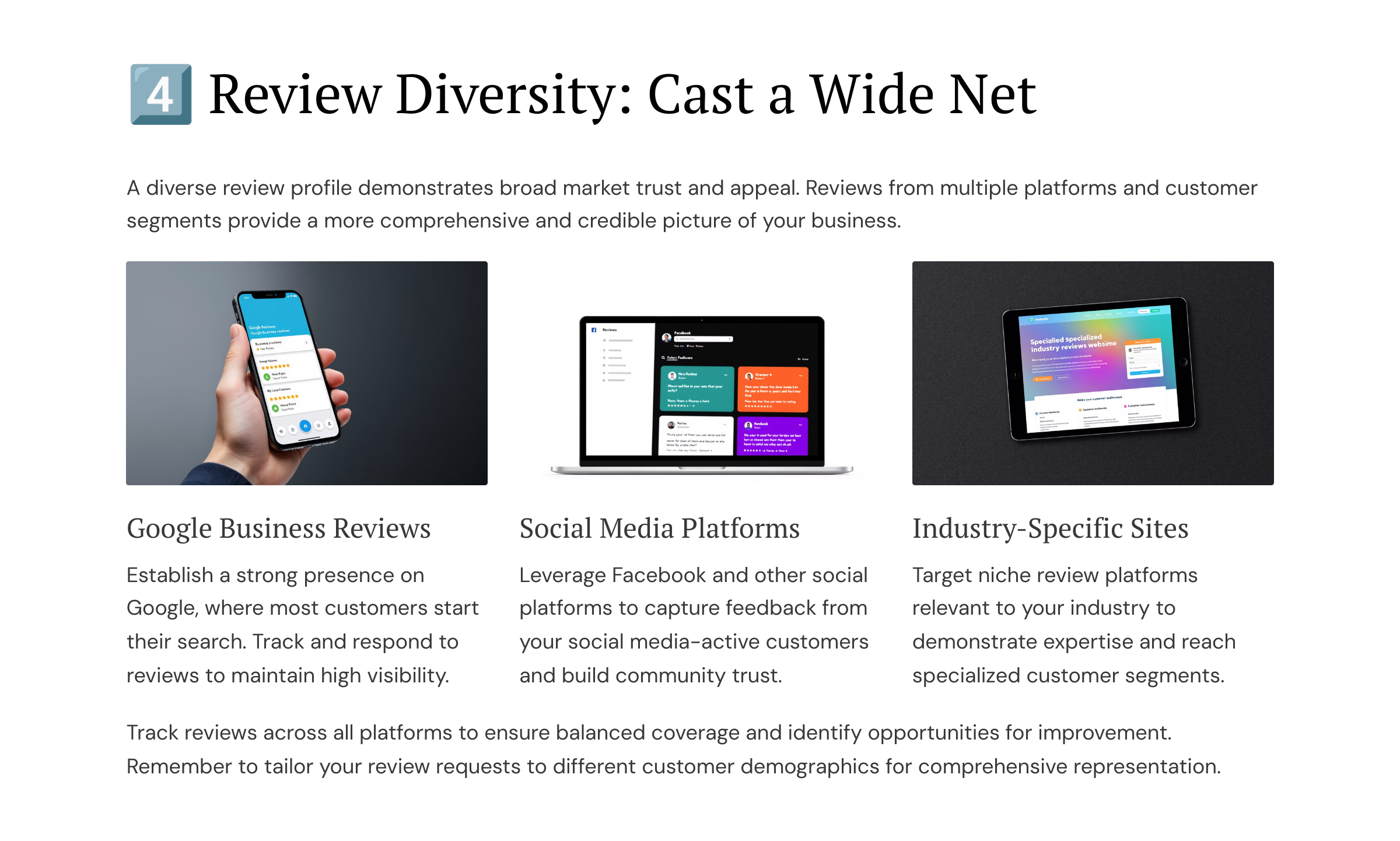
Why It Matters: Reviews across platforms (Google, Yelp, Facebook) boost credibility.
Tip: Encourage customers to leave reviews on multiple platforms.
✅ 5. Review Responses
Why It Matters: AI evaluates how businesses engage with reviews, rewarding those that respond professionally to both positive and negative feedback.
Tip: Respond to every review to show active engagement.
📥 Want More Visibility in AI-Powered Search?
Want More Visibility in AI-Powered Search?
Don’t let your competitors dominate local search results. Download our “Top 5 Review Factors That Influence AEO Rankings“ checklist to discover how reviews can skyrocket your visibility in Google SGE, Siri, and other AI-driven platforms.
✅ Take Control of Your Reviews. Boost Your Rankings.
When you begin marketing your business, you may start crafting blogs and social media posts and even printing flyers. But what if there were others ways to reach your audience? Turns out, businesses in New Jersey can reach more prospects by launching a podcast. Your customers are listening—and they want to engage. Yet, engaging with prospects is just one of the benefits of starting a podcast for your business. Let’s delve into some of the reasons why you should start a podcast.
Key Takeaways
Podcasts offer a versatile platform to tap into a global audience beyond traditional marketing channels.
Podcasts create a personal connection with the audience through the host’s voice and personality, fostering trust and loyalty.
Business podcasts effectively target high-quality prospects interested in the topics discussed, leading to increased conversions.
Comparison Table: Benefits of Starting a Business Podcast
Benefit
Description
Reach:
Tap into a global audience of listeners interested in your niche.
Credibility:
Share valuable insights and establish yourself as an authority.
Connection:
Build trust and loyalty with your audience through a personal touch.
Targeting:
Attract high-quality prospects actively seeking solutions you provide.
Communication Skills:
Improve your ability to articulate ideas and communicate effectively.
Lead Generation:
Capture listener information through calls to action.
Content Repurposing:
Maximize the value of existing content by repurposing it for podcasts.
What is a Podcast?
A podcast is a digital audio program or series that is typically available for streaming or download on the internet. Podcasts cover a wide range of topics and formats, including interviews, storytelling, discussions, educational content, and more. They are often episodic, with new episodes released regularly, and can be accessed through podcast directories, websites, or dedicated podcasting platforms.
If desired, listeners can subscribe to podcasts to receive automatic updates when new episodes are available, and they can listen to them on various devices such as smartphones, computers, or tablets. Podcasts have gained popularity due to their convenience, accessibility, and the diverse range of content they offer.
Reasons to Start a Business Podcast
Podcasts open up a new world of marketing your business that can be engaging and entertaining for everyone involved. Let’s look at some of the best reasons for starting a business podcast:
1. Reach a Broader Audience
Podcasts offer a versatile platform that allows businesses to reach a broader audience beyond traditional marketing channels. With the increasing popularity of podcasts, businesses can tap into a global audience of listeners who are actively seeking content on specific topics. By producing engaging and valuable podcast episodes, businesses can attract new listeners and expand their reach to individuals who may not have been exposed to their brand through other channels.
2. Increase Your Credibility
Hosting a podcast provides an opportunity for businesses to demonstrate their expertise and knowledge in their industry. By sharing valuable insights, discussing industry trends, and interviewing experts, businesses can establish themselves as credible authorities within their niche. As listeners consistently consume informative and engaging content from the podcast, they are more likely to perceive the host and their business as trustworthy and knowledgeable, leading to increased credibility and authority in the eyes of the audience.
3. Build a Personal Connection With Your Audience
Podcasts offer a unique medium for businesses to connect with their audience on a personal level. Unlike written content or traditional advertising, podcasts allow listeners to hear the host’s voice, tone, and personality, creating a sense of intimacy and authenticity. By sharing personal stories, experiences, and anecdotes, businesses can humanize their brand and build a deeper emotional connection with their audience. This personal connection fosters trust and loyalty, leading to stronger relationships and increased customer engagement.
4. Reach Better Prospects
Business podcasts provide an effective platform for targeting and reaching high-quality prospects who are genuinely interested in the topics discussed. By creating content that addresses the pain points, challenges, and interests of their target audience, businesses can attract listeners who are actively seeking solutions and information related to their products or services. These engaged listeners are more likely to convert into leads and customers, making podcasts a valuable tool for reaching and nurturing better prospects.
5. Become a Better Speaker
Hosting a podcast offers valuable opportunities for businesses to improve their communication and public speaking skills. As hosts consistently record and publish podcast episodes, they become more comfortable and confident in articulating their ideas, thoughts, and messages. Podcasting also allows hosts to practice active listening, improvisation, and conversational skills, leading to overall improvement in their speaking abilities. These enhanced speaking skills are not only beneficial for podcasting but also for other business activities such as presentations, meetings, and networking events.
6. Collect New Leads
Podcasts provide businesses with various opportunities to collect new leads and grow their email list. By incorporating calls-to-action (CTAs) in podcast episodes, such as encouraging listeners to subscribe, visit the website, or sign up for newsletters, businesses can capture the attention and contact information of interested listeners. Additionally, businesses can offer exclusive content, resources, or promotions to listeners who opt-in to their email list, providing further incentives for lead generation and nurturing.
7. Repurpose Prior Content
Podcasting allows businesses to repurpose existing content, such as blog posts, articles, interviews, or presentations, into podcast episodes. By repurposing prior content, businesses can extend the life and reach of their existing assets, reaching new audiences who prefer audio content or consuming content in podcast format. Repurposing content also saves time and resources by leveraging existing materials and adapting them to a new medium, maximizing the value and impact of the content across multiple channels.
Looking for a Digital Marketing Specialist in New Jersey?
Podcasts are a wonderful way to access new leads, customers, and listeners. Furthermore, podcasts help you cement your brand image and increase its visibility. In other words, if you haven’t started a podcast, no time is better than now to begin. If you’re ready to harness the power of podcasting for your business and need expert guidance, Digital Marketing Group is here to help. Our team can help you get set up with content, topics, and even software to ensure your podcast is a success. Contact us today by calling 1-267-568-5138 or by filling out the online form to learn how we can assist you in creating and promoting a successful podcast. It’s time to grow your brand and reach your target audience effectively.